What Is Valplekar? Understanding Its Meaning and Origins
October 14, 2026
0
Valplekar is a Swedish expression that can be understood as “puppy play,” referring to the playful activities and interactions of young dogs. The word combines valp, meaning puppy,
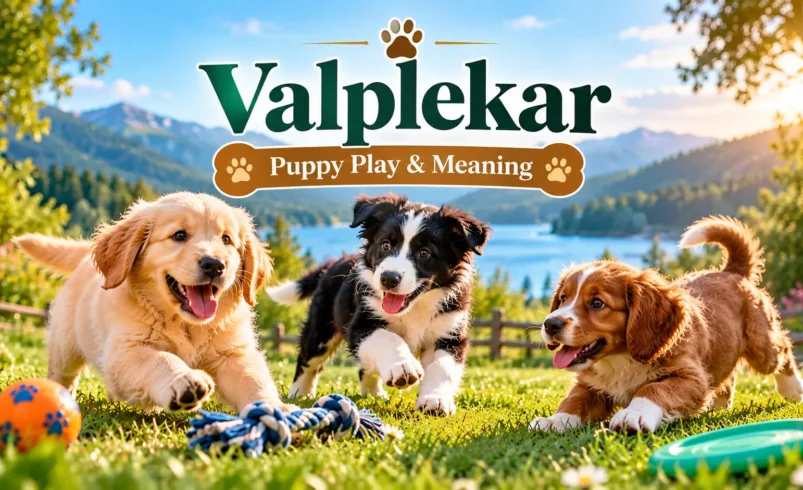
Valplekar is a Swedish expression that can be understood as “puppy play,” referring to the playful activities and interactions of young dogs. The word combines valp, meaning puppy, with lekar, the plural form of lek, meaning play or games.
The meaning is relatively straightforward in a Swedish language context, but online discussions have introduced other interpretations. Some websites associate Valplekar with a South Asian surname, particularly in regions of western India. Others describe it as a dog-training philosophy, digital concept, or even a travel destination.
These explanations should not be treated as equally established. The Swedish linguistic interpretation has a recognizable grammatical foundation, while several alternative explanations lack independent historical or documentary evidence.
For dog owners, the idea behind Valplekar is especially relevant because play is an important part of puppy development. Young dogs explore their surroundings, practice social behavior, develop physical coordination, and build relationships through appropriate playful activities.
Understanding Valplekar therefore involves more than translating an unfamiliar word. It also provides an opportunity to explore how puppies learn, why different forms of play matter, and how owners can create safe, enjoyable experiences during their pets’ early development.
What Does Valplekar Mean in Swedish?
The word Valplekar can be understood through two Swedish language elements.
Valp refers to a puppy, while lekar is the plural form of a noun used for play, games, or playful activities.
Together, the components convey the idea of puppy games or puppy play activities.
Swedish frequently creates compound nouns by combining meaningful elements into a single word. This makes the construction understandable even to readers unfamiliar with the expression.
However, a distinction is necessary between a grammatically understandable compound and an officially standardized specialist term.
Valplekar should not automatically be described as a formally recognized behavioral science category or certified dog-training system.
Its ordinary descriptive meaning is sufficient to explain how it relates to puppies.
The Meaning of Valp
In Swedish, valp is the familiar word for a young dog.
Like the English word puppy, it refers to an animal at an early stage of development.
Puppies depend on appropriate care, social interaction, nutrition, sleep, and opportunities to explore.
Their behavior changes as they grow, and their interests in playing with people, objects, and other dogs develop accordingly.
The Meaning of Lekar
The Swedish noun lek refers to play or a game, while lekar is its plural form.
Play can take different forms, including chasing objects, exploring toys, interacting with other dogs, and participating in simple games with people.
The term does not necessarily imply a formal training exercise.
Some play happens spontaneously, while other activities are introduced or guided by an owner.
Is Valplekar an Official Dog-Training Method?
Valplekar is not established as the name of a particular certified dog-training system.
It is better understood as a descriptive expression for puppy play.
A trainer may use play as part of a structured program, but that does not make every playful interaction a special method called Valplekar.
This distinction matters because puppy owners should evaluate training advice according to its safety, appropriateness, and behavioral principles rather than the appeal of a particular label.
Why Play Matters for Puppy Development
Play is a natural part of canine behavior.
Puppies begin exploring movement and social interaction at an early age. As they develop, playful experiences give them opportunities to investigate their surroundings and practice behaviors they will continue using as adult dogs.
Appropriate play can support physical activity, learning, communication, and relationships with people and other animals.
However, it is important not to overstate what any particular game can accomplish.
A puppy’s behavior is influenced by genetics, temperament, health, previous experiences, environment, and training.
Play contributes to development, but it does not guarantee that a dog will become confident, obedient, or comfortable in every situation.
Physical Coordination
Puppies develop motor skills as they grow.
Walking, turning, balancing, and interacting with objects all require coordination.
Appropriate play offers opportunities to practice these movements.
For example, following a slowly moving toy may encourage a puppy to coordinate its eyes and body.
Walking across safe, varied surfaces can also provide useful environmental experiences.
Activities should match the puppy’s age, size, health, and physical abilities.
High-impact exercise, repeated jumping, and demanding activities may be inappropriate for young dogs whose bodies are still developing.
Social Communication
Dogs communicate through body posture, movement, facial expressions, vocalizations, and other signals.
During suitable interactions, puppies can encounter these signals and begin learning how other dogs respond to their behavior.
A puppy may initiate play by lowering its front body while keeping its rear raised, a behavior commonly called a play bow.
Other behaviors can include bouncing movements, short pauses, and changes in who chases whom.
These interactions provide opportunities to observe canine communication.
However, not every interaction between puppies is comfortable or beneficial. Play should be supervised so that fear, excessive pressure, and conflict are recognized early.
Mental Stimulation
Puppies are curious animals.
Exploring a safe environment, investigating scents, and interacting with suitable toys can provide mental engagement.
Simple activities such as searching for scattered treats or discovering food inside an appropriate enrichment toy encourage exploration.
These experiences may be particularly useful when a puppy needs an alternative to highly energetic physical play.
Mental stimulation should remain enjoyable and manageable rather than becoming a demanding challenge.
Building Relationships With Owners
Play can help owners establish positive interactions with their puppies.
When a person responds consistently and respectfully to a puppy’s behavior, the puppy has opportunities to associate that person with enjoyable experiences.
A gentle toy game can become a way to practice attention, cooperation, and simple cues.
The goal is not to dominate the animal or force constant compliance.
Successful interactions should allow the puppy to remain comfortable, take breaks, and disengage when needed.
Different Types of Valplekar Puppy Activities
Puppy play is not one uniform activity.
Different games provide different experiences, and a well-rounded routine can include physical movement, exploration, interaction, and rest.
1. Toy-Based Play
Soft toys and appropriate chew toys offer opportunities for puppies to interact with objects.
A puppy might carry a toy, gently pull on it, or investigate its texture.
Toy selection should consider the dog’s size, chewing behavior, and ability to damage or swallow pieces.
Small detachable components and unsuitable materials can create choking or intestinal obstruction hazards.
Owners should regularly inspect toys and remove damaged items.
2. Gentle Tug Games
Tug games can provide enjoyable interaction between a puppy and its owner when managed appropriately.
A suitable toy allows the puppy to grip without accidentally catching the person’s fingers.
The person should avoid jerking the puppy’s neck or lifting the animal off the ground.
Short pauses can help keep the activity controlled.
If the puppy becomes excessively excited or begins biting hands, ending the game calmly and allowing a break is more useful than escalating the interaction.
3. Scent Exploration
Dogs rely heavily on their sense of smell.
Simple scent games encourage puppies to investigate their environment without requiring intense running or jumping.
An owner might hide a suitable treat in an easy location and allow the puppy to discover it.
As the puppy becomes familiar with the activity, the difficulty can be adjusted.
The game should remain achievable so that the puppy does not become frustrated or distressed.
4. Social Play With Other Puppies
Play between puppies can offer opportunities for canine interaction.
However, similar age does not necessarily mean two puppies are suitable playmates.
Differences in size, confidence, physical strength, and play style can create problems.
A confident puppy may overwhelm a quieter one, even without displaying obvious aggression.
Supervision is essential, and dogs should have opportunities to move away from the interaction.
Health precautions also matter, particularly for puppies that have not completed their initial vaccinations.
Owners should follow veterinary advice when selecting appropriate social environments.
5. Simple Training Games
Basic cues can be introduced through enjoyable, reward-based activities.
For example, a puppy may learn to respond to its name by turning toward its owner.
Short recall games can also encourage the puppy to approach when invited.
These activities work best when the puppy is interested and the task is easy enough to succeed.
Training should be brief, positive, and adjusted to the animal’s attention span.
Structured Play vs. Free Play
One useful distinction in puppy development is the difference between structured and unstructured activities.
Structured play involves an activity guided by a person.
Examples include simple recall games, supervised toy interaction, and age-appropriate training exercises.
Free play allows the puppy greater choice in how to explore and interact with its surroundings.
Both forms can contribute to a balanced routine, although their usefulness depends on the situation.
Aspect
Structured Play
Free Play
Direction
Guided by an owner
Primarily initiated by the puppy
Main focus
Cooperation and specific activities
Exploration and spontaneous behavior
Examples
Recall games, gentle tug
Investigating toys, independent exploration
Supervision
Active involvement
Supervision appropriate to the environment
Main consideration
Avoid excessive demands
Maintain a safe environment
Neither approach should be treated as universally superior.
A young puppy may benefit from a brief guided interaction followed by time to explore independently and then rest.
The appropriate balance changes with age, temperament, health, and environment.
How to Recognize Healthy Puppy Play
Understanding canine body language helps owners decide whether an interaction is enjoyable.
Healthy play often includes relatively relaxed movement, voluntary participation, and pauses.
Dogs may take turns chasing or approaching one another.
However, no single signal guarantees that an interaction is safe.
Owners need to consider the overall pattern.
Signs of Comfortable Play
A puppy enjoying an activity may show loose body movements and willingly return after short breaks.
During play with another dog, both animals should have opportunities to initiate and end contact.
Play bows, bouncy movements, and relaxed changes of direction may indicate playful intentions.
A dog that briefly moves away and then voluntarily returns may be demonstrating continued interest.
Signs That a Break Is Needed
An interaction may need to stop when a puppy repeatedly tries to escape, hides, freezes, or appears overwhelmed.
Persistent chasing without role changes can also be concerning.
Other warning signs include stiff body posture, repeated yelping, escalating intensity, or one dog ignoring the other’s attempts to disengage.
A puppy may also become overtired and respond less appropriately to stimulation.
Taking a break allows the owner to assess the situation rather than waiting for a serious problem.
Why Forced Socialization Can Be Harmful
Socialization does not mean making a puppy interact with every unfamiliar dog or person.
The goal is to provide positive, manageable experiences.
A frightened puppy should not be forced into close contact simply because an owner believes more exposure is always beneficial.
Gradual introduction, appropriate distance, and the ability to retreat can support more comfortable learning.
Puppies differ in confidence and sensitivity, so social experiences should be individualized.
Creating a Safe Valplekar Routine at Home
A useful puppy play routine does not require expensive equipment or complicated activities.
The most important considerations are safety, consistency, appropriate stimulation, and sufficient rest.
Young puppies generally need considerable sleep throughout the day, so play should fit around their natural periods of activity and recovery.
Start With Short Activities
Brief interactions allow owners to observe how their puppy responds.
Instead of expecting a puppy to remain interested in one game for an extended period, introduce manageable activities and watch for changes in attention.
Some puppies may enjoy a few minutes of toy play before needing a break.
Others may prefer sniffing or gentle interaction.
There is no universal play-session duration suitable for every puppy.
Choose an Appropriate Environment
The play area should be free from obvious hazards.
Electrical cords, toxic plants, cleaning products, and small objects should be inaccessible.
Slippery surfaces may make certain games uncomfortable or increase the chance of falls.
Outdoor spaces should also be checked for unsafe objects, traffic access, and environmental hazards.
The goal is to create a setting where the puppy can explore without unnecessary risk.
Allow the Puppy to Make Choices
Giving puppies some control over play can make interactions more comfortable.
A puppy should be able to stop participating, move away, or rest.
Owners can invite interaction without repeatedly forcing the animal to continue.
This is particularly important for shy puppies or those adjusting to a new home.
Include Rest and Recovery
Play is only one part of healthy development.
Young dogs also need appropriate nutrition, sleep, veterinary care, and a predictable environment.
An overtired puppy may become unusually mouthy, restless, or less responsive.
These behaviors do not always indicate that the animal needs additional exercise.
Sometimes the most useful response is to provide a quiet place to settle.
Common Mistakes Owners Make During Puppy Play
Even well-intentioned owners can accidentally create stressful or unsafe experiences.
Recognizing common mistakes can make play more enjoyable for both the puppy and the person supervising it.
Encouraging Rough Hand Biting
Puppies naturally explore with their mouths.
However, repeatedly allowing rough biting of hands can make future interactions difficult.
Offering appropriate toys and calmly redirecting attention provides a clearer alternative.
Punishment or frightening physical corrections are unnecessary and can damage the quality of interactions.
Allowing Overwhelming Dog Interactions
A larger or more energetic puppy may unintentionally frighten a smaller playmate.
Owners should observe both animals instead of assuming that all puppy interactions are automatically beneficial.
When one puppy repeatedly avoids contact, the interaction should be interrupted.
Using Inappropriate Toys
A toy that is safe for one dog may be unsuitable for another.
Size, material, chewing strength, and the animal’s individual behavior all matter.
Toys should be checked regularly for damage.
Ignoring Signs of Fatigue
Puppies sometimes continue interacting even when their behavior becomes increasingly disorganized.
Escalating excitement can lead owners to believe the puppy needs more activity, when the animal may actually need rest.
Recognizing when to end a game is an important part of responsible care.
Valplekar and Puppy Socialization
Play and socialization are related, but they are not identical.
Socialization involves helping a puppy develop appropriate responses to the people, animals, environments, sounds, and experiences it may encounter throughout life.
Play can contribute to this process, but socialization also includes calm observation and non-playful experiences.
For example, a puppy may benefit from seeing bicycles at a comfortable distance without interacting with them.
Similarly, calmly observing another dog can be useful without direct play.
Early Experiences Matter
The early developmental period is particularly important for introducing puppies to suitable experiences.
However, socialization should continue as dogs mature.
A puppy that has experienced one comfortable meeting with another dog has not necessarily learned to respond calmly to every unfamiliar dog.
Experiences should be varied, positive, and appropriate to the individual animal.
Health Precautions During Socialization
Puppies may not yet have completed their initial vaccination schedules.
This creates an important balance between providing developmental experiences and limiting exposure to infectious disease.
Veterinary recommendations should guide the choice of environments and contact with unfamiliar animals.
Controlled interactions with healthy, appropriately vaccinated dogs may be preferable to uncontrolled gatherings in high-risk settings.
Is Valplekar Also an Indian Surname?
Beyond its Swedish meaning, Valplekar appears in online discussions about South Asian surnames.
Some articles associate the name with western India, including Maharashtra and Goa.
This explanation is linguistically plausible in one respect: surnames ending in -kar are found in Marathi and Konkani naming traditions, and the ending can indicate a connection with a place.
However, the specific historical origin of Valplekar has not been reliably established.
There is insufficient evidence to identify one ancestral village, community, or family lineage as the definitive source of the surname.
Understanding the -kar Surname Ending
In parts of western India, certain surnames preserve connections with geographical locations.
A family name may historically have indicated association with a village, settlement, or region.
Over generations, such surnames can become hereditary, even when families move elsewhere.
Nevertheless, not every surname ending in -kar has an identical history.
Linguistic patterns provide clues, not complete genealogical records.
Does Valplekar Identify a Particular Community?
Some online explanations connect Valplekar with particular regional or social communities.
These claims require careful verification.
A surname alone does not reliably establish a person’s caste, religion, family ancestry, or community membership.
Different families may share similar names without having the same background.
Reliable genealogical research requires family records, historical documents, and other evidence directly connected with the people concerned.
Are the Swedish and Indian Meanings Connected?
There is no established evidence that the Swedish puppy-related expression and the proposed Indian surname interpretation share a common historical origin.
The resemblance may simply reflect two unrelated naming patterns.
Words and names from different languages can have identical or similar spellings without being connected.
Context is therefore essential when interpreting Valplekar.
Is Valplekar a Place or Travel Destination?
A further claim found in some online discussions describes Valplekar as a scenic destination or hidden village.
However, reliable geographical documentation establishing a distinct travel destination by that name has not been identified.
Descriptions of picturesque landscapes, local traditions, or tourist attractions should not be accepted without supporting records.
A genuine travel destination can usually be identified through geographic information, administrative records, or reliable local documentation.
Until such evidence becomes available, Valplekar should not be promoted as a verified tourist destination.
Why Is Valplekar Appearing in Online Searches?
Valplekar has attracted attention partly because it can be interpreted in more than one way.
Readers encountering the unfamiliar spelling may want to know whether it refers to a Swedish expression, family name, training concept, or location.
As websites publish explanations, additional readers may discover the word through search results.
However, the number of articles discussing a term is not evidence that every proposed meaning is authentic.
A repeated claim about an ancient surname, specialized training system, or tourist destination still requires independent verification.
The Difference Between Meaning and Interpretation
A word’s literal linguistic structure provides one type of evidence.
Its historical use within a particular community provides another.
A writer’s symbolic or creative explanation is different again.
For Valplekar, the Swedish components have identifiable meanings, making the puppy-play interpretation understandable.
Claims about a specific Indian family history or geographical location require evidence of a different kind.
Keeping these categories separate helps readers avoid confusing speculation with established knowledge.
Frequently Asked Questions About Valplekar
What does Valplekar mean in English?
Valplekar can be understood as “puppy play” or “puppy games” based on its Swedish components, valp and lekar.
Is Valplekar a real Swedish word?
It is an understandable Swedish compound associated with puppy play. However, it should not automatically be presented as a formally standardized dog-training term.
Is Valplekar a puppy-training technique?
No specific certified training system called Valplekar has been independently established. In its Swedish context, the expression relates to play rather than one proprietary training method.
Is Valplekar beneficial for puppies?
Appropriate puppy play can provide opportunities for movement, exploration, social learning, and interaction with owners. Benefits depend on the activity and individual puppy.
Is Valplekar an Indian surname?
Online explanations also present Valplekar as a surname associated with western India. The proposed connection with regional -kar naming patterns is plausible, but the exact family origin remains insufficiently documented.
Does Valplekar mean a village in India?
There is no reliable evidence confirming that Valplekar itself is the official name of a particular village. Claims identifying a specific ancestral settlement need additional historical or geographical documentation.
Can older dogs participate in similar games?
Yes. Suitable play and enrichment are relevant throughout a dog’s life. Activities should be adjusted for the animal’s age, health, mobility, and preferences.
How often should puppies play?
Puppies can enjoy several brief opportunities for age-appropriate play throughout the day, balanced with sleep, meals, exploration, and quiet time. There is no universal schedule appropriate for every puppy.
Conclusion
Valplekar is most clearly understood through its Swedish linguistic components, which convey the idea of puppy play or puppy games.
In practical terms, the expression points toward an important part of canine development: allowing young dogs to explore, interact, learn, and enjoy appropriate activities in a safe environment.
Healthy puppy play involves more than physical exercise. It includes social communication, environmental exploration, opportunities for learning, and sufficient rest.
The word also appears in discussions of Indian surnames and other online interpretations, although those claims require separate evidence and should not be confused with its Swedish meaning.
For dog owners, the most valuable lesson is straightforward. Play should be enjoyable, supervised appropriately, and suited to the individual puppy’s needs.
Understanding these principles provides a meaningful way to appreciate the idea behind Valplekar without inventing a specialized training system or unsupported historical background.