Provascin Review 2026: Ingredients, Uses, Benefits, Safety and Current Availability
October 6, 2026
0
Provascin sounds like the name of a prescription cardiovascular medicine, and that is partly why researching it online has become confusing. Some articles describe it as though it
Provascin sounds like the name of a prescription cardiovascular medicine, and that is partly why researching it online has become confusing. Some articles describe it as though it were a modern treatment for blood pressure or circulation problems. Others call it a widely available heart-health supplement. A few provide broad lists of supposed benefits without clearly identifying the manufacturer or explaining whether the product is even still sold.
The strongest available records tell a more specific story.
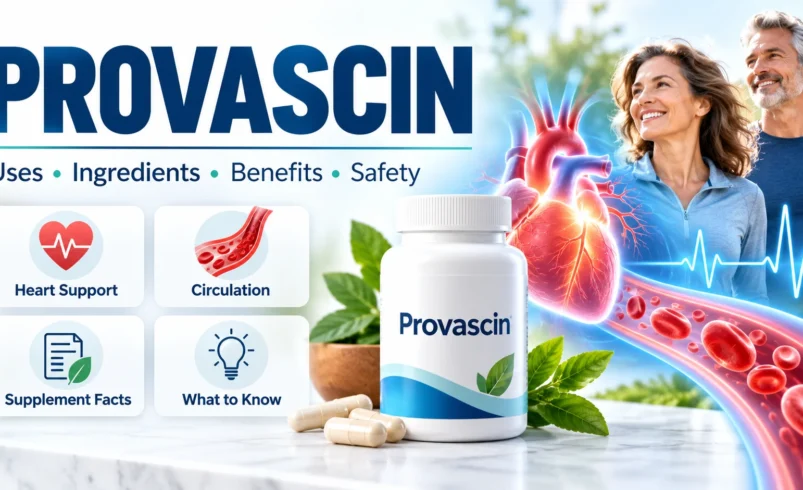
Provascin was a dietary supplement associated with PURICA and The Nutraceutical Medicine Company Inc. It was marketed primarily for cardiovascular and circulatory support and sold in capsule form. Historical retailer listings document a formula containing L-carnitine, alpha-ketoglutaric acid, Chaga mushroom, Coenzyme Q10, betaine hydrochloride, alpha-lipoic acid, grape seed extract and green tea extract. U.S. trademark records also classify PROVASCIN as a dietary supplement rather than a prescription medicine.
The situation in 2026 is different from what many older articles suggest. Major Canadian retailers that previously carried PURICA Provascin now say they no longer carry it or that the product has been discontinued.
That changes the main question.
The issue is no longer simply “What does Provascin do?”
A more useful set of questions is:
What exactly was Provascin?
What ingredients did the historical formula contain?
What was it actually marketed to support?
Was the complete formula clinically proven?
Why should it not be confused with prescription heart medicine?
Is it still available?
What should you check if you find a bottle or online listing today?
Those questions provide a much clearer picture than many current search results.
What Is Provascin?
Provascin is best documented as a multi-ingredient dietary or natural-health supplement formerly sold under the PURICA brand.
It was promoted as a broad cardiovascular-support formula rather than as a pharmaceutical drug built around a single prescription active ingredient.
Historical retailer material describes the product as combining nutrients, antioxidants, botanical extracts and mushroom-derived ingredients associated with cardiovascular, metabolic and circulatory wellness.
It appeared in at least two common bottle sizes:
120 capsules
240 capsules
Older marketing materials connected the product with heart and circulatory wellness, normal energy production, antioxidant support, healthy glucose metabolism and maintenance of healthy cholesterol levels.
Those claims need to be interpreted carefully.
Marketing a supplement for “support” is very different from proving that it can treat cardiovascular disease.
Is Provascin a Medicine or a Supplement?
The documented PURICA Provascin was a supplement, not a prescription cardiovascular medicine.
This distinction is critical.
Prescription medicines used for conditions such as hypertension, high cholesterol, angina, blood clots and heart failure go through drug-specific regulatory processes and are approved for defined medical uses based on evidence submitted to regulators.
Dietary supplements are regulated differently.
The U.S. FDA explains that it does not approve dietary supplements for safety and effectiveness before they are marketed in the same way it approves drugs. Manufacturers are responsible for ensuring that their supplements comply with applicable safety and labeling requirements.
That means phrases such as:
“FDA approved supplement”
“clinically proven heart treatment”
“replaces blood-pressure medication”
“treats cardiovascular disease”
should never be assumed merely because a supplement is sold for cardiovascular support.
Why Is Provascin Sometimes Mistaken for a Prescription Drug?
The name itself contributes to the confusion.
“Provascin” sounds pharmaceutical.
It resembles naming patterns used by cardiovascular and blood-pressure medicines, and some online articles have written about it using medical terminology without clearly identifying the historical PURICA product.
There are also similarly named products or drug brands in different countries.
That makes exact identification important.
Before using anything called Provascin, check:
manufacturer;
full product name;
active ingredients;
Supplement Facts or medicinal-ingredient panel;
registration details;
expiry date;
country of sale.
A similar-sounding name does not mean two products are medically equivalent.
Who Made Provascin?
Historical records associate Provascin with PURICA.
The U.S. trademark record lists The Nutraceutical Medicine Company Inc. as the trademark owner.
PURICA has marketed a range of natural health and supplement products over the years.
Historical retailer pages clearly identify PURICA as the brand behind Provascin, which gives this version of the product much stronger documentation than vague modern articles referring to “Provascin” without naming a manufacturer.
What Ingredients Were in PURICA Provascin?
Historical retailer listings provide one of the clearest ingredient records.
Per capsule, the documented formula contained approximately:
Ingredient
Historical amount per capsule
L-Carnitine
188 mg
Alpha-ketoglutaric acid
125 mg
Certified organic micronized Chaga
125 mg
Coenzyme Q10
38 mg
Betaine hydrochloride
31 mg
DL-alpha-lipoic acid
13 mg
Grape seed extract
9 mg
Green tea extract
9 mg
Non-medicinal ingredients included plant-source magnesium stearate, microcrystalline cellulose and hypromellose in historical listings.
These numbers should be treated as historical label information.
They should not be used to assume that every product currently advertised under the Provascin name contains the same ingredients.
L-Carnitine in Provascin
L-carnitine plays a role in energy metabolism, particularly in transporting fatty acids into mitochondria where they can be used for energy.
That biological role makes it a common ingredient in energy, exercise and cardiovascular-oriented supplements.
However, the fact that L-carnitine has a recognized physiological function does not automatically prove that the amount used in the complete Provascin formula prevents or treats heart disease.
Ingredient-level research and finished-product clinical evidence are two different things.
This distinction applies throughout the formula.
Coenzyme Q10
Coenzyme Q10, commonly called CoQ10, is involved in cellular energy production and also has antioxidant properties.
It is one of the better-known ingredients in heart-health supplement marketing.
Older Provascin promotional material placed significant emphasis on CoQ10 and cardiovascular wellness.
Research exists on CoQ10 in several health contexts, but that does not establish the entire Provascin formula as clinically effective for a particular cardiovascular disease.
This is an important recurring issue with multi-ingredient supplements.
A product may contain individually researched ingredients while the exact combination itself remains insufficiently studied.
Chaga Mushroom
Provascin contained micronized Chaga, a mushroom commonly marketed for antioxidant and wellness purposes.
Chaga has become popular in supplements, teas and functional-food products.
Its presence gave Provascin a different profile from conventional vitamin-only cardiovascular formulas.
However, Chaga should not be assumed to treat cardiovascular disease simply because it contains antioxidant compounds.
Supplement marketing often moves much faster than product-specific clinical evidence.
Alpha-Lipoic Acid
Alpha-lipoic acid is another antioxidant compound used in a range of supplements.
It participates in metabolic processes and has been studied in contexts including oxidative stress and glucose metabolism.
Again, that scientific interest should not be translated automatically into a claim that historical Provascin could treat diabetes, vascular disease or another diagnosed condition.
The evidence for one ingredient cannot simply be transferred to a complete multi-ingredient formula without appropriate research.
It is commonly marketed for antioxidant and vascular-support purposes.
Older Provascin product descriptions associated grape seed extract with the antioxidant portion of the formula.
The most useful way to interpret its role is as part of the product’s intended antioxidant-support profile rather than as proof of a specific clinical outcome.
Green Tea Extract
Green tea extract is another source of plant-derived compounds frequently included in metabolic and antioxidant supplements.
Depending on formulation and concentration, green tea extracts can also raise safety considerations, particularly when concentrated.
Historical Provascin retailer information advised users with certain health conditions—including liver-related concerns—to consult a health professional before use.
That is one reason broad statements such as “natural means safe” should be avoided.
Alpha-Ketoglutaric Acid
Alpha-ketoglutarate is involved in cellular metabolism.
Its inclusion reinforced Provascin’s positioning as a product intended to support metabolic and energy-related processes in addition to cardiovascular wellness.
It is much less familiar to ordinary consumers than CoQ10 or green tea extract, which is another reason the complete ingredient label matters.
People should not evaluate a supplement based only on the two or three recognizable ingredients highlighted in marketing.
Betaine Hydrochloride
Betaine hydrochloride is commonly associated with digestive or stomach-acid support in supplement contexts.
Its inclusion in a cardiovascular-oriented product may look unusual to someone seeing the historical formula for the first time.
This illustrates how broad Provascin’s formulation strategy was.
It was not built around one narrowly targeted compound.
It combined numerous substances intended to affect different physiological processes.
That kind of formulation increases the importance of evaluating interactions and total exposure rather than looking at each ingredient independently.
What Was Provascin Marketed For?
Historical retailer descriptions promoted Provascin around several areas, including:
cardiovascular support;
circulatory wellness;
antioxidant protection;
healthy cholesterol maintenance;
glucose metabolism;
energy production;
endurance;
weight-management support;
chronic venous insufficiency support.
National Nutrition and Vitamart still retain old product copy describing some of these marketed uses, even though both indicate that the product is no longer normally available.
These are historical marketing claims.
They should not be presented as proven clinical outcomes.
Did Provascin Lower Cholesterol?
There is not enough product-specific evidence located to confidently say that the complete Provascin formula lowered cholesterol in people.
Historical product marketing said it supported healthy cholesterol levels.
That is not the same as demonstrating that Provascin:
lowers LDL by a defined percentage;
replaces statins;
prevents heart attack;
reverses atherosclerosis.
Those stronger medical claims would require appropriate clinical evidence.
Anyone being treated for abnormal cholesterol should not replace prescribed therapy with an old or discontinued supplement based on promotional language.
Did Provascin Lower Blood Pressure?
The strongest evidence reviewed does not establish Provascin as an approved or proven hypertension treatment.
Some modern articles discuss it using blood-pressure language, partly because ingredients such as CoQ10 are frequently researched in cardiovascular contexts.
But that does not make Provascin equivalent to a prescription antihypertensive drug.
If someone has hypertension, the relevant questions involve actual blood-pressure readings, cardiovascular risk factors, medication history and clinician guidance.
A discontinued supplement should not become a substitute for medical management.
Was Provascin Used for Circulation?
Circulatory support was one of its major marketed themes.
Historical product material also mentioned chronic venous insufficiency.
Again, the word “support” matters.
Symptoms such as:
leg swelling;
persistent pain;
skin changes;
shortness of breath;
chest pain;
sudden weakness;
one-sided swelling;
can signal conditions requiring medical evaluation.
A supplement should not delay diagnosis.
Did Provascin Treat Heart Disease?
No strong evidence establishes the finished Provascin formula as a treatment for heart disease.
This is perhaps the most important correction to make.
Cardiovascular disease includes many different conditions:
coronary artery disease;
heart failure;
arrhythmias;
hypertension;
valve disease;
cardiomyopathy;
vascular disease.
A supplement marketed generally for “heart support” is not automatically proven to treat any of them.
FDA guidance also explains that a product intended to diagnose, treat, cure or prevent disease falls into drug territory, even if it is labeled as a supplement.
Is Provascin FDA Approved?
The historical PURICA Provascin product should not be described as an FDA-approved heart medication.
FDA does not approve ordinary dietary supplements for safety and effectiveness before marketing in the way it approves drugs.
That is why “FDA approved” is frequently misused in supplement discussions.
A product may be legally sold as a dietary supplement without being FDA-approved as a drug.
Those are completely different concepts.
Was Provascin Clinically Tested?
The largest evidence gap in the current SERP is the lack of clearly identified, high-quality clinical trials on the complete Provascin formulation.
Research exists on various individual ingredients.
That does not automatically answer whether the finished product:
works at its specific doses;
produces meaningful cardiovascular outcomes;
interacts differently because of the ingredient combination;
is effective long term;
improves disease outcomes.
A multi-ingredient product needs to be evaluated as a complete formulation if strong product-level claims are being made.
That evidence is much harder to find.
Why Ingredient Studies Are Not Enough
Imagine a formula containing eight compounds.
Suppose three of them each have research suggesting possible benefits under certain conditions.
That does not automatically prove the eight-ingredient product works.
Variables include:
dosage;
chemical form;
absorption;
timing;
interactions;
participant health;
treatment duration;
outcome measured.
This is why phrases such as “contains clinically researched ingredients” can sound stronger than they really are.
The ingredients may have research.
The specific product may not.
Is Provascin Still Available in 2026?
The historical PURICA Provascin product appears to be discontinued or no longer routinely carried.
Vitamart explicitly states:
“Product discontinued and is no longer available.”
National Nutrition says:
“We’re sorry, we no longer carry this item.”
Both sites still preserve historical product descriptions and ingredient information.
That is stronger evidence than pages claiming Provascin is readily available today.
Why Was Provascin Discontinued?
A reliable official explanation was not located.
Therefore, the reason should not be guessed.
There are many possible reasons a supplement disappears:
commercial demand;
manufacturing changes;
rebranding;
reformulation;
supply issues;
strategic changes.
But none of those possibilities should be presented as the explanation for Provascin without evidence.
Importantly, discontinued does not automatically mean banned, unsafe or recalled.
Those are different claims.
No conclusion about why it disappeared should be drawn merely from its retail status.
Was Provascin Recalled?
I did not find reliable evidence in the reviewed sources establishing that the historical PURICA Provascin was discontinued because of a recall.
That means articles should avoid equating “discontinued” with “recalled.”
The terms are not interchangeable.
A discontinued product simply means routine sale has stopped.
A recall involves a specific safety, quality or regulatory action.
Can You Still Buy Provascin Online?
You may encounter old pages, marketplace listings or remaining stock.
That creates several concerns.
If a product has been discontinued for some time, check:
expiration date;
bottle seal;
storage history;
lot information;
manufacturer details;
ingredient list;
seller reputation.
An indexed retailer page is not proof that fresh inventory exists.
Vitamart’s page is a good example: the product page remains online even though it clearly marks Provascin as discontinued.
Should You Buy Provascin From eBay or Marketplaces?
Extra caution is warranted with discontinued health products.
Possible problems include:
expired stock;
unknown storage temperature;
damaged seals;
counterfeit labeling;
outdated instructions;
seller-modified listings.
This becomes particularly important for supplements intended for people with cardiovascular concerns.
A bargain on an old bottle is not necessarily a bargain if product identity or storage cannot be verified.
Historical Provascin Dosage
Old retailer listings published suggested capsule amounts.
National Nutrition and Vitamart both preserve historical directions.
However, those directions should not be treated as current personalized medical advice.
The product is discontinued, health circumstances differ between individuals, and the formula includes compounds that may interact with medicines or medical conditions.
Anyone finding an old bottle should not simply copy a dosage from a years-old retailer page.
What Side Effects Can Provascin Cause?
Strong product-specific adverse-event data are not readily available.
That does not mean side effects are impossible.
The formula contained multiple biologically active ingredients, meaning potential reactions could depend on:
dose;
other supplements;
medications;
liver function;
kidney function;
blood-pressure treatment;
diabetes treatment;
anticoagulants;
allergies.
FDA specifically warns that dietary supplements can interact with medicines and may have strong biological effects.
Provascin Drug Interactions
Historical National Nutrition information advised consultation with a healthcare professional for people using:
blood-pressure medication;
blood thinners;
diabetes treatment;
immunosuppressants;
and for those with certain liver, kidney, seizure, autoimmune or iron-related conditions.
That does not mean an interaction is guaranteed.
It means the formula was complex enough that professional review was appropriate.
Provascin and Blood Thinners
This is particularly important.
The historical formula contained multiple compounds that may affect physiological pathways relevant to people taking anticoagulants or antiplatelet medication.
The old retailer warning specifically mentioned blood thinners.
People using medicines such as warfarin or other anticoagulants should never casually add or remove supplements without discussing it with a qualified clinician.
Provascin and Blood-Pressure Medicine
The same applies to hypertension treatment.
Historical labeling advised people taking blood-pressure medication to consult a healthcare practitioner.
Combining supplements with prescription treatment can alter effects unpredictably.
The correct response to uncontrolled blood pressure is not to experiment with discontinued supplements.
Provascin and Diabetes
Historical product information also advised caution for people with diabetes.
This makes sense given the presence of compounds marketed around glucose metabolism.
Anyone using insulin or glucose-lowering medicine should be especially careful with supplements that may influence metabolic pathways.
Can Pregnant or Breastfeeding People Use Provascin?
Historical retailer information advised pregnant or breastfeeding individuals to consult a healthcare practitioner before use.
Given that the product is now discontinued and includes several active botanical and nutraceutical ingredients, using old stock without medical review would be difficult to justify.
Is Provascin Natural?
It contained nutrients, a mushroom ingredient and botanical extracts, so it was marketed within the natural-health category.
But natural does not mean risk-free.
FDA explicitly warns consumers not to assume that a product described as natural is automatically safe.
Many biologically active natural compounds affect enzymes, blood clotting, blood pressure, glucose metabolism or drug absorption.
Safety depends on context.
Is Provascin a Scam?
The historical PURICA Provascin product itself was real.
Evidence includes:
a registered U.S. trademark;
established retailer listings;
historical product advertising;
archived product information;
documented ingredient panels.
So describing the original product as completely fake would be inaccurate.
The more serious problem in 2026 is information quality.
Some newer websites make Provascin sound like:
an active prescription drug;
a newly launched supplement;
a clinically established heart treatment;
an easily purchased current product.
Those descriptions do not align well with the strongest records.
Is Provascin Legit?
The historical PURICA product was a legitimate commercially marketed dietary supplement.
That does not mean every claim surrounding it is proven.
“Legit product” and “clinically proven treatment” are two different questions.
A real supplement can still have:
limited product-specific evidence;
marketing language stronger than available science;
ingredients with varying evidence;
interaction risks.
The most accurate view is that Provascin was real, but its historical marketing claims should not be confused with proof of medical efficacy.
Provascin vs Prescription Heart Medication
They belong in different categories.
Provascin
Historical dietary supplement containing several nutrients and botanical ingredients.
Prescription cardiovascular medication
Drug with a defined active pharmaceutical ingredient, approved indications, standardized dosing and prescribing information.
Examples of cardiovascular drug classes include:
statins;
ACE inhibitors;
ARBs;
beta blockers;
calcium-channel blockers;
anticoagulants;
antiplatelet medicines.
Provascin should not be described as an alternative equivalent to these treatments.
Provascin vs CoQ10
CoQ10 was one ingredient within the formula.
Taking standalone CoQ10 is therefore not the same as taking historical Provascin.
The original product combined CoQ10 with seven other principal ingredients.
Likewise, evidence on CoQ10 alone cannot automatically be used as proof for Provascin.
Provascin vs Fish Oil
Fish oil products typically supply omega-3 fatty acids such as EPA and DHA.
The documented Provascin formula did not revolve around omega-3s.
It used a completely different ingredient strategy.
Therefore, online comparisons claiming one product is categorically “better” are usually too simplistic.
Supplement choice depends on the intended purpose, evidence, individual health status and professional guidance.
Is There a Modern Replacement for Provascin?
PURICA currently sells other health-oriented products, but that does not mean any one of them is an official direct replacement for historical Provascin.
A newer cardiovascular product should not be called “the replacement for Provascin” unless the manufacturer explicitly says so.
People interested in cardiovascular support should focus on what they actually need rather than trying to recreate an old multi-ingredient supplement.
What Should You Check Before Buying Something Called Provascin Today?
This is particularly important because the original product is discontinued.
Check the manufacturer
Is it actually PURICA or another company using a similar name?
Compare the ingredients
Does the bottle contain the historical formula?
Look for expiry information
Avoid expired or poorly stored supplements.
Check regulatory details
If sold as a natural health product or supplement, verify applicable registration information in your country.
Avoid medicine-like promises
Be skeptical of claims that it treats hypertension, cures cardiovascular disease or replaces prescription medication.
Speak with a pharmacist
This is especially important if you already take medicine for heart disease, blood pressure, diabetes or clotting.
Why Current Google Results About Provascin Are Confusing
The SERP currently contains three different types of content.
Historical-product articles
These identify Provascin correctly as a PURICA supplement.
Generic wellness articles
These use broad cardiovascular language without deeply checking whether the product is still sold.
Medicine-style articles
These describe Provascin as though it were a prescription or active medical treatment.
That mix creates unnecessary confusion.
The strongest documentation supports a much simpler conclusion:
Provascin was a real PURICA supplement, its exact historical formula is documented, but the original product appears discontinued and should not be presented as a current prescription cardiovascular therapy.
Frequently Asked Questions About Provascin
What is Provascin?
Provascin was a PURICA dietary supplement marketed for cardiovascular and circulatory support. Historical listings document a multi-ingredient capsule formula.
Is Provascin a prescription drug?
No. Trademark and retail records identify the documented PURICA product as a dietary supplement.
Is Provascin FDA approved?
It should not be described as an FDA-approved prescription medicine. FDA does not pre-approve ordinary dietary supplements for safety and effectiveness in the same way it approves drugs.
What ingredients were in Provascin?
Historical ingredients included L-carnitine, alpha-ketoglutaric acid, Chaga, CoQ10, betaine hydrochloride, alpha-lipoic acid, grape seed extract and green tea extract.
What was Provascin used for?
It was marketed primarily for cardiovascular, circulatory, antioxidant and metabolic support.
Does Provascin lower blood pressure?
The available evidence does not establish the complete formula as a proven hypertension treatment.
Does Provascin lower cholesterol?
Historical marketing discussed healthy cholesterol support, but strong product-specific evidence proving a defined cholesterol-lowering effect was not identified.
Is Provascin still available?
Major retailers checked mark the historical PURICA product as discontinued or no longer carried.
Was Provascin recalled?
A reliable source establishing a recall as the reason for discontinuation was not found.
Why was Provascin discontinued?
A verified official explanation was not located.
Is Provascin safe?
The historical formula contained several biologically active ingredients and retailer information warned about use alongside blood thinners, blood-pressure medication, diabetes treatment and several medical conditions.
Can Provascin replace heart medication?
No. A supplement should not replace prescription cardiovascular treatment without medical guidance.
Can you buy Provascin online?
Old listings or remaining stock may appear, but consumers should verify the seller, expiration date, storage, seal and exact formulation.
Final Verdict on Provascin
Provascin is much easier to understand once outdated marketing, current SEO articles and documented product history are separated.
The strongest evidence shows that PURICA Provascin was a real multi-ingredient dietary supplement marketed primarily for cardiovascular and circulatory support. Its historical formula contained L-carnitine, alpha-ketoglutaric acid, Chaga, CoQ10, betaine hydrochloride, alpha-lipoic acid, grape seed extract and green tea extract. U.S. trademark records classify PROVASCIN as a dietary supplement, reinforcing that it should not be treated as a prescription heart drug.
The biggest update for anyone researching it in 2026 is availability.
Vitamart now explicitly marks PURICA Provascin as discontinued, while National Nutrition says it no longer carries the product.
That makes many current articles describing Provascin as an easily available modern supplement misleading or outdated.
The other major issue is evidence.
Several individual ingredients in the formula have attracted scientific research, but research on separate ingredients does not prove that the complete Provascin formula treats heart disease, lowers blood pressure, prevents heart attacks or replaces prescribed medication.
FDA guidance is clear that supplements are regulated differently from drugs and are not approved for safety and effectiveness before marketing in the same way prescription medicines are.
For someone who encounters an old bottle or a present-day listing, the best approach is simple: verify the manufacturer and label, check the expiration date, avoid assuming old marketing claims equal clinical proof, and discuss use with a qualified healthcare professional—particularly if you take cardiovascular, diabetes or blood-thinning medication.
Provascin was a genuine historical supplement.
That does not make it a proven cardiovascular treatment, and it does not mean every product or article currently using the name refers to the same thing.