Reed Hastings and Diane von Furstenberg: Their Connection
October 20, 2026
0
Reed Hastings and Diane von Furstenberg are two prominent figures whose careers have shaped different areas of American business and culture. Reed Hastings co-founded Netflix and helped transform
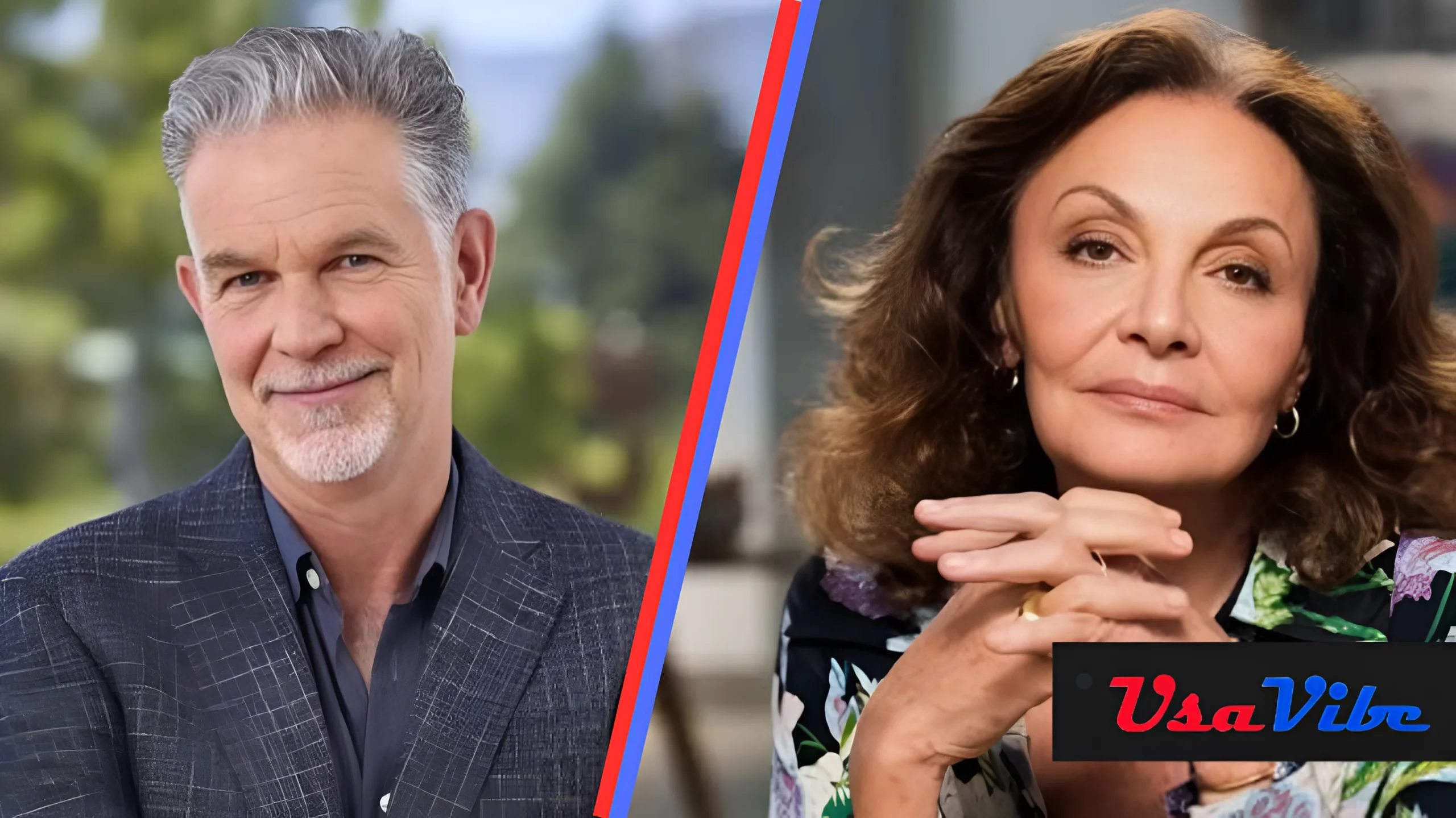
Reed Hastings and Diane von Furstenberg are two prominent figures whose careers have shaped different areas of American business and culture. Reed Hastings co-founded Netflix and helped transform how audiences watch movies and television, while Diane von Furstenberg built an internationally recognized fashion brand around a design that became a symbol of women’s independence.
At first, the two seem to have little in common. Hastings developed his career in software, digital entertainment, and technology entrepreneurship. Von Furstenberg became known for fashion design, brand development, and advocacy for women.
However, Reed Hastings and Diane von Furstenberg share a documented connection through the Giving Pledge, an international philanthropic initiative that encourages wealthy individuals and families to commit the majority of their wealth to charitable causes.
Their participation in the same philanthropic network does not establish that they are relatives, business partners, or personal friends. Instead, it highlights an important area of overlap between two people whose professional achievements developed independently.
Understanding their careers and charitable commitments provides a clearer picture of what connects them and why their names may appear together in discussions of entrepreneurship, leadership, and philanthropy.
Who Are Reed Hastings and Diane von Furstenberg?
Reed Hastings is an American technology entrepreneur born on October 8, 1960, in Boston, Massachusetts. He is best known for co-founding Netflix in 1997 with Marc Randolph and helping the company evolve from a DVD rental service into a global streaming platform.
Diane von Furstenberg is a Belgian-born American fashion designer born on December 31, 1946, in Brussels, Belgium. She established her fashion business in 1972 and became internationally recognized for introducing her signature wrap dress in 1974.
Their careers belong to different industries, but both founded businesses that introduced recognizable products and influenced consumer behavior.
Detail
Reed Hastings
Diane von Furstenberg
Full name
Wilmot Reed Hastings Jr.
Diane Simone Michelle Halfin
Date of birth
October 8, 1960
December 31, 1946
Birthplace
Boston, Massachusetts
Brussels, Belgium
Nationality
American
Belgian-American
Profession
Technology entrepreneur
Fashion designer and entrepreneur
Best known for
Co-founding Netflix
Creating the iconic wrap dress
Founded business
Netflix, with Marc Randolph
Diane von Furstenberg fashion brand
Main industry
Entertainment and technology
Fashion and lifestyle
Philanthropic connection
Giving Pledge signatory since 2012
Giving Pledge signatory with Barry Diller since 2010
Their professional achievements provide the background for understanding their participation in wider business and philanthropic communities.
Reed Hastings: Early Life and Education
Reed Hastings developed an interest in mathematics and technology during his early years.
He attended Bowdoin College in Maine, graduating in 1983 with a bachelor’s degree in mathematics.
After completing his undergraduate education, Hastings joined the Peace Corps and taught mathematics in Swaziland, now known as Eswatini.
His teaching experience became an important part of his background and contributed to his longstanding involvement in education-related philanthropy.
Hastings subsequently studied computer science at Stanford University, earning a master’s degree in 1988.
His education combined mathematical training with software development, providing a foundation for his entrepreneurial career.
During the late 1980s and early 1990s, the software industry was expanding rapidly. Businesses increasingly depended on computer applications, and new opportunities emerged for entrepreneurs developing specialized software tools.
Hastings entered this industry before creating the company that would eventually make him internationally recognized.
Reed Hastings’ First Business: Pure Software
In 1991, Reed Hastings founded Pure Software.
The company developed software tools intended to help programmers identify problems and improve the performance of their applications.
Software development was becoming increasingly complex as companies adopted larger computing systems.
Developers needed tools to identify errors, manage performance, and maintain the reliability of their programs.
Pure Software addressed some of these requirements.
The business grew and eventually became publicly traded.
After mergers and acquisitions, Pure was acquired by Rational Software in 1997.
The experience provided Hastings with an important foundation in entrepreneurship, product development, employee management, and corporate growth.
It also introduced him to challenges involving organizational culture.
As businesses expand, management structures that work effectively for small teams may become less suitable.
Hastings later became especially interested in developing a workplace culture that encouraged responsibility and independent decision-making.
These ideas became influential during his leadership at Netflix.
How Reed Hastings Co-Founded Netflix
Netflix Began as a DVD Rental Service
Reed Hastings and Marc Randolph co-founded Netflix in 1997.
The company began operating as a DVD rental business in 1998.
At the time, customers commonly rented films from physical stores.
Netflix introduced a different approach by allowing customers to order DVDs online and receive them through the mail.
The service removed the need to visit a rental store for every movie.
Netflix subsequently developed a subscription model that allowed customers to receive DVDs as part of an ongoing membership.
The company’s approach offered an alternative to traditional video rental businesses.
Its growth reflected changing consumer expectations about convenience and access to entertainment.
Moving From DVD Rentals to Streaming
One of the most significant developments in Netflix’s history occurred when the company introduced streaming in 2007.
Instead of waiting for physical DVDs to arrive, subscribers could begin watching available content through an internet connection.
The transition required changes in technology, licensing, distribution, and customer experience.
Streaming also depended on improvements in internet speeds and the increasing availability of connected devices.
As these technologies developed, online viewing became more practical for larger audiences.
Netflix expanded its streaming service internationally, eventually reaching audiences across many countries.
The company also moved into producing and distributing original films and television programs.
This transformation made Netflix an important participant in the global entertainment industry.
The Importance of Original Content
Netflix’s expansion into original programming became a major element of its business strategy.
Rather than depending exclusively on content licensed from other entertainment companies, Netflix began investing in its own productions.
Programs such as House of Cards, Orange Is the New Black, and Stranger Things contributed to the company’s recognition.
Original productions allowed Netflix to develop a more distinctive entertainment library.
They also introduced new financial responsibilities, including production spending, creative development, marketing, and international distribution.
The company’s growth encouraged established entertainment organizations to develop competing streaming services.
This competition reshaped the way audiences access television and film content.
Reed Hastings’ Leadership Philosophy
Hastings became well known for his approach to corporate culture.
Netflix developed a management philosophy emphasizing employee responsibility, transparency, and organizational flexibility.
One of the ideas associated with the company was that employees should be trusted to make important decisions within their areas of responsibility.
Freedom and Responsibility
Netflix’s workplace culture emphasized giving employees considerable freedom while expecting high performance.
Instead of relying entirely on detailed rules, the company encouraged employees to use judgment.
This approach was based on the belief that talented professionals can make effective decisions when they understand an organization’s objectives.
However, substantial employee independence also creates challenges.
Workers need clear expectations, suitable information, and effective communication.
A flexible management model may not work equally well in every company or industry.
Building an Adaptable Business
Netflix’s development required the company to adapt repeatedly.
Its transition from DVDs to streaming involved replacing a successful existing business model with one based on emerging technology.
The company later expanded from distributing entertainment to producing original content.
These changes demonstrated the importance of adapting to consumer behavior and technological developments.
Hastings’ leadership became associated with the willingness to reconsider established business practices.
His experience also illustrates that successful business models can become less effective when technology and customer expectations change.
Reed Hastings’ Departure From Netflix Leadership
Reed Hastings served as Netflix’s chief executive for approximately 25 years.
In January 2023, he stepped down from the co-CEO position.
Ted Sarandos and Greg Peters became the company’s co-chief executives, while Hastings moved into the executive chairman role.
In April 2025, Hastings transitioned to the non-executive chairman position.
Another important leadership change occurred in 2026.
Netflix announced that Hastings would not seek re-election to the board at its June annual meeting.
His board service concluded in June 2026, and Jay Hoag became chairman.
Therefore, as of October 2026, Reed Hastings is no longer Netflix’s CEO or board chairman.
His departure ended nearly three decades of direct involvement in the company’s governance.
Hastings has continued pursuing philanthropic interests and other projects, including activities related to education, artificial intelligence, and business investment.
His role in Netflix’s development remains a defining part of his professional legacy.
Diane von Furstenberg: Early Life and Background
Diane von Furstenberg was born Diane Simone Michelle Halfin on December 31, 1946, in Brussels, Belgium.
She grew up in a European environment that exposed her to different cultures and ideas.
Her mother, Liliane Nahmias, survived imprisonment in a Nazi concentration camp during World War II.
Von Furstenberg has spoken publicly about how her mother’s experiences and emphasis on strength influenced her understanding of independence.
She later studied economics at the University of Geneva.
During her time in Europe, she developed an interest in fashion and design.
In 1969, she married Prince Egon von Furstenberg, becoming known professionally by the surname that she continued using after their separation.
Although the marriage contributed to her public recognition, her subsequent professional reputation developed through her work as a fashion designer and entrepreneur.
She eventually moved to New York, where she began developing her clothing business.
How Diane von Furstenberg Built Her Fashion Brand
Establishing Her Business
Diane von Furstenberg founded her fashion brand in 1972.
Her early designs emphasized clothing that women could wear comfortably while maintaining an elegant appearance.
During the 1970s, women’s roles in professional and social life were changing.
Fashion increasingly reflected a demand for clothing that combined practicality with individual expression.
Von Furstenberg recognized this opportunity.
Her designs used fabrics and silhouettes intended to support movement and comfort without sacrificing style.
The approach helped distinguish her brand within the American fashion market.
The Creation of the Wrap Dress
In 1974, Diane von Furstenberg introduced the wrap dress that became her signature design.
The dress featured a simple construction that wrapped around the body and fastened at the waist.
Its design allowed women to adjust the fit without complicated closures.
The garment combined comfort, versatility, and a distinctive silhouette.
Women could wear it in different settings, including professional environments and social occasions.
The wrap dress became closely associated with the changing expectations of women during the 1970s.
Its significance extended beyond commercial popularity.
For many consumers, the garment represented confidence, practicality, and the ability to express personal style.
Why the Wrap Dress Became Popular
Several characteristics contributed to the wrap dress’s appeal.
First, its adjustable design made it suitable for different body shapes.
Second, the garment could be styled for various occasions.
Third, its construction made it relatively convenient to wear.
The dress also became recognizable through bold colors, prints, and fabric choices.
By 1976, more than one million wrap dresses had been sold.
Its popularity helped establish von Furstenberg as a major name in American fashion.
The design remains associated with her brand decades after its introduction.
Diane von Furstenberg’s Influence on Fashion
Fashion trends frequently change, but certain designs become influential because they address enduring consumer needs.
Von Furstenberg’s wrap dress demonstrated the value of combining visual appeal with functionality.
The garment became an example of how clothing could support everyday activities while maintaining a distinctive appearance.
Practicality and Personal Expression
Von Furstenberg emphasized the idea that clothing should help women feel comfortable and confident.
Her approach differed from fashion concepts that prioritized elaborate construction or restrictive silhouettes.
The wrap dress allowed women to achieve a polished appearance through a relatively simple design.
Its versatility contributed to its popularity across different generations.
Building a Recognizable Brand Identity
The Diane von Furstenberg brand became associated with colorful prints, distinctive silhouettes, and an emphasis on independence.
A recognizable identity helped the company maintain a connection with consumers.
Fashion businesses depend on more than individual products.
They must communicate a consistent creative direction while responding to changing customer expectations.
Von Furstenberg’s brand demonstrated how a signature product can become the foundation of a broader fashion business.
Continued Development of the DVF Brand
The DVF brand has experienced periods of expansion, restructuring, and creative change.
Like other fashion companies, it has responded to changes in retail shopping, consumer preferences, and international competition.
The wrap dress remains central to its identity.
In May 2026, designer Henry Zankov was appointed artistic director of Diane von Furstenberg.
His appointment reflected the brand’s continued development under a new creative generation.
Von Furstenberg remains closely associated with the company’s identity and founding philosophy, even as creative and operational responsibilities evolve.
Diane von Furstenberg’s Leadership in the Fashion Industry
Beyond designing clothing, von Furstenberg has played a prominent role in fashion industry organizations.
She served as president of the Council of Fashion Designers of America, commonly known as the CFDA, from 2006 to 2019.
The organization supports American fashion designers and promotes the development of the fashion industry.
Her work involved advocating for designers, supporting creative talent, and participating in discussions about the industry’s future.
This role expanded her influence beyond her own brand.
It also demonstrated that fashion leadership can involve industry representation, professional development, and efforts to support emerging designers.
In 2019, she was inducted into the National Women’s Hall of Fame.
Her recognition reflected her contributions to fashion, entrepreneurship, and women’s advancement.
The Real Connection Between Reed Hastings and Diane von Furstenberg
The most important documented connection between Reed Hastings and Diane von Furstenberg is their participation in the Giving Pledge.
The Giving Pledge was established in 2010 through the efforts of Warren Buffett, Bill Gates, and Melinda French Gates.
Its purpose is to encourage wealthy individuals and families to commit the majority of their wealth to charitable causes.
The initiative brings together people from different industries, including technology, finance, entertainment, retail, and fashion.
Participation represents a public charitable commitment rather than membership in a conventional business corporation.
Diane von Furstenberg Joined in 2010
Diane von Furstenberg and her husband, media executive Barry Diller, became Giving Pledge signatories in 2010.
Their involvement reflected their commitment to charitable giving and social causes.
Diller and von Furstenberg have supported philanthropic activities through their family foundation.
Their interests have included women’s leadership, community development, and public projects.
Reed Hastings Joined in 2012
Reed Hastings and his wife, Patty Quillin, joined the Giving Pledge in 2012.
Their commitment reflected their interest in using personal wealth to support charitable initiatives.
Hastings has devoted considerable attention to education-related causes.
His philanthropic activities have included support for educational institutions, learning opportunities, and organizations involved in educational improvement.
What Their Shared Membership Actually Means
Both individuals are part of the same international philanthropic community.
This is a genuine and verifiable institutional connection.
However, participation in the Giving Pledge does not establish that Hastings and von Furstenberg have collaborated on a specific charitable project.
It also does not prove that they are close personal friends or regularly work together.
Their shared membership is best understood as an overlap in philanthropic networks rather than evidence of a direct business relationship.
What Is the Giving Pledge and Why Does It Matter?
The Giving Pledge encourages people with substantial financial resources to make public commitments to philanthropy.
Participants generally pledge to contribute more than half of their wealth to charitable purposes during their lifetimes or through their estates.
The initiative is intended to encourage long-term giving and discussions about the responsibilities associated with wealth.
A Commitment Rather Than a Centralized Charity
The Giving Pledge is not a single charitable fund that receives and distributes every signatory’s promised donations.
Participants generally determine their own philanthropic priorities.
Some focus on education, while others support healthcare, poverty reduction, scientific research, environmental protection, or community development.
This distinction matters because two signatories may participate in the same initiative without funding the same organizations.
Opportunities for Learning and Collaboration
The Giving Pledge provides opportunities for participants to exchange ideas about philanthropy.
Such discussions may involve evaluating charitable programs, understanding social challenges, and considering how donations can create meaningful results.
However, membership alone does not establish that any two individuals attended the same gathering or jointly funded a project.
The connection between Hastings and von Furstenberg should therefore be described accurately and without exaggeration.
Why Their Participation Is Notable
Hastings and von Furstenberg earned public recognition through different business sectors.
Their participation in the Giving Pledge illustrates how philanthropy can bring individuals from diverse professional backgrounds into a shared institutional network.
It also highlights their respective interests in supporting causes beyond their commercial activities.
Reed Hastings’ Philanthropic Work
Reed Hastings has been particularly active in educational philanthropy.
His interest in education developed partly through his teaching experience in the Peace Corps.
He later participated in education policy discussions and served on the California State Board of Education from 2000 to 2004.
Support for Educational Institutions
Hastings and Patty Quillin have supported educational organizations and institutions.
In 2020, they announced a combined $120 million donation to Morehouse College, Spelman College, and the United Negro College Fund.
The funding was intended to support scholarships and educational opportunities.
The donation represented an important part of their philanthropic activity.
Artificial Intelligence and Education
In March 2025, Hastings donated $50 million to Bowdoin College to establish the Hastings Initiative for AI and Humanity.
The initiative was designed to support the study of artificial intelligence and its implications for human society.
This commitment reflected his interest in how emerging technologies may influence education and broader social development.
It also connected his technical background with his philanthropic priorities.
Education as a Long-Term Priority
Hastings’ charitable activities demonstrate a recurring focus on learning and educational opportunity.
Education initiatives can involve different approaches, including institutional funding, scholarships, policy advocacy, and support for teaching.
The effectiveness of any individual program depends on its implementation, objectives, and measurable outcomes.
His involvement should be understood within this broader context rather than assuming that every educational initiative produces identical results.
Diane von Furstenberg’s Philanthropic Work
Diane von Furstenberg’s charitable activities have emphasized women’s leadership, empowerment, and community support.
She established the DVF Awards through the Diller-von Furstenberg Family Foundation in 2010.
The awards recognize women who demonstrate leadership and contribute to improving the lives of others.
The DVF Awards
The DVF Awards honor women whose work addresses important social challenges.
Recipients have included individuals involved in human rights, education, community development, and other areas of public service.
The awards provide recognition and financial support intended to help recipients continue their work.
This initiative reflects von Furstenberg’s longstanding interest in encouraging women to exercise leadership and independence.
Supporting Women’s Leadership
Von Furstenberg has also been involved with organizations supporting women’s participation in public life.
Her work with Vital Voices, an organization focused on women’s leadership, reflects these interests.
Women working in different countries may face distinct social, economic, and political challenges.
Programs supporting leadership can provide resources, professional networks, and opportunities to strengthen existing initiatives.
Von Furstenberg’s philanthropic activities have focused on recognizing and encouraging such efforts.
Community and Cultural Projects
The Diller-von Furstenberg Family Foundation has also supported public and cultural projects.
These activities demonstrate that the foundation’s interests extend beyond the fashion industry.
Philanthropic support can contribute to public spaces, cultural institutions, and community programs.
However, the specific responsibilities and funding arrangements associated with individual projects should be distinguished from von Furstenberg’s personal activities.
Comparing Their Business Leadership Styles
Reed Hastings and Diane von Furstenberg developed their companies using different forms of expertise.
Hastings relied heavily on software development, business strategy, and organizational management.
Von Furstenberg built a fashion brand through design, product identity, and an understanding of consumer preferences.
Innovation Through Technology
Hastings’ career demonstrates how technology can change the delivery of existing services.
Netflix did not invent movies or television programs.
Instead, it developed new methods for helping customers access entertainment.
The company’s transition from mailed DVDs to streaming required substantial technological and strategic changes.
Its business model developed alongside improvements in internet infrastructure and connected devices.
Innovation Through Product Design
Von Furstenberg’s career demonstrates how an individual product can influence an established industry.
The wrap dress did not require advanced digital technology.
Its impact came from combining a recognizable design with practical functionality.
The garment addressed consumer preferences involving comfort, versatility, and personal expression.
This form of innovation depended on understanding how people wanted to use a product in everyday life.
Building Long-Term Brand Recognition
Both Netflix and DVF developed recognizable brand identities.
Netflix became associated with convenient access to entertainment and a growing library of programming.
DVF became strongly connected with the wrap dress, colorful prints, and women’s confidence.
Their experiences illustrate how brands can develop lasting recognition when products communicate a clear purpose.
Nevertheless, both companies have faced changing market conditions and the need to adapt.
Brand recognition alone does not eliminate competitive or financial challenges.
How Their Careers Reflect Changes in Consumer Culture
The achievements of Hastings and von Furstenberg can also be examined through changes in consumer expectations.
During the 1970s, von Furstenberg introduced clothing that responded to women’s evolving professional and personal lives.
The wrap dress appealed to consumers seeking versatile clothing that combined elegance with practicality.
Decades later, Netflix responded to growing demand for convenient entertainment access.
Streaming allowed viewers to watch available programming without depending entirely on traditional television schedules.
Although clothing and entertainment are different products, both examples involve identifying friction in everyday consumer experiences.
For von Furstenberg, the opportunity involved making fashionable clothing easier to wear.
For Hastings, the opportunity involved making entertainment easier to access.
This comparison does not establish that either entrepreneur influenced the other’s business decisions.
It simply illustrates how consumer-focused products can become important within different industries.
Are Reed Hastings and Diane von Furstenberg Friends or Business Partners?
There is no sufficiently documented evidence establishing that Reed Hastings and Diane von Furstenberg are close personal friends or direct business partners.
Their participation in the Giving Pledge places them within the same philanthropic network.
However, belonging to the same organization does not automatically demonstrate a personal relationship.
Similarly, their professional activities do not establish a joint business venture.
Hastings’ career centered on Netflix and technology entrepreneurship.
Von Furstenberg’s commercial achievements developed through fashion design and the DVF brand.
Their respective business histories do not identify a company that they jointly founded or operated.
It is possible for prominent entrepreneurs to participate in overlapping social or professional circles without maintaining a formal partnership.
Any stronger claim would require reliable documentation.
Are Reed Hastings and Diane von Furstenberg Related?
No credible public information establishes a family relationship between Reed Hastings and Diane von Furstenberg.
Hastings has been married to Patty Quillin, with whom he has participated in charitable giving.
Von Furstenberg is married to Barry Diller, the American media executive.
The couple married in 2001.
Their names appear together on the Giving Pledge’s list of signatories.
These documented family relationships provide useful context when distinguishing philanthropic partnerships from unverified personal connections.
There is no factual basis for describing Hastings and von Furstenberg as relatives or romantic partners.
What Entrepreneurs Can Learn From Their Careers
Although Hastings and von Furstenberg built companies in different industries, their experiences provide several useful business lessons.
Understanding consumer needs is essential. Netflix developed services around convenience and entertainment access, while DVF emphasized comfortable and recognizable clothing.
A distinctive product can support long-term recognition. Netflix’s subscription and streaming models helped differentiate its service. The wrap dress became an enduring part of DVF’s identity.
Businesses must adapt as markets change. Netflix moved beyond DVD rentals, while the DVF brand has evolved through different retail and creative environments.
Leadership responsibilities change over time. Hastings eventually transferred Netflix’s executive and board leadership to successors. Von Furstenberg’s brand has also developed through changing creative leadership.
Professional achievement can create opportunities for philanthropy. Both individuals have used resources associated with their business success to support charitable causes.
These lessons are not guarantees of commercial success. Business outcomes depend on market conditions, competition, execution, financing, and other factors.
However, their careers demonstrate the importance of combining a clear vision with the ability to respond to changing circumstances.
Frequently Asked Questions
Who is Reed Hastings?
Reed Hastings is an American entrepreneur and philanthropist who co-founded Netflix with Marc Randolph in 1997. He served as the company’s CEO for approximately 25 years and left its board in June 2026.
Who is Diane von Furstenberg?
Diane von Furstenberg is a Belgian-American fashion designer and entrepreneur known for establishing the DVF brand and introducing her signature wrap dress in 1974.
What is the connection between Reed Hastings and Diane von Furstenberg?
Both are Giving Pledge signatories. Diane von Furstenberg joined with Barry Diller in 2010, while Reed Hastings joined with Patty Quillin in 2012. Their participation establishes a shared philanthropic affiliation.
Did Reed Hastings and Diane von Furstenberg ever work together?
No verified public evidence establishes that they worked together on a specific business venture or charitable project.
Are Reed Hastings and Diane von Furstenberg related?
No documented family relationship exists between them.
Is Reed Hastings still the CEO of Netflix?
No. Hastings stepped down as co-CEO in January 2023. He subsequently served in board leadership positions before leaving the Netflix board in June 2026.
What is Diane von Furstenberg famous for?
She is best known for creating the wrap dress in 1974. The design became a significant part of American fashion history and remains associated with her brand.
What charitable causes does Reed Hastings support?
Hastings is particularly associated with educational philanthropy. His charitable activities have included support for scholarships, educational institutions, and research involving artificial intelligence and society.
What philanthropic work does Diane von Furstenberg do?
Von Furstenberg supports women’s leadership through initiatives including the DVF Awards and her involvement with organizations focused on women’s advancement.
What is the Giving Pledge?
The Giving Pledge is a philanthropic initiative encouraging wealthy individuals and families to commit the majority of their wealth to charitable causes during their lifetimes or through their estates.
Conclusion
Reed Hastings and Diane von Furstenberg built influential careers in two different industries.
Hastings helped establish Netflix and guided its transformation from a DVD rental business into an international streaming service. His professional achievements made him a prominent figure in technology and entertainment, while his later activities have included substantial educational philanthropy.
Von Furstenberg became an influential fashion entrepreneur through her signature wrap dress and the development of the DVF brand. Her career also extended into industry leadership and charitable initiatives supporting women.
Their clearest documented connection is their shared participation in the Giving Pledge, although they joined the initiative separately and have pursued different philanthropic priorities.
There is no verified evidence establishing that they are relatives, business partners, or close personal friends.
For readers researching Reed Hastings and Diane von Furstenberg, the most meaningful connection is how two successful entrepreneurs from different industries became part of a broader international philanthropic community.
Their careers demonstrate that business achievement can take many forms, while their charitable commitments illustrate how individuals with different professional backgrounds may participate in efforts directed toward social improvement.