Jim Taiclet and Henrik Fisker: Careers and Connection
October 20, 2026
0
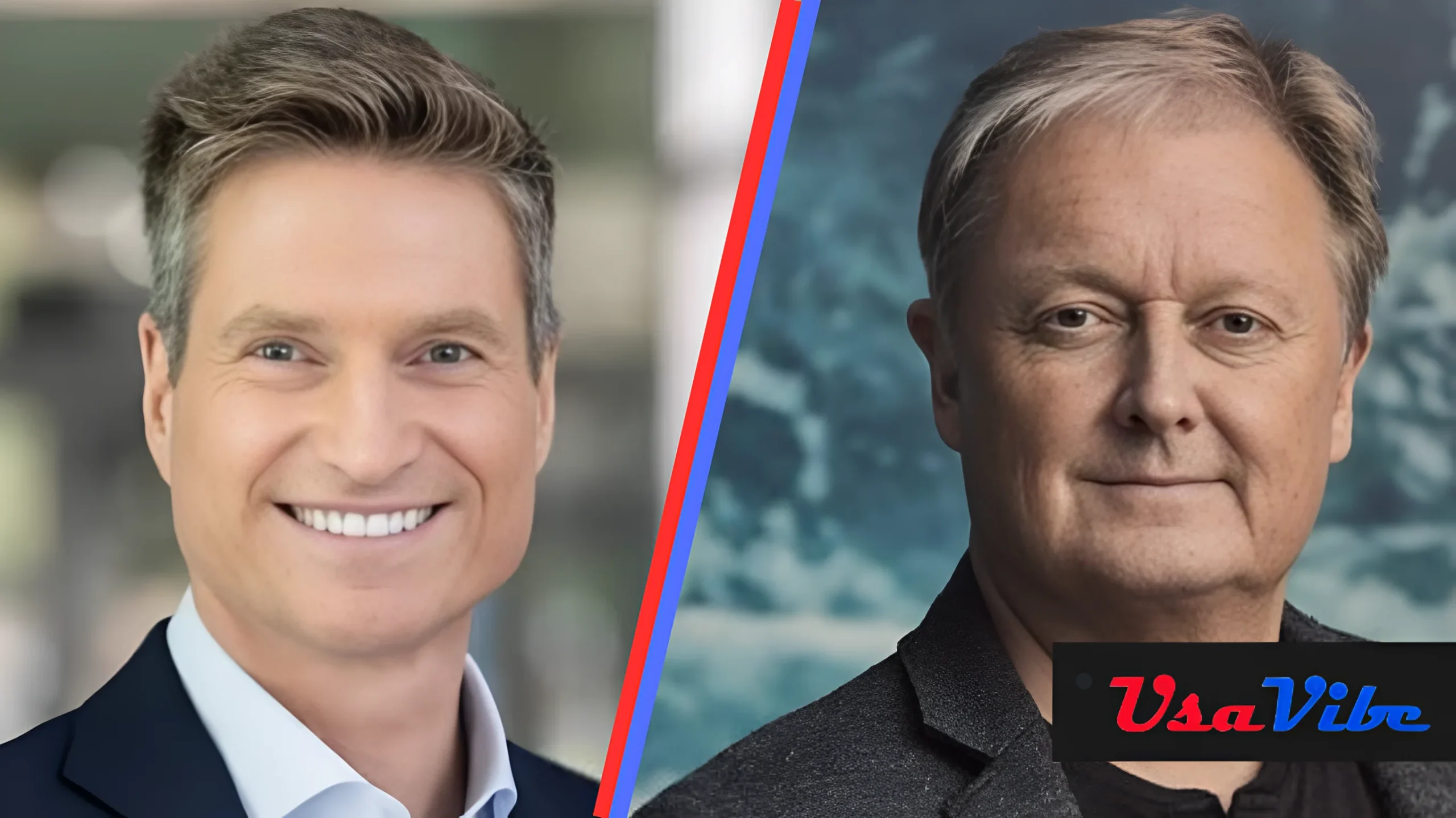
Jim Taiclet and Henrik Fisker are two recognized figures in the worlds of engineering, technology, and business leadership. Jim Taiclet is an American executive who serves as chairman,
Jim Taiclet and Henrik Fisker are two recognized figures in the worlds of engineering, technology, and business leadership. Jim Taiclet is an American executive who serves as chairman, president, and chief executive officer of Lockheed Martin, one of the world’s major aerospace and defense companies. Henrik Fisker is a Danish automotive designer and entrepreneur known for designing luxury vehicles and founding electric vehicle businesses.
Although both have worked in industries involving advanced engineering and technological innovation, their careers have followed different paths. Taiclet developed his professional reputation through military aviation, telecommunications infrastructure, and corporate management. Fisker became internationally recognized through automotive design, luxury vehicles, and attempts to build competitive electric vehicle companies.
People searching for Jim Taiclet and Henrik Fisker may want to understand their professional backgrounds, major accomplishments, business strategies, or whether they have worked together.
There is currently no reliable public evidence establishing a direct personal, family, or business partnership between them.
However, comparing their careers reveals important differences in how established aerospace corporations and emerging automotive businesses approach innovation, financial risk, manufacturing, and leadership.
Their stories also illustrate that experience in engineering and technology does not necessarily lead to identical business outcomes.
Who Are Jim Taiclet and Henrik Fisker?
Jim Taiclet, whose full name is James Donald Taiclet Jr., is an American business executive and former United States Air Force pilot.
He became president and CEO of Lockheed Martin in June 2020 and chairman in March 2021.
Before joining the company’s executive leadership, Taiclet served as chairman and CEO of American Tower Corporation, where he oversaw significant expansion in telecommunications infrastructure.
Henrik Fisker is a Danish-born automotive designer whose work has included vehicles for BMW and Aston Martin.
He subsequently established automotive businesses under his own name, including Fisker Automotive and Fisker Inc.
His most recognizable designs include the BMW Z8, Aston Martin V8 Vantage, Fisker Karma, and Fisker Ocean.
Their professional backgrounds can be summarized as follows.
Detail
Jim Taiclet
Henrik Fisker
Full name
James Donald Taiclet Jr.
Henrik Fisker
Born
May 13, 1960
August 10, 1963
Nationality
American
Danish
Profession
Business executive
Automotive designer and entrepreneur
Best known for
Leading Lockheed Martin and American Tower
Designing luxury cars and founding Fisker businesses
Main industries
Aerospace, defense, telecommunications
Automotive design and electric vehicles
Educational background
U.S. Air Force Academy and Princeton University
ArtCenter College of Design, Switzerland
Major organizations
Lockheed Martin, American Tower
BMW, Aston Martin, Fisker Automotive, Fisker Inc.
Current professional position
Chairman, president, and CEO of Lockheed Martin
Automotive designer and independent adviser
Both have extensive experience in technical industries, but their responsibilities and organizational environments differ substantially.
Jim Taiclet: Early Life and Education
Jim Taiclet was born on May 13, 1960, in Pittsburgh, Pennsylvania.
His professional development began in aviation and military service.
He attended the United States Air Force Academy, where he earned bachelor’s degrees in engineering and international relations.
This educational combination provided technical training alongside an understanding of international affairs and organizational leadership.
He later completed a master’s degree in public affairs at Princeton University.
Taiclet’s academic background became relevant to his subsequent responsibilities in aerospace, telecommunications, and defense.
Large engineering organizations operate within environments shaped by technological requirements, government regulations, international relationships, and financial considerations.
Experience in both engineering and public affairs can provide useful preparation for such responsibilities.
Taiclet’s early career also included extensive operational experience as a military pilot.
Jim Taiclet’s Career in the United States Air Force
Before entering senior corporate management, Jim Taiclet served as an officer and pilot in the United States Air Force.
He accumulated more than 5,000 flying hours, primarily operating the Lockheed C-141B Starlifter.
The C-141B was a military transport aircraft used to move personnel, equipment, and supplies.
Operating such an aircraft required technical knowledge, procedural discipline, teamwork, and the ability to respond to changing conditions.
Taiclet served as an aircraft commander and instructor pilot.
His assignments also included work associated with the Joint Staff and Air Staff at the Pentagon.
During the Gulf War period, he flew transport missions supporting Operation Desert Shield.
How Military Aviation Influenced His Career
Military aviation involves responsibilities that extend beyond operating an aircraft.
Pilots must understand safety procedures, coordinate with other personnel, and make decisions within structured operational environments.
These experiences can provide preparation for leadership roles involving complex systems.
Taiclet’s later career in aerospace management placed him within an industry he already understood from an operational perspective.
His knowledge of aircraft and military requirements became particularly relevant after he joined Lockheed Martin.
However, military service and corporate management involve different responsibilities.
The relationship between these experiences is best understood as a transfer of useful skills rather than an assumption that success in one automatically guarantees success in the other.
Jim Taiclet’s Career Before Lockheed Martin
Experience at Pratt & Whitney
Following his military career, Taiclet worked in the aerospace industry.
He held a senior position at Pratt & Whitney, a company associated with aircraft engines and propulsion systems.
His responsibilities included aircraft engine services, maintenance, and related operations.
This experience introduced him to the commercial and industrial requirements of aerospace manufacturing.
Aircraft engine businesses must maintain strict technical standards while serving customers with complex operational needs.
They also operate in markets where long product lifecycles and maintenance requirements create ongoing business relationships.
Leadership at AlliedSignal Aerospace Services
Taiclet subsequently served as president of AlliedSignal Aerospace Services.
The organization provided aviation-related services involving aircraft engines, components, and technical support.
His leadership responsibilities included managing business operations rather than focusing exclusively on technical engineering.
The experience expanded his familiarity with corporate management, industrial customers, and service-based business models.
It also contributed to his preparation for leading larger organizations.
Jim Taiclet and American Tower Corporation
One of the most important chapters of Jim Taiclet’s career occurred at American Tower Corporation.
The company owns and operates communications infrastructure, including towers used by wireless network operators.
Taiclet joined American Tower in 2001 and became CEO in 2003.
He later served as chairman and CEO.
Expanding Communications Infrastructure
During Taiclet’s leadership, American Tower expanded significantly beyond its original American market.
The company developed operations across multiple international regions.
Communications towers provide infrastructure that wireless service providers use to transmit signals.
Unlike companies that primarily sell consumer devices, tower operators focus on the physical infrastructure needed to support communications networks.
This business model can generate recurring revenue through agreements with telecommunications companies.
As mobile technology expanded, demand for wireless communications infrastructure became increasingly important.
American Tower participated in that development by acquiring, constructing, and operating communications sites.
Growth Under Taiclet’s Leadership
During his tenure, American Tower developed into a large international communications infrastructure business.
Its market capitalization increased from approximately $2 billion to more than $100 billion during the period described in Taiclet’s corporate biography.
Market capitalization represents the market value of a publicly traded company’s outstanding shares.
It is not the same as annual revenue, profit, or the total value of its physical assets.
The increase reflected a combination of company expansion, investor expectations, market conditions, and business performance.
Taiclet’s experience at American Tower established his reputation as an executive capable of managing international infrastructure operations.
Lessons From the Telecommunications Industry
Telecommunications infrastructure businesses require substantial capital investment.
Constructing and maintaining communications networks involves financial planning, regulation, customer relationships, and long-term asset management.
These responsibilities share some characteristics with aerospace and defense businesses.
Both sectors require specialized technology and infrastructure that may remain operational for many years.
Taiclet’s work at American Tower therefore provided experience that could be applied to managing another large engineering organization.
Jim Taiclet Becomes CEO of Lockheed Martin
Jim Taiclet joined Lockheed Martin’s board of directors in January 2018.
He became the company’s president and chief executive officer in June 2020.
In March 2021, he also became chairman of the board.
Lockheed Martin operates across several major aerospace and defense sectors.
Its activities include military aircraft, missile systems, space technologies, and advanced electronic systems.
The company’s customers include the United States government and international defense organizations.
Lockheed Martin’s Major Business Areas
Lockheed Martin operates through businesses that develop and support specialized technologies.
Its aeronautics activities include aircraft such as the F-35 Lightning II.
Its missiles and fire control operations produce systems designed for military and defense applications.
The rotary and mission systems business develops technologies involving helicopters, sensors, and other integrated systems.
Its space operations include satellites and technologies used in space-related missions.
These businesses involve long development cycles, extensive technical requirements, and substantial government oversight.
Taiclet’s Technology Strategy
Taiclet has emphasized a corporate strategy that Lockheed Martin describes as its vision for 21st Century Security.
The approach focuses on integrating digital technologies with existing aerospace and defense capabilities.
Important areas include artificial intelligence, autonomy, advanced communications, and systems that allow different technologies to exchange information.
Modern defense systems increasingly depend on the ability to coordinate information across aircraft, satellites, sensors, and other platforms.
A significant challenge is ensuring that equipment developed by different organizations can communicate reliably.
Taiclet’s strategy emphasizes integration and cooperation across these technological environments.
Modernizing Defense Manufacturing
Under Taiclet’s leadership, Lockheed Martin has pursued initiatives involving digital engineering and manufacturing modernization.
These activities include efforts to strengthen supply chains and increase production capabilities.
In October 2026, the company expanded its collaboration with manufacturing technology startup Hadrian.
The cooperation involved advanced manufacturing capabilities supporting missile production.
The initiative reflected a broader interest in combining established aerospace manufacturing experience with newer industrial technologies.
Such collaborations may help companies respond to growing production requirements, although their long-term results depend on implementation and operational performance.
Henrik Fisker: Early Life and Interest in Automotive Design
Henrik Fisker was born on August 10, 1963, in Denmark.
He developed an interest in automotive design and pursued education focused on transportation styling.
Fisker attended the ArtCenter College of Design in Switzerland.
The institution provided training in industrial and automotive design.
Automotive design involves more than determining how a vehicle looks.
Designers must consider proportions, aerodynamics, passenger space, visibility, materials, manufacturing requirements, and the relationship between a vehicle’s appearance and its intended market.
Fisker developed his career within this specialized field.
His early professional work included positions at BMW, where he contributed to the development of luxury and performance vehicles.
Henrik Fisker’s Career at BMW
Henrik Fisker began working for BMW in 1989.
His design experience included projects involving advanced concepts and production vehicles.
He became particularly recognized for his involvement in the BMW Z8.
The BMW Z8
The BMW Z8 was a luxury roadster introduced around the turn of the millennium.
Its appearance drew inspiration from classic BMW sports cars while incorporating modern design elements.
The vehicle became known for its distinctive proportions, long hood, and elegant styling.
Fisker’s involvement in the project contributed to his reputation as an automotive designer capable of combining contemporary technology with recognizable design heritage.
The Z8 also attracted attention through its appearance in the James Bond film The World Is Not Enough.
Although a movie appearance can increase a vehicle’s visibility, the car’s design reputation developed through its distinctive styling and limited production.
Design and Brand Identity
Luxury automotive companies often use design to distinguish their vehicles from competing products.
A recognizable appearance can communicate performance, exclusivity, or a connection with a manufacturer’s history.
Fisker’s work at BMW demonstrated an understanding of these principles.
His subsequent career continued emphasizing strong visual identity.
Henrik Fisker’s Work at Aston Martin
After BMW, Fisker held senior design roles within Ford Motor Company’s organization, including responsibilities associated with Aston Martin.
His work involved the development of important luxury sports cars.
Aston Martin DB9
The Aston Martin DB9 became one of the brand’s notable models of the 2000s.
Its design combined traditional grand touring proportions with a modern appearance.
Fisker was responsible for the production launch design of the DB9.
The car helped establish a recognizable styling direction for Aston Martin during that period.
Aston Martin V8 Vantage
Fisker also designed the Aston Martin V8 Vantage.
The V8 Vantage became known for its compact sports car proportions and distinctive appearance.
Its design balanced performance-oriented styling with the elegance associated with the Aston Martin brand.
These projects contributed significantly to Fisker’s international reputation.
They also provided experience developing vehicles for manufacturers with established engineering systems and production capabilities.
That background later influenced his decision to establish an automotive company under his own name.
Henrik Fisker and the Creation of Fisker Automotive
In 2007, Henrik Fisker co-founded Fisker Automotive.
The company aimed to develop premium vehicles combining performance, attractive design, and electrified propulsion.
During this period, environmental concerns, fuel prices, and developments in battery technology were encouraging automakers to explore alternatives to conventional gasoline-powered vehicles.
Fisker Automotive entered this emerging market with an emphasis on luxury design.
The Fisker Karma
The company’s most recognizable vehicle was the Fisker Karma.
The Karma was a luxury sports sedan using an extended-range electric powertrain.
Unlike a purely battery-electric vehicle, an extended-range electric vehicle uses an internal combustion engine as part of a system intended to support longer-distance operation.
The Karma combined electric propulsion with a distinctive exterior design.
Its production began in 2011.
The vehicle attracted attention because it offered an alternative approach to luxury electrified transportation.
However, developing an attractive car did not eliminate the difficulties of establishing a financially sustainable automotive manufacturer.
Challenges Facing Fisker Automotive
Fisker Automotive experienced major operational and financial problems.
These included production difficulties, battery-related issues, and disruptions involving important suppliers.
The company struggled to maintain the financing and production capabilities required to continue operating.
Fisker Automotive filed for bankruptcy protection in 2013.
Its assets were subsequently acquired by investors who developed a separate automotive business.
This development illustrates an important distinction between designing a vehicle and building a sustainable automotive company.
Vehicle manufacturers need reliable supply chains, manufacturing facilities, financing, customer service, and long-term support systems.
An appealing product concept alone cannot guarantee commercial success.
Fisker Inc. and the Return to Electric Vehicles
Henrik Fisker later established another automotive business, Fisker Inc., in 2016.
The company was founded with his wife, Geeta Gupta-Fisker.
Its goal was to develop electric vehicles with a focus on design, sustainability, and new manufacturing approaches.
Unlike Fisker Automotive, which initially developed an extended-range electric sedan, Fisker Inc. focused on fully electric vehicles.
The Fisker Ocean SUV
The company’s primary production vehicle was the Fisker Ocean.
The Ocean was an electric sport utility vehicle designed to compete in the growing EV market.
Its design incorporated a modern exterior, technology-oriented interior, and sustainability-related features.
The company promoted an approach that relied on manufacturing partnerships rather than developing a fully independent vehicle production infrastructure.
Fisker selected Magna Steyr to manufacture the Ocean in Austria.
Production began in November 2022.
Customer deliveries followed in 2023.
Why Fisker Used Contract Manufacturing
Building an automotive factory requires enormous financial investment.
Manufacturers must acquire equipment, develop production processes, recruit skilled employees, and establish quality management systems.
Contract manufacturing provides an alternative.
Instead of owning every factory involved in production, a company can work with an established manufacturer to build vehicles.
This arrangement may reduce some initial infrastructure requirements.
However, it does not eliminate responsibility for vehicle engineering, customer support, software maintenance, warranties, or financial management.
Fisker Inc.’s experience demonstrated that outsourcing manufacturing does not automatically solve the challenges of operating an automotive company.
What Happened to Fisker Inc.?
Despite considerable publicity surrounding the Fisker Ocean, Fisker Inc. experienced major financial and operational difficulties.
The company encountered problems involving vehicle software, customer service, repair support, and its financial position.
These challenges affected its ability to expand operations and maintain customer confidence.
Financial Difficulties in 2024
During 2024, Fisker Inc. attempted to reduce expenses and secure additional financing.
The company also explored strategic relationships and changed aspects of its sales approach.
However, these measures did not prevent its financial condition from deteriorating.
Fisker and certain affiliated businesses filed for Chapter 11 bankruptcy protection in June 2024.
The filing followed difficulties raising sufficient capital and maintaining operations.
Bankruptcy and Liquidation
On October 16, 2024, the bankruptcy court confirmed Fisker Inc.’s Chapter 11 liquidation plan.
The plan became effective on October 17, 2024.
This distinction is important because the company did not simply enter a temporary restructuring process and resume normal vehicle production.
Its bankruptcy proceedings involved liquidation of assets and arrangements concerning remaining vehicles and obligations.
The company was no longer operating as an ordinary, growing electric vehicle manufacturer.
What Happened to Fisker Ocean Owners?
The bankruptcy created concerns for existing Fisker Ocean owners.
Electric vehicles require continuing access to software, maintenance information, replacement components, and technical support.
These needs remain important even after the manufacturer stops producing new vehicles.
During the liquidation process, arrangements were developed to address aspects of ongoing technical support.
However, ownership of a vehicle from a bankrupt manufacturer can involve greater uncertainty than ownership of a model supported by an established automaker.
Customers may face difficulties obtaining parts, arranging specialized repairs, or receiving software updates.
The Fisker Ocean’s history therefore demonstrates the importance of considering long-term manufacturer support when purchasing vehicles.
What Is Henrik Fisker Doing in 2026?
Following the failure of Fisker Inc., Henrik Fisker’s public professional activities have been associated with automotive design and advisory work.
His professional profile describes interests in design direction, brand development, and product strategy.
These activities are different from leading a large automotive manufacturer.
As of October 2026, there is no verified basis for describing him as the chief executive of an actively producing Fisker electric vehicle company.
This distinction is particularly important because older online profiles may still identify him as CEO of Fisker Inc. without acknowledging the company’s bankruptcy.
Fisker remains associated with the vehicles he designed and the businesses he founded, but his current professional position should be distinguished from those earlier executive responsibilities.
Are Jim Taiclet and Henrik Fisker Connected?
The primary question surrounding Jim Taiclet and Henrik Fisker is whether they share a direct professional or personal relationship.
Available reliable information does not establish such a relationship.
There is no verified evidence that they founded a business together, served on the same corporate board, or jointly developed a commercial project.
Taiclet’s professional history includes the United States Air Force, Pratt & Whitney, AlliedSignal Aerospace Services, American Tower, and Lockheed Martin.
Fisker’s professional history includes BMW, Aston Martin, Fisker Automotive, and Fisker Inc.
Their careers both involve complex engineering industries, but this similarity should not be confused with a documented partnership.
Did Jim Taiclet Work With Fisker?
There is no verified public record establishing that Taiclet held a leadership position at Fisker Automotive or Fisker Inc.
Similarly, no confirmed corporate announcement identifies him as a business partner in Fisker’s automotive ventures.
Did Henrik Fisker Work for Lockheed Martin?
Fisker’s documented professional background is primarily associated with automotive design and electric vehicle entrepreneurship.
There is no verified evidence establishing that he served as an executive or board member of Lockheed Martin.
Are They Related?
There is no credible public evidence establishing a family relationship between Jim Taiclet and Henrik Fisker.
Their inclusion in the same search query does not establish a personal connection.
The most appropriate approach is to examine their careers separately and compare their experiences where meaningful similarities exist.
Comparing Their Leadership Approaches
Jim Taiclet and Henrik Fisker have operated in very different business environments.
Taiclet developed his career through military service and executive management within established organizations. Fisker built his reputation through product design before attempting to establish independent automotive manufacturers.
Jim Taiclet: Managing Established Organizations
Taiclet’s leadership experience involves managing organizations with extensive infrastructure, complex operations, and long-term customer relationships.
At American Tower, he oversaw the expansion of communications infrastructure across international markets.
At Lockheed Martin, his responsibilities include coordinating aerospace and defense programs, guiding investment decisions, and supporting the development of advanced technologies.
His approach has emphasized organizational transformation, technology integration, and operational capacity.
These responsibilities require coordination among employees, suppliers, government customers, and corporate stakeholders.
Henrik Fisker: Design-Led Entrepreneurship
Fisker’s business career developed from a background in automotive design.
His professional reputation was initially established through luxury vehicles produced by companies with existing manufacturing capabilities.
When he established his own automotive businesses, he attempted to combine distinctive design with emerging electrification technologies.
This approach involved significant financial and operational uncertainty.
Fisker’s experience illustrates the difficulty of moving from product design into full-scale manufacturing and company management.
A vehicle may receive attention for its appearance and technical specifications while its manufacturer struggles with financing or operational execution.
Different Types of Business Risk
Taiclet and Fisker also faced different categories of business risk.
Lockheed Martin operates within an industry characterized by long-term defense programs, government contracts, extensive testing, and regulatory requirements.
The company faces challenges involving manufacturing costs, program schedules, supply chains, and technological development.
Fisker’s startups faced the challenge of establishing themselves in a competitive automotive market while developing products, attracting customers, and securing funding.
Unlike established corporations, startups often have limited financial reserves and less developed operational systems.
These differences influence the decisions available to business leaders.
Aerospace and Automotive Innovation: Where Their Industries Overlap
Although Taiclet and Fisker have not been shown to collaborate, aerospace and automotive engineering share some important technical characteristics.
Both industries develop complex physical products requiring substantial research, manufacturing expertise, and testing.
Advanced Materials and Engineering
Aerospace manufacturers use specialized materials to meet demanding performance requirements.
Automotive manufacturers also invest in materials intended to improve efficiency, safety, and vehicle performance.
Weight reduction is particularly important in both fields.
Reducing unnecessary weight can influence aircraft performance and vehicle efficiency.
However, changes to materials must account for strength, durability, manufacturing costs, and safety requirements.
Software Integration
Modern aircraft and electric vehicles increasingly depend on software.
Aerospace systems use software for navigation, communication, monitoring, and other functions.
Electric vehicles rely on software for battery management, vehicle controls, diagnostics, and user interfaces.
In both industries, software reliability is important.
Errors can affect product performance, customer satisfaction, and potentially safety.
Fisker Inc.’s difficulties with software and vehicle support demonstrated how important these systems are after a product reaches customers.
Manufacturing and Supply Chains
Aircraft and vehicles contain components supplied by numerous companies.
Manufacturers must coordinate production schedules, quality requirements, and component availability.
Problems affecting one important supplier may create delays throughout a production process.
These challenges make supply chain management a central responsibility in both industries.
The differences between aerospace and automotive manufacturing remain significant, but both require careful coordination between engineering and operational teams.
What Their Careers Reveal About Product Development
One of the most useful comparisons between Jim Taiclet and Henrik Fisker concerns the relationship between innovation and execution.
Innovation is often associated with introducing a new design or technology.
However, commercial success requires more than an interesting idea.
A product must be developed, manufactured, delivered, maintained, and supported.
The Importance of Reliability
Lockheed Martin develops products that must meet extensive technical and contractual requirements.
Aircraft and defense systems can remain in service for decades.
Manufacturers therefore need processes for maintenance, technical support, and long-term product management.
Automotive companies also have continuing responsibilities after a vehicle is delivered.
Customers may require software updates, repairs, replacement parts, and warranty support.
The financial collapse of a manufacturer can complicate these services.
This distinction helps explain why strong product design does not automatically guarantee long-term commercial success.
Turning Concepts Into Sustainable Businesses
Fisker’s career illustrates the potential of distinctive automotive design.
His work on the BMW Z8 and Aston Martin vehicles demonstrated his ability to contribute to recognized luxury products.
However, his later companies encountered difficulties maintaining financially sustainable operations.
Taiclet’s leadership experience has occurred largely within established organizations with existing customers, infrastructure, and financial systems.
His responsibilities have centered on expanding and transforming those businesses rather than establishing an automotive manufacturer from the beginning.
These examples show that successful product development and sustainable business management involve related but distinct capabilities.
Major Challenges in Their Careers
No serious comparison of business leaders is complete without considering the challenges associated with their decisions.
Jim Taiclet’s Challenges at Lockheed Martin
As CEO of Lockheed Martin, Taiclet is responsible for a company operating within a complicated defense and aerospace environment.
Major programs involve extensive development spending and demanding performance requirements.
Delays, technical problems, and supply chain disruptions can affect financial results and customer relationships.
The company’s dependence on government contracts also means that changes in budgets, procurement priorities, and international security requirements may influence its business.
These factors require financial discipline and long-term planning.
Henrik Fisker’s Automotive Challenges
Fisker faced a different set of difficulties.
Both Fisker Automotive and Fisker Inc. entered bankruptcy proceedings.
The first company’s failure occurred in 2013, while the second filed for bankruptcy in June 2024.
Although the circumstances differed, the outcomes demonstrated the challenges of establishing independent automotive manufacturers.
Vehicle production requires substantial funding, reliable suppliers, and effective customer support.
A startup may face serious difficulties if production costs increase, demand falls short of expectations, or additional financing becomes unavailable.
Fisker’s experience also highlights the difference between achieving recognition as a designer and succeeding as the operator of an automotive business.
What Entrepreneurs Can Learn From Jim Taiclet and Henrik Fisker
Their professional experiences provide useful observations for entrepreneurs, designers, engineering students, and business managers.
Technical expertise is valuable, but it does not replace operational management. Both aerospace and automotive businesses depend on engineering knowledge, yet they also require financial planning, staffing, and organizational coordination.
Product development should include long-term customer support. Delivering a product is only one stage of its commercial life. Maintenance, updates, reliability, and service remain important.
Business strategies must match available resources. Established corporations and startups operate under different financial constraints. Expansion plans need to account for realistic funding and operational capabilities.
Partnerships can reduce certain costs without eliminating responsibility. Fisker Inc.’s use of contract manufacturing demonstrated that outsourcing production does not remove the need for customer service and quality management.
Leadership approaches should fit the industry. Managing a major defense contractor involves different requirements from creating a new electric vehicle company.
These lessons are not arguments that one leader’s career is universally preferable to the other’s.
They illustrate how business outcomes depend on organizational circumstances, strategic choices, and execution.
Why Their Stories Remain Relevant in 2026
In 2026, aerospace technology and electric transportation remain important subjects in business and engineering.
Defense companies continue investing in artificial intelligence, advanced manufacturing, and connected systems.
Electric vehicle manufacturers continue working to improve battery technology, affordability, charging convenience, and reliability.
Taiclet’s ongoing leadership at Lockheed Martin provides an example of technology modernization within an established corporation.
Fisker’s professional history offers insight into the opportunities and difficulties associated with entering the electric vehicle industry.
His automotive designs remain part of his professional legacy, while the bankruptcies of his companies provide important context for evaluating his entrepreneurial record.
Their careers are relevant because they demonstrate different aspects of innovation.
One concerns guiding a major organization through technological change.
The other concerns turning ambitious product concepts into commercial vehicles while confronting the financial challenges of building a manufacturer.
Frequently Asked Questions
Who is Jim Taiclet?
Jim Taiclet is an American business executive and former Air Force pilot who serves as chairman, president, and CEO of Lockheed Martin. He previously led American Tower Corporation.
Who is Henrik Fisker?
Henrik Fisker is a Danish automotive designer and entrepreneur known for designing vehicles such as the BMW Z8, Aston Martin V8 Vantage, Fisker Karma, and Fisker Ocean.
Are Jim Taiclet and Henrik Fisker related?
There is no verified public evidence establishing a family relationship between them.
Have Jim Taiclet and Henrik Fisker worked together?
No documented professional collaboration between the two has been established through the reliable information reviewed.
Is Jim Taiclet still the CEO of Lockheed Martin?
Yes. As of October 2026, Jim Taiclet is listed as chairman, president, and chief executive officer of Lockheed Martin.
What happened to Henrik Fisker’s electric vehicle company?
Fisker Inc. filed for Chapter 11 bankruptcy protection in June 2024. Its liquidation plan was confirmed in October 2024, and the company did not resume normal operations as an independent electric vehicle manufacturer.
Did Henrik Fisker design the BMW Z8?
Yes. Henrik Fisker was involved in designing the BMW Z8, one of the vehicles associated with his early automotive design career.
What is Jim Taiclet best known for?
Taiclet is known for leading American Tower’s international expansion and subsequently becoming chairman and CEO of Lockheed Martin.
Is Fisker Automotive the same company as Fisker Inc.?
No. Fisker Automotive and Fisker Inc. were separate companies established at different times. Both were associated with Henrik Fisker, but they had different products, ownership structures, and business histories.
Does Henrik Fisker own Karma Automotive?
No. Karma Automotive developed after the acquisition of assets from the bankrupt Fisker Automotive. It is a separate company, and Henrik Fisker has not been part of Karma Automotive’s leadership.
What is the main difference between Taiclet and Fisker’s careers?
Taiclet developed his career through military aviation and corporate leadership, while Fisker became recognized through automotive design and entrepreneurship.
Conclusion
Jim Taiclet and Henrik Fisker represent two different professional paths within technology-driven industries.
Taiclet built his career through military aviation, aerospace management, telecommunications infrastructure, and executive leadership. His work at American Tower and Lockheed Martin reflects experience managing large organizations with extensive technical and operational responsibilities.
Fisker established his reputation through automotive design, contributing to recognizable vehicles for BMW and Aston Martin before founding his own automotive companies. His career demonstrates both the creative opportunities associated with vehicle innovation and the financial difficulties of developing sustainable manufacturing businesses.
Although their industries share interests in engineering, advanced materials, software, and manufacturing, there is no verified evidence establishing a direct personal or business connection between them.
For readers researching Jim Taiclet and Henrik Fisker, the most meaningful comparison concerns how innovation operates in different organizational environments.
Their experiences show that creating advanced products, leading major corporations, and establishing successful businesses require different combinations of expertise.
Ultimately, their professional histories provide a useful perspective on the relationship between engineering, leadership, financial responsibility, and the practical challenges of bringing technology to market.