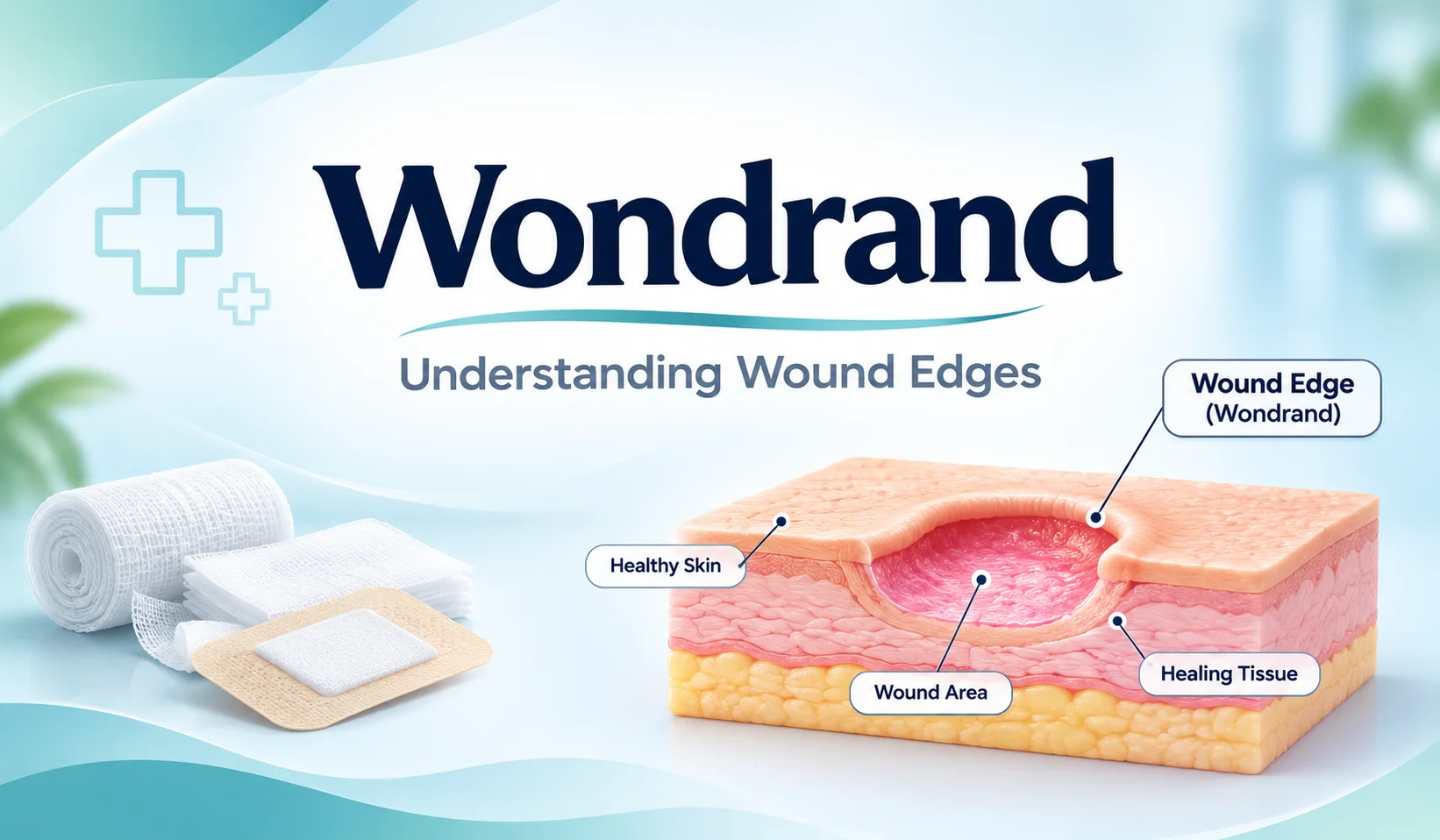
A wound may look like a simple break in the skin, but the surrounding tissue has an important role in determining how successfully it heals. While most people focus on the visible injury, healthcare professionals also examine the border where damaged tissue meets healthy skin. This area, known in Dutch medical terminology as the Wondrand, can reveal valuable information about wound healing, tissue condition, and possible complications.
Wondrand translates to “wound edge” in English. It refers to the boundary of a wound rather than the entire injured area. Changes along this border can indicate whether new skin is developing normally, whether excessive moisture is damaging nearby tissue, or whether healing requires closer medical attention. Understanding these changes can help people recognize the difference between ordinary recovery and warning signs that should not be ignored.
The Narrow Boundary Where Skin Begins Repairing Itself
The wound edge is the point where an open injury meets the surrounding skin. Although this boundary may appear insignificant, it is involved in a complex healing process. After an injury, the body begins controlling bleeding, responding to damaged tissue, and preparing the area for repair. As healing progresses, skin cells near the wound margin can migrate across the injured surface, gradually restoring the protective barrier.
This movement is known as epithelialization. It is especially important because the skin acts as the body’s first defense against physical damage, microorganisms, and excessive moisture loss. A wound cannot regain its normal protective function until the injured surface has been adequately covered and repaired.
However, the appearance of the Wondrand is only one part of wound assessment. Healthcare professionals also consider wound depth, drainage, surrounding skin, blood circulation, infection risk, and overall health. A wound edge that looks relatively normal does not necessarily mean deeper tissues have completely healed.
Why Two Similar Wounds Can Heal Differently
Imagine two people developing small cuts in nearly identical locations. One injury closes steadily, while the other remains open longer than expected. The difference may involve much more than the original size of the cut.
Blood circulation influences how efficiently oxygen and nutrients reach healing tissues. Nutrition, age, medications, immune function, and medical conditions such as diabetes can also affect recovery. Repeated pressure, friction, or exposure to excessive moisture may further interfere with healing at the wound boundary.
The Wondrand often reflects some of these underlying conditions. When the surrounding tissue remains healthy and the wound progressively becomes smaller, recovery may be moving in the expected direction. If the edges begin breaking down, swelling excessively, or separating, the wound may need reassessment.
This is why wound care should focus on protecting the entire affected area rather than simply covering the visible opening.
What the Wondrand Can Tell You Before a Wound Fully Closes
The appearance of a healing wound edge can change over time. During early recovery, mild redness, tenderness, and swelling may occur as part of the body’s inflammatory response. These changes should generally improve rather than continue worsening.
As repair progresses, the wound may develop a thin layer of new epithelial tissue along its margins. This new tissue can look delicate and slightly different from the surrounding skin. The wound gradually becomes smaller as repair continues, although healing speed depends on the nature and severity of the injury.
Several features deserve attention when examining the Wondrand:
- Smooth, progressing edges: May indicate that tissue repair is advancing normally.
- White, softened skin: Can suggest maceration caused by excessive moisture.
- Rolled or thickened margins: May interfere with closure in certain chronic wounds.
- Increasing redness and warmth: May indicate irritation, inflammation, or infection.
- Darkened or nonviable tissue: Requires professional assessment, particularly when circulation is impaired.
No single visual feature provides a complete diagnosis. Lighting, natural skin tone, wound type, and previous treatments can influence appearance. Changes should be interpreted alongside symptoms and the wound’s overall progress.
When Moisture Stops Helping and Starts Damaging Skin
Moisture plays a surprisingly important role in healing. A properly maintained moist wound environment can support cellular activity and reduce unnecessary drying of exposed tissue. However, excessive moisture can damage the skin around the wound and weaken its protective barrier.
Maceration occurs when skin remains exposed to too much moisture, often from wound drainage, perspiration, or an unsuitable dressing. The affected skin may appear pale, soft, wrinkled, or fragile. When this happens near the Wondrand, the delicate tissue can become more vulnerable to breakdown.
Choosing the right dressing involves balancing moisture retention with the ability to manage excess fluid. A dressing that works well for a relatively dry wound may be inappropriate for an injury producing substantial drainage.
For persistent, heavily draining, or chronic wounds, dressing selection should be guided by a qualified healthcare professional. Applying random creams or frequently changing products can make it harder to determine what is helping.
The Overlooked Difference Between Wound Edges and Surrounding Skin
Although closely connected, the wound edge and periwound skin are not identical. The Wondrand is the immediate margin of the open wound, while the periwound area refers to the surrounding skin beyond that boundary.
This distinction matters because problems may develop in one region before becoming noticeable in the other. For example, excessive drainage might irritate the surrounding skin even while the wound itself appears to be producing healthy new tissue. Conversely, an unhealthy wound margin may prevent closure despite relatively normal-looking skin farther away.
Healthcare professionals often examine both areas to identify changes in moisture, color, texture, and tissue integrity. Protecting the surrounding skin helps maintain conditions that support healing at the wound edge.
Why Some Wound Edges Refuse to Move Forward
A wound that remains open for an extended period may develop characteristics different from those seen in an ordinary healing injury. In some chronic wounds, the edges become thickened, irregular, or rolled inward. This condition is sometimes described as epibole.
When wound margins roll instead of advancing across the injured surface, epithelial cells may no longer migrate effectively toward the center. As a result, the wound can remain open despite the presence of tissue that otherwise appears stable.
Chronic pressure injuries, diabetic foot ulcers, and certain circulation-related wounds may involve complicated healing patterns. These conditions require more than basic home care because unresolved pressure, poor blood supply, infection, or other underlying problems can prevent recovery.
Treatment depends on the cause and may involve pressure relief, specialized dressings, management of underlying disease, or professional removal of nonviable tissue when appropriate.
Caring for a Healing Wound Without Interfering With Recovery
Good wound care is not necessarily complicated, but it should be consistent and appropriate for the injury. Small, uncomplicated cuts and abrasions can often be managed with basic first aid, while deeper or poorly healing wounds require medical guidance.
For a minor superficial wound, useful precautions include:
- Wash your hands before touching the injured area or changing a dressing.
- Gently clean the wound with clean running water or sterile saline when appropriate.
- Avoid repeatedly applying harsh antiseptics that may irritate healing tissue.
- Use a suitable non-adherent dressing to protect the injury.
- Replace dressings when dirty, wet, or according to the product instructions.
- Avoid scratching, picking, or pulling at newly forming tissue.
Maintaining adequate nutrition, hydration, and control of underlying health conditions can also support normal healing. People with diabetes, circulation problems, or reduced sensation should be especially careful when monitoring wounds, particularly those affecting the feet.
Warning Signs That Deserve More Than Home Treatment
Not every wound heals according to the same schedule, but certain developments should prompt medical evaluation. Spreading redness, increasing warmth, worsening pain, pus, unpleasant odor, or fever may indicate infection. A wound that becomes larger rather than smaller also deserves attention.
Immediate assessment is important for uncontrolled bleeding, deep injuries, loss of sensation, or wounds involving potentially damaged nerves, tendons, or blood vessels. Animal or human bites, heavily contaminated wounds, and puncture injuries may require additional treatment, including consideration of tetanus protection.
People with diabetes or poor circulation should seek timely assessment of new foot wounds, even when pain is minimal. Reduced sensation can make a serious injury appear less concerning than it actually is.
Questions That Bring More Clarity to Wondrand
Is Wondrand a disease or a medical condition?
No. Wondrand is a Dutch term meaning wound edge. It describes an anatomical feature of an injury rather than a disease, diagnosis, or treatment.
What does a healthy Wondrand usually look like?
A healing wound edge generally shows progressive tissue repair without increasing breakdown, spreading inflammation, or persistent excessive moisture. Its exact appearance varies according to wound type, healing stage, and individual skin characteristics.
Can the wound edge become infected?
Yes. Infection can affect the wound and nearby tissues. Increasing redness, pain, warmth, swelling, or discharge should be assessed, particularly if symptoms are worsening.
Why does skin sometimes turn white around a wound?
Whitish, softened skin may result from prolonged moisture exposure, a condition called maceration. However, appearance alone cannot confirm the cause, and persistent changes may need professional evaluation.
Can poor wound-edge healing delay complete recovery?
Yes. If epithelial cells cannot advance effectively or the surrounding tissue is repeatedly damaged, wound closure may be delayed. The underlying reason must be identified before an appropriate treatment approach can be selected.
The Smallest Details Often Explain the Biggest Healing Problems
Wondrand describes a narrow part of an injury, yet its condition can provide important clues about how healing is progressing. The wound edge participates in restoring the skin barrier, responds to moisture and inflammation, and may reveal problems that interfere with normal tissue repair.
The most useful approach is to observe changes over time rather than judging recovery from a single appearance. A wound that steadily becomes smaller, remains protected, and shows improving tissue condition is generally more reassuring than one developing persistent drainage, spreading redness, or deteriorating margins.
Understanding the Wondrand encourages a more complete view of wound care. Instead of concentrating only on the damaged center, attention extends to the delicate boundary where healing tissue meets healthy skin. Protecting this area, recognizing concerning changes, and obtaining medical advice when necessary can make wound management safer and more effective.
More Read: From Science Fiction to the Operating Room: The Evolution of Laser Technology in Medicine