Tom Kennedy and Emma Walmsley: Two Executive Careers Shaped by Technology, Strategy, and Change
September 7, 2026
0
Senior executives are often grouped together because they reached similar heights in corporate life, but the routes that brought them there can reveal far more than their job
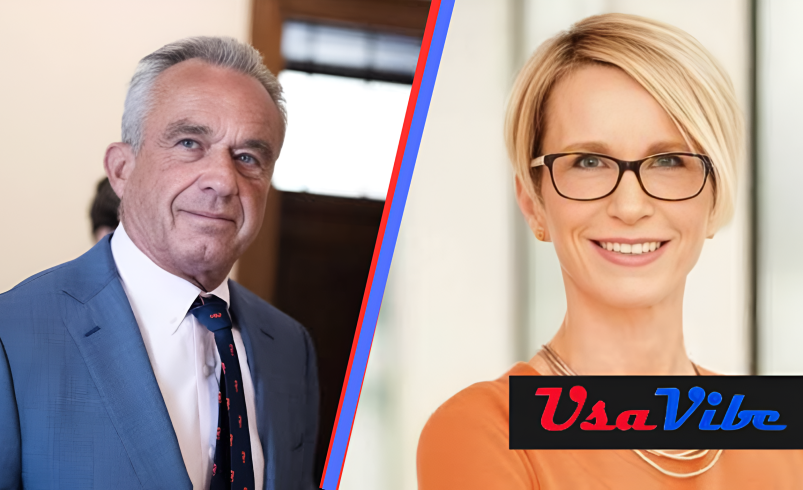
Senior executives are often grouped together because they reached similar heights in corporate life, but the routes that brought them there can reveal far more than their job titles. Tom Kennedy and Emma Walmsley are a useful example. Kennedy built his career inside the highly technical, government-facing world of aerospace and defense, eventually becoming chairman and chief executive of Raytheon. Walmsley came through consumer products and international brand management before leading GSK through one of the most significant strategic transformations in the pharmaceutical company’s modern history.
For clarity, the Tom Kennedy discussed here is Thomas A. Kennedy, the American engineer and former Raytheon chairman and CEO. His background in electrical engineering, military technology and large-scale defense programs differs sharply from Walmsley’s experience in marketing, consumer healthcare and biopharmaceutical leadership.
There is no prominent, documented personal or business relationship between Tom Kennedy and Emma Walmsley that should be inferred merely because their names appear together in searches. Their careers are more meaningful as a comparison. Both spent decades inside major global corporations, both eventually assumed responsibility for organizations operating under intense public scrutiny, and both faced the executive challenge of making long-range strategic decisions in industries where technological capability, regulation and capital allocation matter enormously.
Their stories demonstrate two distinct routes to senior leadership: one built from engineering upward and another built through commercial management before moving into science-led healthcare.
Quick Profile: Tom Kennedy and Emma Walmsley
Fact
Tom Kennedy
Emma Walmsley
Full Name
Thomas A. Kennedy
Emma Natasha Walmsley
Birth Year
1955
1969
Nationality
American
British
Profession
Engineer, aerospace and defense executive, corporate director
Business executive and corporate director
Education
B.S. in Electrical Engineering, Rutgers University; M.S., Air Force Institute of Technology; Ph.D. in Engineering, UCLA
M.A. in Classics and Modern Languages, University of Oxford
Best Known For
Serving as chairman and CEO of Raytheon and later executive chairman of Raytheon Technologies
Serving as CEO of GSK from 2017 through 2025
Major Industry
Aerospace, defense, radar, electronics and advanced technology
Pharmaceuticals, vaccines, consumer healthcare and biopharma
Early Professional Background
U.S. Air Force officer and radar engineer
Marketing and general management at L’Oréal
Major Leadership Role
Chairman and CEO, Raytheon Company, 2014–2020
CEO and board director, GSK, 2017–2025
Current or Later Board Work
Director of Textron and trustee roles associated with Fidelity funds
Director of Microsoft and transitional advisory work with GSK during 2026
Major Corporate Turning Point
Raytheon’s 2020 combination with United Technologies
Separation of GSK Consumer Healthcare as Haleon in 2022
Selected Professional Recognition
Patents related to radar and electronic-warfare technologies; Aviation Week Laureate recognition connected with AESA radar work
Appointed Dame Commander of the Order of the British Empire in 2020 for services to the pharmaceutical industry and business
Kennedy’s career is unusually rooted in technical expertise for an executive who eventually became chairman of a major public company. After serving as a captain in the U.S. Air Force, he joined Raytheon in 1983 and progressed through engineering, program-management and business-leadership positions before becoming chief executive in 2014. UCLA records that he holds several patents involving radar and related technologies.
Walmsley’s route was almost the reverse. Rather than beginning in science or medicine, she spent 17 years with L’Oréal in marketing and general-management positions across several countries. She joined GSK in 2010, eventually led its consumer-healthcare operations, became group CEO in April 2017 and remained in that position through December 31, 2025.
For concise reference biographies, readers can also consult Emma Walmsley.
Two Very Different Paths to Executive Recognition
The most revealing comparison between Tom Kennedy and Emma Walmsley begins before either became a chief executive.
Kennedy entered corporate leadership through engineering. His academic training was highly technical: electrical engineering at Rutgers, graduate study through the Air Force Institute of Technology and a doctorate in engineering from UCLA. He also served as a U.S. Air Force captain, working with development and production programs involving communications, navigation and satellite-launch systems before joining Raytheon.
That sequence matters because Raytheon was not simply a large corporation requiring generic management skills. Its businesses depended on technologies such as radar, electronic warfare, missile defense, sensing and military communications. Customers included governments and defense ministries. Product-development cycles could stretch across years, and decisions frequently involved engineering feasibility, procurement rules, geopolitical priorities and national-security requirements.
Kennedy therefore rose inside an environment where credibility depended partly on understanding what the organization actually built.
Walmsley developed her leadership identity through a different discipline. Her academic background was in classics and modern languages at Oxford, after which she joined L’Oréal. Over 17 years, she worked in locations including Paris, London, New York and Shanghai. By 2007, she was running L’Oréal’s consumer-products business in China, overseeing major brands in one of the world’s largest and fastest-changing consumer markets.
That experience trained a different set of executive muscles: understanding customers, managing brands, allocating marketing investment, operating across cultures and translating corporate strategy into commercial performance.
Neither route resembles a conventional founder biography. Kennedy did not create Raytheon, and Walmsley did not establish GSK. Their careers instead show how professional managers can accumulate enough operational knowledge, strategic authority and organizational credibility to lead companies that existed long before they arrived.
For readers comparing other paths into senior management, [INTERNAL LINK: profiles of global CEOs and business leaders] would fit naturally alongside this discussion.
Tom Kennedy’s Engineering-Led Career
Kennedy joined Raytheon in 1983, initially working in radar development. Over the decades that followed, he moved through increasingly senior positions connected with airborne systems, surveillance, electronic warfare and integrated defense.
His rise was not simply a shift from engineer to administrator. He accumulated experience in multiple parts of the organization. Among his later roles were vice president of Tactical Airborne Systems, president of Raytheon’s Integrated Defense Systems business and executive vice president and chief operating officer of the company.
The Integrated Defense Systems position was especially consequential. That business dealt with complex combinations of sensors, command systems, missile defense and related technologies. Managing such a portfolio meant understanding both individual products and the larger systems into which they had to fit.
By 2013, Kennedy had become Raytheon’s chief operating officer. In that role, he helped oversee a restructuring that reduced the company’s six principal businesses to four, intended to improve productivity, agility and alignment with customer priorities. The position also put business presidents and major enterprise functions under his direct leadership.
He became CEO in March 2014 and chairman later that year.
The progression illustrates a classic internal-leadership model: decades of technical and operational experience followed by responsibility for the entire corporation. By the time Kennedy reached the top job, he had spent more than 30 years learning how Raytheon developed technology, managed programs and served defense customers.
Emma Walmsley’s Commercial Route Into Healthcare Leadership
Walmsley’s career did not begin anywhere near pharmaceutical research.
Her long period at L’Oréal gave her experience in consumer brands and international markets rather than laboratories or drug development. That distinction became a major subject of discussion when she was named to lead GSK, because pharmaceutical companies have traditionally favored leaders with backgrounds closer to medicine, science or the industry’s technical operations.
Yet consumer healthcare provided a bridge.
Walmsley joined GSK in 2010 as president of Consumer Healthcare Europe. She subsequently became president of the worldwide consumer-healthcare division and joined GSK’s corporate executive team. When GSK combined consumer-healthcare assets with Novartis in 2015, she became CEO of the resulting consumer-healthcare business.
The role placed her in charge of a large healthcare operation while drawing directly on her consumer-products experience.
When GSK announced in September 2016 that she would succeed Sir Andrew Witty, the appointment represented a significant departure from the stereotype of the pharmaceutical CEO. Walmsley became group chief executive in April 2017. Her challenge was no longer simply selling established healthcare brands. She was now responsible for pharmaceutical research priorities, vaccines, capital allocation, regulatory exposure, investor expectations and the long-term competitiveness of one of Britain’s largest companies.
Her career consequently demonstrates how commercial leadership can expand into a science-dependent industry—provided the executive builds a team and strategic structure capable of supplying the technical expertise that the CEO does not personally possess.
How Their Professional Worlds Differ
The industries in which Kennedy and Walmsley reached the top differ substantially, even though both demand enormous technological investment.
Raytheon’s major products are developed for military, government and aerospace customers. The sales process can involve lengthy procurement cycles, highly specific technical requirements, government budgets and geopolitical relationships. A program may continue for decades through development, production, upgrades and maintenance.
Success is not determined primarily by mass-market consumer preference. Customers typically evaluate systems according to mission requirements, reliability, technological performance, interoperability and cost. Regulatory and security requirements can limit where technology is sold and how information moves between countries.
GSK operates under a different but equally demanding system.
Pharmaceutical and vaccine development depends on scientific research, clinical trials, regulatory approval, manufacturing quality, intellectual property and healthcare reimbursement. A promising experimental medicine can consume years of investment before anyone knows whether it will become an approved commercial product.
Walmsley therefore led an organization in which today’s revenue often depends on scientific decisions made many years earlier.
Kennedy’s leadership environment required a deep appreciation of engineering programs and defense customers. Walmsley’s required balancing current commercial performance against the uncertainty of future medicines and vaccines.
Their capital-allocation challenges were different as well.
A defense company may decide which technologies, acquisitions or long-term programs deserve investment while navigating government demand. A pharmaceutical company must decide which scientific programs to fund, which clinical projects to stop, what external biotechnology to acquire and how aggressively to invest in therapeutic areas that may not generate revenue for years.
Both industries punish short-term thinking, but they punish it in different ways.
The Companies and Ideas Associated With Their Names
Tom Kennedy’s name is overwhelmingly associated with Raytheon.
By the time he became CEO, Raytheon had already developed a long history in aerospace, electronics and defense technology. Kennedy’s task was therefore not to invent the company’s identity from nothing. His responsibility was to guide an established technology organization through changing military requirements, growing international markets, cybersecurity opportunities and a period of industry consolidation.
He also brought an engineer’s identity to the role. UCLA’s biography of Kennedy notes patents related to radar and electronic-warfare technologies and describes his earlier work in radar development and airborne systems.
That detail distinguishes him from many CEOs whose expertise is mainly financial or administrative. Kennedy had direct experience with the kinds of systems that eventually became part of the businesses he managed.
Emma Walmsley, meanwhile, is primarily associated with three corporate names: L’Oréal, GSK and Haleon.
L’Oréal formed her commercial foundation. GSK made her one of Britain’s most visible corporate leaders. Haleon emerged from one of the most consequential strategic moves undertaken during her period as GSK CEO.
The relationship between GSK and Haleon requires some context.
GSK had built a large consumer-healthcare business containing brands sold directly to the public. The company later combined its consumer-health assets with Pfizer’s, creating a joint venture. GSK controlled 68% and Pfizer owned 32%. Walmsley chaired the joint venture as the wider group prepared to separate consumer healthcare from the pharmaceutical and vaccines company.
The resulting standalone company was named Haleon and demerged in 2022.
This separation altered GSK’s corporate identity. Rather than continuing as a mixed healthcare group containing both everyday consumer brands and prescription medicines, GSK became more tightly focused on biopharmaceuticals and vaccines. Haleon, meanwhile, became an independent consumer-health business with brands including Sensodyne, Panadol and Centrum.
Readers interested in similar corporate transformations may find [INTERNAL LINK: major company restructurings and executive strategy] useful for understanding why large companies sometimes create more focused businesses rather than continuing to expand under one roof.
Technical Leadership Versus Commercial Transformation
The contrast between Tom Kennedy and Emma Walmsley becomes especially useful when considering what qualifies someone to lead a complex company.
Kennedy’s qualifications were closely connected to the company’s technical core. He understood radar, defense electronics and large engineering programs before he managed entire business units.
Walmsley’s expertise was more transferable across industries. She understood consumers, international operations, organizational management and commercial execution. At GSK, she had to apply those capabilities to a sector where the technical core was controlled by scientists, physicians and researchers with expertise far beyond the CEO’s own academic background.
These models suggest two different answers to a recurring leadership question: must a chief executive be an expert in the company’s underlying technology?
Kennedy’s career shows the advantages of technical depth. An executive who understands engineering can evaluate trade-offs with unusual context. He may communicate naturally with technical teams and recognize the strategic significance of a capability before it becomes obvious in financial reports.
Walmsley’s career demonstrates the alternative argument. A CEO’s role is not necessarily to be the company’s best scientist. It is to establish priorities, choose strong technical leaders, allocate resources intelligently and create an organization in which scientific excellence produces commercially useful outcomes.
At GSK, that issue was particularly visible because one of Walmsley’s strategic priorities was improving research and development productivity. The company described its post-2017 transformation as involving increased focus on vaccines and specialty medicines, stronger R&D investment and significant changes to the portfolio and leadership structure.
The two approaches are therefore less contradictory than they first appear.
Technical expertise can make a CEO exceptionally well suited to a technology-intensive business. Commercial expertise can also work—provided that leadership recognizes where specialist knowledge must guide decisions rather than pretending the CEO can supply every form of expertise personally.
Major Career Turning Points
Kennedy Moves From Engineering Into Business Leadership
Kennedy’s first major transition was not becoming CEO. It was moving from technical work into responsibility for entire business organizations.
He started at Raytheon in radar development, an environment where success depended heavily on engineering execution. Later assignments put him in charge of programs and business units, broadening his responsibility from solving technical problems to managing budgets, customers, employees and strategic direction.
His leadership of Tactical Airborne Systems and then Integrated Defense Systems gave him increasingly large operating responsibilities. By the time he became COO in 2013, he was involved in decisions spanning multiple Raytheon businesses rather than a single technology portfolio.
That is a pivotal transition for many technically trained executives. The question changes from “Can this system work?” to “How should the entire company compete?”
Kennedy Becomes Raytheon CEO
Kennedy became chief executive in March 2014, succeeding William Swanson.
His promotion represented the culmination of an unusually long internal career. Rather than being recruited from another corporation to change Raytheon’s direction, he reached the top after decades inside the company.
Raytheon’s 2019 proxy materials described him as bringing extensive knowledge of the company’s technology, operations, markets, strategic planning, mergers and acquisitions, cybersecurity, engineering, finance and risk management.
That breadth is important. By the time someone reaches the chief executive position, technical knowledge alone is insufficient. The job requires decisions about capital, acquisitions, international expansion, employees and long-term corporate structure.
The Raytheon–United Technologies Combination
The defining corporate event near the end of Kennedy’s CEO tenure was Raytheon’s combination with United Technologies.
Announced in 2019 and completed in April 2020, the transaction created Raytheon Technologies, combining Raytheon’s defense-focused operations with major aerospace businesses including Pratt & Whitney and Collins Aerospace. Kennedy became executive chairman of the combined company while United Technologies CEO Gregory Hayes became chief executive.
The combination changed the scale and composition of the enterprise significantly. Rather than simply managing Raytheon’s existing portfolio, Kennedy helped guide the company into a much larger aerospace and defense structure.
He retired as executive chairman effective June 1, 2021, following roughly a year in that position after the merger.
Walmsley Moves From L’Oréal to GSK
Walmsley’s decision to leave L’Oréal after 17 years was equally important.
She had developed an international career in consumer goods, including leadership experience in China, but joining GSK put her inside healthcare—a sector with far greater regulatory complexity and a closer relationship between commercial performance and scientific innovation.
Consumer healthcare initially gave her a relatively natural bridge between the two industries. Toothpaste, pain relief products and other non-prescription health brands still rely heavily on marketing, distribution and consumer behavior.
Her eventual promotion to group CEO dramatically expanded the job.
Walmsley Becomes GSK CEO
When Walmsley assumed the chief executive role in 2017, she inherited questions about GSK’s research productivity, portfolio structure and future growth.
One of the defining features of her leadership became increased emphasis on pharmaceutical R&D, vaccines and specialty medicines. Rather than operating GSK indefinitely as a broad collection of pharmaceutical, vaccine and consumer-health businesses, management moved toward a more focused biopharma model.
The strategy also required substantial changes in people, capital allocation and business structure.
Walmsley’s appointment was historically significant as well. She became the first woman to lead a major global pharmaceutical company, making her promotion relevant beyond GSK’s internal succession process.
The Haleon Demerger Reshapes GSK
The 2022 demerger of consumer healthcare into Haleon became perhaps the clearest structural expression of Walmsley’s strategy.
GSK described the separation as its most significant corporate change in approximately two decades. Consumer healthcare became an independently listed company, while GSK emerged as a more concentrated pharmaceuticals and vaccines organization.
For Walmsley, the transaction was especially notable because consumer healthcare had been the part of GSK she previously led.
Executives often protect the business units from which they rose. Walmsley’s later role instead required deciding what corporate structure made sense for the wider company, even if that meant separating the operation most closely associated with her earlier GSK career.
Walmsley Hands Leadership to Luke Miels
Another turning point arrived in September 2025, when GSK announced that Luke Miels would succeed Walmsley.
Miels assumed full CEO responsibilities on January 1, 2026. Walmsley stepped down from GSK’s board at the end of December 2025, although GSK said she would remain with the business through September 30, 2026 to support the transition and advise on issues including geopolitics and emerging technologies.
That distinction matters for any current biography. As of September 2026, Emma Walmsley should no longer be described as GSK’s CEO. Her nine-year period as chief executive has ended, while she has continued temporarily supporting the company during the leadership transition.
Public Recognition and Professional Influence
Kennedy’s public reputation is closely tied to the defense and aerospace establishment rather than mass consumer recognition.
A person purchasing everyday products may never encounter his name, even though systems produced by the organization he led have played significant roles in national defense, aviation and security.
Within engineering and aerospace circles, however, Kennedy’s combination of technical credentials and executive authority made him notable. He holds patents associated with radar and electronic-warfare technologies, and UCLA records that he received an Aviation Week Laureate Award in 2003 for achievements involving Active Electronically Scanned Array technology.
His influence also extends through board work after leaving Raytheon Technologies. Textron elected Kennedy to its board in 2022, citing his experience leading a global public aerospace and defense company. More recent regulatory filings continue to identify him as a Textron director and as a trustee of Fidelity funds.
Walmsley acquired a different kind of public profile because GSK operates at the intersection of business, public health and political debate.
Pharmaceutical executives can be questioned not only about earnings but also about vaccine access, medicine prices, research investment, pandemic preparedness and health policy. That gives the CEO role a visibility not typically associated with executives in many other industries.
Walmsley also became prominent as one of relatively few women leading major British public companies. In 2020, she was appointed Dame Commander of the Order of the British Empire for services to the pharmaceutical industry and business.
Her corporate influence extends beyond GSK. She joined Microsoft’s board as an independent director in 2019 and remained a director in Microsoft’s fiscal-2026 filings.
That board position is particularly relevant to her broader professional identity because it places her at another company dealing with questions around technology, artificial intelligence, regulation and global economic change.
Leadership Under Long Development Cycles
One of the strongest connections between Tom Kennedy and Emma Walmsley is not a business relationship but an operating reality: both led companies where strategically important products can require years of work before their economic value becomes clear.
Defense programs are frequently developed through long government procurement processes. A new radar, sensor or missile system can require extensive testing, integration and certification. Governments may alter budgets or change priorities while development is underway.
Drug development is similarly unforgiving, although for very different reasons. An experimental medicine can appear promising in early research and still fail during clinical development. Regulatory authorities require evidence of safety and effectiveness before approval, and even successful products must compete against existing therapies.
That long horizon changes executive decision-making.
A retail leader can sometimes see the results of a pricing or merchandising decision within weeks. The chief executive of a defense contractor or pharmaceutical company may allocate billions toward initiatives whose real strategic value cannot be evaluated for years.
That makes portfolio discipline crucial.
Executives must be willing to invest before certainty exists, but they must also stop projects that no longer justify continued spending. The hardest decisions may involve technically interesting work that does not meet commercial or strategic requirements.
Kennedy’s engineering experience and Walmsley’s portfolio transformation at GSK represent different ways of managing this uncertainty.
Achievements Worth Understanding
A list of awards and job titles does not fully explain why either executive matters. Their more interesting accomplishments are tied to the organizations they helped shape.
Kennedy’s progression from radar engineer to chief executive demonstrated an unusually direct path from technical expertise to corporate leadership. His career shows that engineering knowledge can become the foundation for broader operating authority rather than remaining confined to specialist roles.
His leadership of Raytheon culminated in a transformative corporate combination. The merger with United Technologies created Raytheon Technologies and joined major commercial-aerospace operations with Raytheon’s defense technologies.
Walmsley’s rise from consumer products to pharmaceutical leadership challenged assumptions about the background required to run a major drug company. She did not become a scientist; she built leadership teams and redirected corporate priorities around science and R&D.
The Haleon separation fundamentally changed GSK’s structure. It allowed consumer healthcare and biopharma to operate as independent companies with different capital requirements and strategic priorities.
Walmsley’s period at GSK included a stronger emphasis on vaccines and specialty medicines. GSK repeatedly described the post-2017 strategy as concentrating capital and R&D resources in areas where management believed the company could achieve better growth and scientific competitiveness.
Both developed professional reputations that extended beyond their chief executive positions. Kennedy moved into board and trustee roles after Raytheon Technologies, while Walmsley’s Microsoft directorship gave her continuing influence within another major global corporation.
Readers interested in how accomplished executives transition from operating roles into governance may also find [INTERNAL LINK: corporate directors and former CEO career profiles] relevant.
Personal Life and Background Beyond the Boardroom
Publicly established personal information is considerably more detailed for Walmsley than for Kennedy, and that difference should be respected rather than filled with speculation.
Walmsley was born in Barrow-in-Furness in England in June 1969. Her father was Vice-Admiral Sir Robert Walmsley. She attended St Swithun’s School and later studied classics and modern languages at Christ Church, Oxford. She married David Owen in 1995, and the couple have four children.
Her educational background is particularly interesting because it does not predict the career that followed. Classics and languages might appear distant from pharmaceuticals, but international business leadership often depends heavily on communication, cultural adaptability and the ability to absorb unfamiliar subject matter.
Walmsley’s assignments across several continents during her L’Oréal years reinforced that international dimension.
Kennedy’s publicly documented background focuses much more heavily on education, military service and professional history than on family matters. Reliable corporate biographies identify his engineering degrees, U.S. Air Force service and extensive Raytheon career, while detailed information about his private family life is not necessary to explain his professional record.
That distinction is worth preserving. Executive profiles are more accurate when they include only personal details that are both publicly established and relevant, rather than treating every biography as an invitation to fill identical categories.
What Business Leaders Can Learn From Their Different Careers
The careers of Tom Kennedy and Emma Walmsley offer several practical lessons without requiring either executive to be treated as a universal leadership model.
The first concerns the value of a professional foundation.
Kennedy’s foundation was engineering. He understood technology before he led people who developed it. Walmsley’s foundation was commercial management. She understood consumers, branding and international markets before assuming responsibility for an organization whose future depended on scientific innovation.
Both foundations were useful because neither remained static.
Kennedy had to learn finance, strategy, mergers, risk management and organizational design. Walmsley had to become sufficiently fluent in pharmaceutical R&D to allocate resources and evaluate leadership in an industry she had not originally trained to enter.
A second lesson concerns knowing what expertise the CEO does not possess.
Executives become dangerous when authority is mistaken for omniscience. A chief executive may have final decision-making power, but specialists frequently possess superior knowledge of particular technical problems.
Kennedy’s engineering background undoubtedly gave him an advantage in technical discussions, yet a company as large as Raytheon still contained specialists whose expertise exceeded his in individual fields.
Walmsley’s lack of a scientific degree made the issue even clearer. Her effectiveness depended on recruiting and supporting scientific leadership rather than attempting to impersonate it.
A third lesson is organizational structure can become strategy.
The Raytheon–United Technologies combination and GSK–Haleon separation moved in opposite directions.
Kennedy participated in combining major businesses into a broader aerospace and defense company. Walmsley oversaw the separation of a large consumer-healthcare operation from GSK.
Neither combination nor separation is inherently superior. The correct structure depends on whether businesses gain more from operating together than they lose through complexity.
That makes these careers an especially useful pairing. One major strategic event created a larger corporation; the other created two more focused ones.
A fourth lesson involves succession.
Long-serving CEOs eventually have to leave organizations that have become closely associated with them. The transition is itself a leadership test.
Kennedy moved from Raytheon CEO to executive chairman of the newly formed Raytheon Technologies before retiring in 2021. Walmsley stepped down from GSK’s board at the end of 2025 but remained temporarily involved during 2026 to support Luke Miels and the company during the transition.
Strong governance requires the organization to continue functioning after the person at the top changes.
Why People Search for Tom Kennedy and Emma Walmsley Together
The exact phrase Tom Kennedy and Emma Walmsley naturally raises the possibility that the two executives collaborated, worked for the same company or share a personal connection.
Publicly established career histories do not support treating them as a known business partnership or personal relationship.
Kennedy’s professional life was centered on Raytheon and the American aerospace and defense sector. Walmsley’s major corporate careers were at L’Oréal and GSK, followed by continuing board responsibilities including Microsoft. Their best-known executive positions occurred in different industries, different companies and largely different professional networks.
The combined keyword therefore makes more sense as comparative search intent.
Someone researching prominent CEOs may encounter both names through executive databases, leadership articles or corporate biographies. Researchers examining careers in technology-intensive industries may also compare Kennedy’s defense background with Walmsley’s pharmaceutical leadership.
There is also a compelling leadership contrast. Kennedy was an engineer who became a CEO. Walmsley was a consumer-business executive who became the CEO of a science-led pharmaceutical company. That difference creates a useful comparison around expertise, executive development and organizational leadership.
A third possible reason is corporate-governance research. Both moved beyond day-to-day chief executive responsibilities into board-level roles. Kennedy has served on Textron’s board and in Fidelity trustee positions; Walmsley serves on Microsoft’s board.
What the combined search does not establish is equally important. Search proximity is not evidence of a friendship, marriage, family relationship, investment, transaction or corporate partnership.
A responsible article should distinguish curiosity from documentation.
Two Models of Corporate Transformation
The defining strategic events associated with Kennedy and Walmsley point in opposite directions, which makes their comparison more interesting than a superficial list of similarities.
Raytheon’s transformation involved combination.
Joining with United Technologies created a much larger aerospace and defense organization containing businesses that served both commercial and military customers. Management’s argument was that the combined portfolio could benefit from scale, technology sharing and diversification.
GSK’s transformation involved separation.
Management concluded that consumer healthcare and biopharma would have clearer strategic priorities as independent businesses. Haleon could concentrate on everyday health brands, while GSK could allocate capital toward vaccines, specialty medicines and pharmaceutical research.
These decisions illustrate why corporate strategy rarely has universal rules.
Executives are sometimes praised for building bigger companies, as though size itself proves strategic intelligence. At other times, leaders are praised for breaking conglomerates apart, as though focus automatically creates value.
The more useful question is whether businesses belong together economically and operationally.
Do they share technology? Customers? Distribution? Capital requirements? Talent? Research? Regulatory structures? Can management run them better together than independent leadership teams could separately?
Kennedy and Walmsley operated on different sides of that equation. Studying both reinforces a simple principle: corporate structure should serve strategy, not executive ego.
Questions Readers Often Ask About Tom Kennedy and Emma Walmsley
Who is Tom Kennedy?
Tom Kennedy, whose full name is Thomas A. Kennedy, is an American engineer and business executive best known for leading Raytheon Company. He joined Raytheon in 1983 after serving as a captain in the U.S. Air Force and built a career spanning radar engineering, program management and senior operating leadership. Kennedy became Raytheon’s CEO in March 2014 and chairman later that year. After Raytheon combined with United Technologies in 2020, he became executive chairman of Raytheon Technologies before retiring from that role in June 2021. He later continued in corporate-governance positions, including service on Textron’s board.
Who is Emma Walmsley?
Dame Emma Walmsley is a British business executive best known for serving as chief executive of GSK from April 2017 through December 2025. Before entering healthcare, she spent 17 years at L’Oréal in marketing and general-management positions in several countries, including China. She joined GSK in 2010 and eventually became CEO of its consumer-healthcare operations before being selected to lead the entire group. During her tenure, GSK increased its focus on vaccines and specialty medicines and separated its consumer-healthcare operation as Haleon. Luke Miels succeeded her as GSK CEO on January 1, 2026.
Are Tom Kennedy and Emma Walmsley connected?
There is no prominent, documented professional or personal relationship between Thomas A. Kennedy and Emma Walmsley that should be inferred from their names appearing together. Kennedy’s career centered on Raytheon, aerospace, defense technology and engineering. Walmsley’s career developed through L’Oréal, GSK, healthcare and later board work including Microsoft. Their names are more usefully treated as a comparison between senior executives who reached major leadership positions through very different professional backgrounds. Unless credible evidence establishes a specific collaboration or transaction, describing them as partners, relatives or close business associates would be unsupported.
What company did Tom Kennedy lead?
Kennedy led Raytheon Company, one of the major American aerospace and defense technology companies. He became chief executive in March 2014 after decades at the company and later served simultaneously as chairman. His earlier positions included leadership of Tactical Airborne Systems, Integrated Defense Systems and the chief operating officer role. In April 2020, Raytheon combined with United Technologies to form Raytheon Technologies. Kennedy then served as executive chairman of the new organization until his retirement in June 2021. His subsequent governance work has included a directorship at Textron.
What company did Emma Walmsley lead?
Walmsley led GSK, the British global biopharmaceutical company previously known as GlaxoSmithKline. She became CEO in April 2017 after previously heading the company’s consumer-healthcare business. Her tenure involved substantial changes to GSK’s structure and investment priorities, including greater emphasis on vaccines and specialty medicines. One of the most visible changes was the 2022 demerger of GSK Consumer Healthcare as Haleon. Walmsley left the GSK board at the end of 2025, and Luke Miels became CEO on January 1, 2026. She remained involved temporarily during 2026 to support the transition.
How are Tom Kennedy and Emma Walmsley’s careers different?
Kennedy built his career from a technical foundation. He studied electrical engineering and engineering, served in the U.S. Air Force and worked on radar and defense technologies before moving into business leadership. Walmsley studied classics and modern languages and developed her early career in consumer products, marketing and international general management. She later transferred those commercial skills into healthcare. Their industries also differ: Kennedy operated in aerospace and defense, while Walmsley led a pharmaceuticals and vaccines company. The comparison shows that major corporate leadership can emerge from either deep technical specialization or broad commercial-management experience.
Are Tom Kennedy and Emma Walmsley both engineers?
No. Kennedy has an extensive engineering background, including bachelor’s and master’s-level electrical-engineering education and a doctorate in engineering from UCLA. His early Raytheon work involved radar technology, and he holds patents related to radar and electronic-warfare systems. Walmsley is not an engineer or pharmaceutical scientist. She studied classics and modern languages at Oxford and developed her career through marketing, consumer products and general management. Her leadership of GSK therefore depended less on personal scientific specialization and more on corporate strategy, talent management, commercial execution and the ability to lead highly specialized scientific teams.
What were Tom Kennedy’s major achievements?
Kennedy’s achievements include progressing from radar engineering to the chairmanship and chief executive role at Raytheon, managing major defense businesses and participating in the transformation that created Raytheon Technologies. His technical career also included patents involving radar and electronic-warfare technologies. UCLA has highlighted his recognition for work connected with Active Electronically Scanned Array technology. From a leadership perspective, his significance lies in combining technical credibility with responsibility for a large global public company—a path less common than executive careers originating primarily in finance, sales or general management.
What were Emma Walmsley’s major achievements?
Walmsley’s most consequential achievements include becoming the first woman to lead a major global pharmaceutical company, redirecting GSK toward greater emphasis on pharmaceuticals, vaccines and scientific R&D, and overseeing the separation of consumer healthcare into Haleon. Her career also stands out because she entered pharmaceutical leadership from a consumer-products background rather than medicine or laboratory science. She was appointed Dame Commander of the Order of the British Empire in 2020 for services to the pharmaceutical industry and business. Her continuing Microsoft directorship also reflects the breadth of her corporate-governance experience beyond GSK.
Why are Tom Kennedy and Emma Walmsley searched together?
The combined search most plausibly reflects interest in executive careers, business leadership or comparative corporate research rather than a documented relationship between them. Both became chief executives of major global companies operating in technologically demanding and heavily regulated industries. Yet their routes were strikingly different: Kennedy moved from engineering and defense systems into management, while Walmsley advanced through consumer marketing and international business before taking charge of a pharmaceutical company. That contrast makes their careers useful for studying leadership development, technical versus commercial expertise, corporate restructuring and the responsibilities of executives overseeing long-term innovation.
Two Careers, Two Ways of Reaching the Top
The value of examining Tom Kennedy and Emma Walmsley together does not depend on finding an undisclosed connection between them. Their professional histories already provide a stronger reason for comparison.
Kennedy’s career developed from technical depth. He moved from military and engineering work into increasingly complex Raytheon leadership positions, eventually becoming chairman and CEO and helping guide the company toward the combination that created Raytheon Technologies.
Walmsley’s path developed from commercial breadth. International experience at L’Oréal led into consumer healthcare, and consumer healthcare eventually became the platform from which she moved into the leadership of GSK. Her tenure was defined by greater pharmaceutical focus, organizational change and the separation that created Haleon.
Their largest strategic events even moved in opposite directions: Kennedy helped combine businesses, while Walmsley helped separate them.
That contrast is precisely why the combined topic is useful. Executive leadership does not follow a single educational path, personality type or career sequence. Some leaders arrive with deep knowledge of the technology their companies sell. Others succeed by understanding markets, people and capital while relying on specialist teams for scientific expertise.
Tom Kennedy and Emma Walmsley represent those two routes with unusual clarity—and their careers show why the quality of leadership is better judged by decisions, structures and execution than by job titles alone.