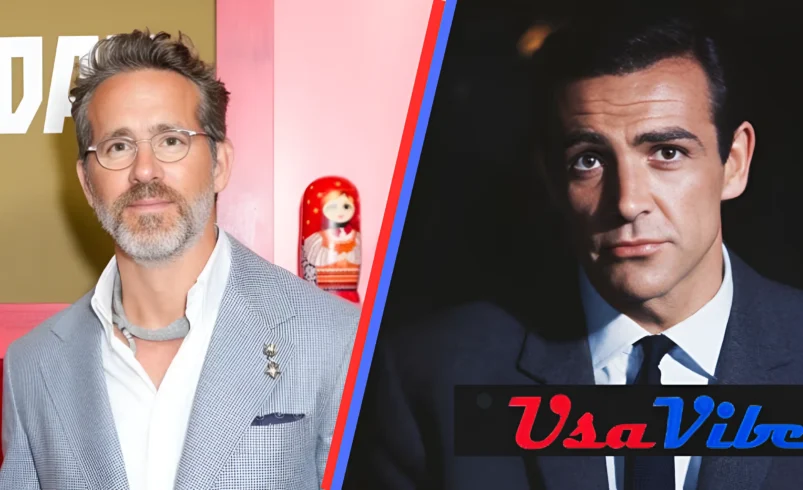
Ryan Reynolds and Sean Connery are two recognizable names in Hollywood, representing different generations of leading men whose careers helped shape the action and entertainment genres. Reynolds is a Canadian actor known for his sharp humor, unconventional superhero performances, and ability to combine comedy with action. Connery was a Scottish film legend whose commanding screen presence made him the original cinematic James Bond and established him as one of the most influential actors of the twentieth century.
Although their careers developed during different periods, the connection between Ryan Reynolds and Sean Connery is more substantial than an occasional comparison between famous actors. Both became associated with the Highlander franchise, a fantasy action series centered on immortal warriors. Connery played a memorable supporting role in the original 1986 movie, while Reynolds was selected for a proposed remake decades later. The project never reached production with Reynolds in the leading role, but the casting news briefly connected him with one of Connery’s most recognizable films outside the James Bond series.
Their names have also appeared together in discussions about Hollywood history, action cinema, and the changing expectations placed on leading actors. Reynolds’ approach to entertainment is often playful and self-aware, whereas Connery became famous for projecting confidence, authority, and sophistication. Despite these differences, both developed strong screen identities that audiences could recognize almost immediately.
Understanding their connection requires separating documented film history from assumptions about personal relationships. There is no established evidence that Reynolds and Connery shared a major film role or maintained a publicly documented friendship. Their clearest association comes through the Highlander franchise and the broader evolution of action filmmaking.
How Are Ryan Reynolds and Sean Connery Connected?
The strongest connection between Ryan Reynolds and Sean Connery involves Highlander, the 1986 fantasy action film directed by Russell Mulcahy. The original movie starred Christopher Lambert as Connor MacLeod, an immortal Scottish warrior, while Connery portrayed Juan Sánchez-Villalobos Ramírez, an experienced immortal who becomes MacLeod’s mentor.
The film gradually developed a dedicated following because of its unusual mythology, sword-fighting sequences, historical settings, and memorable characters. Its story follows immortal warriors who can survive ordinary injuries but can be permanently killed through decapitation. These warriors are drawn into a final struggle in which only one can claim the ultimate prize.
Connery’s character played an important role in establishing the mythology. Ramírez guides Connor MacLeod as he learns about his immortality, the dangers posed by other immortals, and the rules governing their existence. Connery brought authority and charisma to the mentor role, giving the film a recognizable international star alongside Lambert.
More than twenty-five years later, Hollywood began developing a new version of Highlander. In 2012, Reynolds became attached to the proposed remake, with plans for him to portray Connor MacLeod. The casting would have placed Reynolds in the central role originally played by Lambert, within a story closely associated with Connery’s famous supporting performance.
However, Reynolds was not replacing Connery directly. He was attached to the protagonist’s role rather than Ramírez, and the proposed film was a new adaptation rather than a direct collaboration between the two actors.
Did Ryan Reynolds and Sean Connery Ever Work Together?
There is no verified film credit showing that Ryan Reynolds and Sean Connery acted together in a completed feature film. Their professional histories overlap through Hollywood’s action and adventure traditions, but they did not share the screen in Highlander or another established joint production.
This distinction is particularly important because older casting announcements can become confusing when read years after their publication. A report connecting Reynolds with a remake of a Connery film may appear to suggest that the two were involved in the same project. In reality, Connery had appeared in the original Highlander decades earlier, while Reynolds was considered for a later version.
By the time Reynolds became attached to the remake, Connery had largely retired from live-action film acting. His final major live-action film role was in The League of Extraordinary Gentlemen, released in 2003. He later participated in limited voice work, but he was no longer pursuing the kind of demanding action roles that defined much of his earlier career.
Reynolds, meanwhile, was entering a period in which major studios increasingly viewed him as a potential action and comedy leading man. His work in films such as Green Lantern, Safe House, and R.I.P.D. reflected his involvement in different types of high-budget entertainment before Deadpool transformed his career.
The connection between the actors is therefore best understood as part of the history of a film franchise rather than a record of direct professional collaboration.
The Highlander Movie That Connected Two Generations
The original Highlander occupies a distinctive place in fantasy cinema. Released in 1986, it combined sword fights, romance, immortality, historical flashbacks, and a contemporary urban setting in a way that differed from many other action films of its era.
Christopher Lambert’s Connor MacLeod begins as a Scottish warrior who discovers that he cannot die through ordinary means. Over centuries, he encounters other immortals, learns to survive their conflicts, and eventually becomes involved in a struggle that determines the future of their kind.
Sean Connery’s Ramírez provides one of the film’s most memorable relationships. He introduces MacLeod to the wider world of immortals and helps transform him from a confused survivor into a more capable warrior.
The mentor-student relationship supplies much of the story’s emotional foundation. Ramírez is more experienced, more knowledgeable, and more comfortable with the unusual rules governing immortal life. Connor, by contrast, must learn how to accept an existence that separates him from ordinary human relationships.
The film’s atmosphere was also shaped by its music, including songs performed by Queen. Its distinctive visual style and combination of historical and modern settings helped establish a recognizable identity.
Highlander eventually inspired sequels, television productions, and an extended fictional universe. Although individual installments received different critical reactions, the original film maintained a devoted audience.
When producers began discussing a modern remake, they faced the challenge of preserving the original story’s appeal while introducing it to a new generation. Reynolds’ proposed casting represented one attempt to address that challenge.
Why Ryan Reynolds Was Considered for Highlander
Ryan Reynolds’ potential involvement in Highlander emerged during a period when studios were revisiting established film properties and considering how familiar stories could be adapted for contemporary audiences.
By 2012, Reynolds had already appeared in several action-oriented productions and demonstrated his ability to lead major studio films. His performances often relied on fast dialogue, physical comedy, and a charismatic screen presence.
Connor MacLeod would have represented an interesting opportunity because the character combines action with emotional conflict. Highlander is not simply about an immortal fighter defeating enemies. Its protagonist must also confront the consequences of living for centuries while watching ordinary human relationships end.
Reynolds had experience combining humor with dramatic material, making him a plausible choice for a reinterpretation of the character.
The proposed remake was associated with Lionsgate and Summit Entertainment. Director Juan Carlos Fresnadillo was involved during an important stage of development, and Reynolds’ attachment became public in 2012.
However, casting interest is not the same as a completed film. Major productions frequently undergo changes in directors, scripts, financing, and creative direction before filming begins.
Highlander proved to be one of those projects.
The remake encountered a prolonged development process, and its creative direction continued changing. Reynolds eventually left the project in June 2013.
His departure meant that audiences never saw his interpretation of Connor MacLeod.
Why Ryan Reynolds Left the Highlander Remake
Ryan Reynolds’ departure from Highlander in 2013 followed a period of development difficulties involving the proposed film.
The project experienced changes in its directing arrangements, and the absence of a settled production direction complicated progress.
Fresnadillo had left the project before Reynolds’ departure, leaving the remake without the director previously associated with the actor’s involvement.
Reports at the time described Reynolds as no longer committed to the film after an extended development period.
The precise details of every private discussion between Reynolds, producers, and studio executives were not publicly established. It would therefore be inaccurate to attribute his departure to a specific disagreement without reliable confirmation.
What is clear is that Reynolds never completed the proposed Highlander film and that the project continued developing without him.
This outcome is not unusual in Hollywood. Announced projects can remain in development for years, and actors sometimes leave because production schedules, creative plans, or professional priorities change.
For Reynolds, the departure ultimately preceded a period of enormous success associated with Deadpool.
For Highlander, it meant that the franchise’s planned return to cinemas would continue without the actor who had briefly been attached to its central role.
Sean Connery’s Role in the Original Highlander
Sean Connery’s performance as Ramírez remains one of the defining elements of the original Highlander.
Although he was not the film’s central protagonist, his character provided a crucial source of knowledge and guidance.
Ramírez introduces Connor MacLeod to the rules of immortality and helps him understand the danger represented by other immortals. Their relationship adds humor, warmth, and dramatic tension to a story that otherwise could have relied almost entirely on sword fighting.
Connery was already an established international star when Highlander was released. His earlier work as James Bond had given him an instantly recognizable screen presence, while later roles allowed him to move beyond the identity of the famous secret agent.
In Highlander, that established persona worked particularly well. Ramírez needed to appear knowledgeable, experienced, and capable of commanding attention. Connery could communicate those qualities without elaborate explanations.
The character also allowed him to display humor and a willingness to participate in a fantastical storyline.
Connery’s involvement contributed to the film’s appeal, particularly among viewers who already associated him with action and adventure.
His performance demonstrates how an experienced supporting actor can help shape an entire film’s identity even without appearing in every major sequence.
The Different Acting Styles of Ryan Reynolds and Sean Connery
One of the most interesting aspects of comparing Ryan Reynolds and Sean Connery is the contrast between their acting styles.
Connery became famous for projecting confidence and authority. His performances frequently depended on controlled dialogue, strong physical presence, and a voice that audiences immediately recognized.
As James Bond, he helped establish the screen identity of a character who combined danger, sophistication, humor, and emotional distance. His later roles often relied on similar qualities, although he adapted them to different genres and characters.
Reynolds has developed a noticeably different public and cinematic personality. His best-known performances frequently involve rapid dialogue, sarcasm, self-deprecating humor, and characters who acknowledge the absurdity of their situations.
Deadpool is the clearest example of this approach. The character regularly breaks the fourth wall, addresses the audience directly, and turns familiar superhero conventions into comedy.
Connery’s humor was usually delivered through understated confidence or sharp remarks, while Reynolds often uses a more openly playful and exaggerated style.
Nevertheless, both actors understand the value of screen presence.
A memorable leading man is not defined solely by physical appearance or action sequences. Audiences also respond to distinctive speech patterns, timing, movement, and personality.
Connery and Reynolds developed different combinations of those qualities, but both created recognizable entertainment identities.
<WritingBlock id=”68246″ variant=”document”>## Sean Connery’s Influence on Action Cinema
Sean Connery’s influence on action and adventure cinema extends far beyond the James Bond franchise.
When Dr. No was released in 1962, Connery introduced a version of James Bond that would influence the portrayal of cinematic secret agents for decades. His performance combined physical confidence, intelligence, charm, and a willingness to confront danger.
The success of the Bond films helped establish a template for action heroes who could move between dramatic danger and sophisticated humor.
Connery later demonstrated that he was capable of moving beyond the character. His performances in The Untouchables, Indiana Jones and the Last Crusade, The Hunt for Red October, and other films revealed his versatility across crime dramas, historical adventures, and thrillers.
His work in The Untouchables earned him the Academy Award for Best Supporting Actor for his portrayal of Jim Malone, an experienced police officer who helps Kevin Costner’s Eliot Ness confront organized crime.
In Indiana Jones and the Last Crusade, Connery played Professor Henry Jones Sr., the father of Harrison Ford’s adventurous archaeologist. The role gave him an opportunity to combine humor with family drama and adventure.
These performances helped redefine his screen image as he grew older. Rather than relying exclusively on romantic leading-man roles, Connery became known for playing mentors, authority figures, and complicated characters whose experience shaped the stories around them.
That transition is relevant to Highlander, where his portrayal of Ramírez similarly relied on the authority of an experienced performer guiding a younger protagonist.
How Ryan Reynolds Became a Hollywood Action Star
Ryan Reynolds followed a different route toward international fame.
Born on October 23, 1976, in Vancouver, British Columbia, Reynolds began acting during his teenage years. His early career included television work before he gradually moved into larger film roles.
Comedy became an important part of his professional identity. His performance in National Lampoon’s Van Wilder helped establish him as an actor capable of carrying energetic, character-driven comedy.
He later appeared in romantic comedies, thrillers, and action films, including The Proposal, Buried, Safe House, and Green Lantern.
Not every project achieved the same level of success. Green Lantern, in particular, became a recurring subject of Reynolds’ self-deprecating humor after the film received a disappointing response.
His eventual breakthrough as Deadpool demonstrated how closely a role could align with his distinctive screen personality.
Released in 2016, Deadpool combined superhero action with irreverent comedy, adult humor, and direct commentary on the conventions of the genre.
The character allowed Reynolds to use his strengths in timing, improvisational delivery, and audience engagement.
The success of Deadpool was followed by Deadpool 2 in 2018 and Deadpool & Wolverine in 2024, further establishing Reynolds as a major figure in superhero entertainment.
His career demonstrates how an actor can develop a recognizable identity through repeated experimentation across genres.
The Difference Between James Bond and Deadpool
Comparing James Bond and Deadpool provides an especially useful way to understand the cinematic worlds associated with Sean Connery and Ryan Reynolds.
James Bond is traditionally presented as a skilled secret agent operating within dangerous international missions. His appeal depends partly on competence, confidence, physical ability, and the idea that he can maintain control under extreme pressure.
Connery’s portrayal helped define that screen identity, creating a character whose sophistication was inseparable from his willingness to take risks.
Deadpool, by contrast, is a deliberately unconventional superhero. He is violent, unpredictable, sarcastic, and frequently aware that he exists within a fictional entertainment universe.
Where Bond typically attempts to preserve an image of control, Deadpool often undermines his own authority through jokes.
The contrast reflects changing audience preferences and different approaches to action storytelling.
Connery’s Bond films helped establish the appeal of a stylish, charismatic action hero. Reynolds’ Deadpool films demonstrated how modern audiences could respond to a character who openly mocks traditional heroic expectations.
Both characters incorporate humor, but they use it differently.
Bond’s wit often reinforces his confidence, while Deadpool’s humor frequently exposes insecurity, absurdity, or emotional conflict.
Their contrasting styles illustrate how action cinema has developed without making either approach inherently superior.
Ryan Reynolds’ Humorous Reference to Sean Connery
Beyond their Highlander connection, Ryan Reynolds made a memorable social-media reference to Sean Connery in June 2017.
During a Father’s Day post, Reynolds shared an image connected with Connery’s unusual 1974 science-fiction film Zardoz.
The post was consistent with Reynolds’ established style of online humor, which often combines affectionate jokes with unexpected popular-culture references.
Zardoz occupies a distinctive place in Connery’s filmography because it differs sharply from the polished spy image associated with James Bond.
Directed by John Boorman, the film presents a surreal futuristic world and features Connery in a striking costume that has attracted attention for decades.
Reynolds’ reference demonstrated his willingness to draw humor from older films and familiar celebrity imagery.
However, it should not be interpreted as proof that he and Connery had a personal friendship.
The post is relevant because it establishes another documented instance in which Reynolds publicly referenced Connery’s work.
It also illustrates how famous performances can remain part of popular culture long after their original release.
Were Ryan Reynolds and Sean Connery Friends?
There is no sufficiently documented public record establishing a close friendship between Ryan Reynolds and Sean Connery.
Both were internationally recognized actors, and their careers overlapped chronologically. However, overlapping careers do not automatically establish a personal relationship.
The entertainment industry is large, and actors can spend decades working in the same profession without developing meaningful personal connections.
No reliable evidence has been established showing the two maintained a longstanding friendship, regularly socialized together, or collaborated on a completed film.
It is possible for public figures to encounter one another privately without those meetings becoming public knowledge. However, responsible writing should not turn that possibility into a factual claim.
The more meaningful connection involves their association with Highlander and their contributions to action cinema.
Connery helped establish the original film’s identity, while Reynolds was once considered for a new version intended to introduce the story to a later generation.
That is a genuine connection requiring no invented personal history.
Did Ryan Reynolds Ever Play James Bond?
Ryan Reynolds has never portrayed James Bond in an official Bond film.
His association with action and espionage-related entertainment may encourage comparisons with actors who have played the character, but no verified filmography identifies Reynolds as an official 007 performer.
Sean Connery, by contrast, was the first actor to portray James Bond in the long-running theatrical film series, beginning with Dr. No in 1962.
Connery played Bond in six films produced as part of the main series and returned for the separately produced Never Say Never Again in 1983.
His portrayal became one of the franchise’s defining interpretations.
Reynolds has occasionally been discussed in broader conversations about action stars and potential franchise casting, but those discussions should not be confused with an official Bond role.
The distinction highlights another recurring issue in celebrity searches: comparisons and hypothetical casting discussions can create associations that sound more concrete than they actually are.
Did Sean Connery Influence Ryan Reynolds’ Career?
Sean Connery’s impact on action cinema is widely recognized, but a specific personal mentorship relationship with Ryan Reynolds has not been established.
It would be inaccurate to claim that Connery trained Reynolds, helped him obtain acting roles, or directly shaped his career decisions without supporting evidence.
A broader historical influence is easier to discuss.
Connery’s work helped define the conventions of modern action entertainment, particularly through the James Bond series. Subsequent generations of filmmakers and performers worked within an industry influenced by those films.
Reynolds’ career emerged in a Hollywood environment where established action franchises, recognizable characters, and charismatic leading men were already central to commercial filmmaking.
His performances frequently reinterpret or parody conventions associated with earlier action cinema.
That makes a comparison between Connery and Reynolds meaningful as film history, even without a personal connection.
The influence of an earlier generation can operate through films, storytelling conventions, and audience expectations rather than direct contact between individual actors.
Sean Connery’s Death and His Lasting Hollywood Legacy
Sean Connery died on October 31, 2020, at the age of 90.
His death marked the end of a career that had helped shape international cinema across several decades.
Connery’s achievements included an Academy Award, multiple Golden Globe honors, and recognition for his contribution to film.
He was knighted in 2000, an honor that further reflected his cultural significance.
Although he had largely withdrawn from live-action filmmaking years before his death, his performances remained influential through television broadcasts, streaming releases, film retrospectives, and discussions of the James Bond franchise.
His career also demonstrated the importance of successfully moving beyond a defining early role.
Many actors become closely associated with one character, but Connery developed an extensive filmography after achieving international success as Bond.
His performances in adventure films, thrillers, and dramas helped establish him as more than a single-franchise star.
For modern audiences, Connery remains a connection to an earlier period of Hollywood filmmaking when screen presence and traditional leading-man authority played a particularly prominent role in action cinema.
Why Their Names Still Appear Together
Interest in Ryan Reynolds and Sean Connery can be explained in part by the continued cultural relevance of Highlander.
The original movie remains recognizable among fantasy and action fans, while the history of proposed remakes continues to attract attention.
Reynolds’ attachment to the project in 2012 created a clear connection between his career and a franchise featuring Connery.
His subsequent departure became another chapter in the long development history of the proposed remake.
The two actors are also associated with major entertainment franchises: Connery with James Bond and Reynolds with Deadpool.
Comparisons between their performances offer a way to examine how expectations surrounding action heroes have changed.
In Connery’s era, the confident and authoritative leading man was a familiar ideal. Reynolds’ success reflects a period in which humor, self-awareness, and unconventional heroes have become central to many commercially successful films.
Both approaches continue to have audiences, and neither is limited exclusively to one performer or historical period.
Their names therefore belong together most meaningfully in discussions of film history, franchise development, and the evolution of Hollywood action stars.
Frequently Asked Questions
Did Ryan Reynolds and Sean Connery star in a movie together?
No completed feature film has been verified in which Ryan Reynolds and Sean Connery appeared together. Their strongest film connection involves Highlander, which starred Connery in 1986 and was later considered for a remake featuring Reynolds.
Was Ryan Reynolds supposed to star in Highlander?
Yes. Reynolds became attached to a planned Highlander remake in 2012 and was expected to portray Connor MacLeod. He left the project in 2013 before the film entered production with him in the role.
Who did Sean Connery play in Highlander?
Sean Connery portrayed Juan Sánchez-Villalobos Ramírez, an immortal swordsman who mentors Connor MacLeod, played by Christopher Lambert.
Did Ryan Reynolds replace Sean Connery in Highlander?
No. Reynolds was attached to the role originally played by Christopher Lambert, not Connery’s Ramírez character. The proposed remake was never completed with Reynolds.
Were Ryan Reynolds and Sean Connery related?
There is no verified family relationship between Ryan Reynolds and Sean Connery. Reynolds was born in Canada, while Connery was born in Scotland.
Did Ryan Reynolds ever play James Bond?
No. Reynolds has never played James Bond in an official film. Connery became famous as the original cinematic Bond, beginning with Dr. No in 1962.
Did Ryan Reynolds publicly reference Sean Connery?
Yes. In June 2017, Reynolds made a humorous Father’s Day social-media post involving imagery associated with Connery’s 1974 film Zardoz.
When did Sean Connery die?
Sean Connery died on October 31, 2020, at the age of 90.
Final Thoughts
The connection between Ryan Reynolds and Sean Connery is an interesting example of how Hollywood careers can intersect through film franchises without involving direct collaboration.
Connery helped define the original Highlander through his memorable performance as Ramírez, while Reynolds was briefly attached to a proposed modern remake decades later. Their association also extends to a documented humorous reference by Reynolds to Connery’s film Zardoz.
There is no reliable basis for describing them as close friends, former co-stars, or family members. Their relationship is most accurately understood through their professional histories and the broader development of action cinema.
Sean Connery established a lasting screen legacy through James Bond and numerous acclaimed performances, while Ryan Reynolds built his own identity through comedy, action films, and the Deadpool franchise.
Together, their careers illustrate how different generations of actors have approached charisma, humor, and heroism. Their shared connection with Highlander remains a compelling detail for movie fans, offering a glimpse into the ongoing relationship between classic Hollywood films and modern attempts to reinterpret them.
Must Readable Posts for you;
Kate Hudson and Hugh Jackman: Song Sung Blue Explained
Lucas Hedges and Pope Francis: The Connection Explained
Tina Fey and Garth Brooks: Their SNL Connection Explained
Eminem and Khloe Kardashian: The 2013 Feud Explained