


Jipinfeiche: Meaning, Chinese Origin and Need for Speed Connection
- October 4, 2026
- 0
Jipinfeiche looks like the name of an unfamiliar racing game when it is written as one word in the Latin alphabet, but its gaming connection is much easier

Jipinfeiche looks like the name of an unfamiliar racing game when it is written as one word in the Latin alphabet, but its gaming connection is much easier
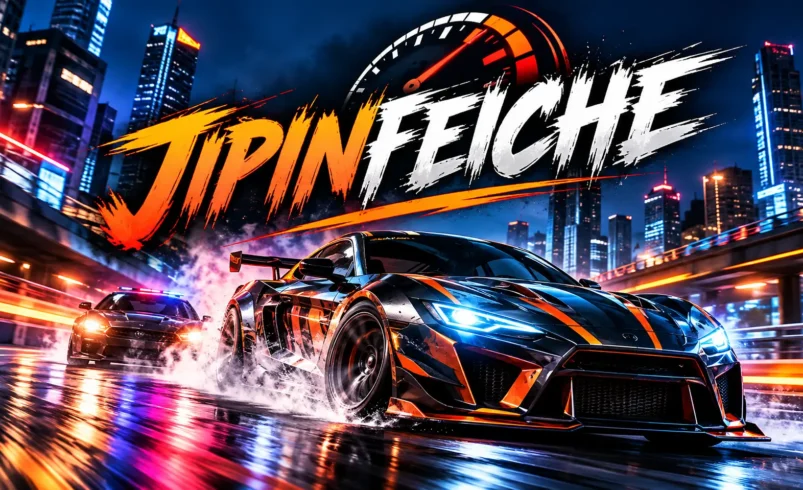
Jipinfeiche looks like the name of an unfamiliar racing game when it is written as one word in the Latin alphabet, but its gaming connection is much easier to establish when the original Chinese characters are added. The term corresponds to 极品飞车, written in Mandarin pinyin as Jípǐn Fēichē, the name Electronic Arts uses for its Need for Speed franchise on its official Simplified Chinese website. Remove the tone marks and the space between the two words and Jípǐn Fēichē becomes Jipinfeiche, which explains why the keyword can appear in searches, filenames, gaming discussions and pages written for audiences outside China. It should therefore not normally be treated as the name of an unrelated racing franchise. In its strongest documented gaming context, Jipinfeiche points toward the wider Need for Speed series, although the exact game being discussed still matters because Need for Speed includes numerous releases across PC, consoles and mobile platforms.
Jipinfeiche is the Latin-letter rendering of the Chinese name 极品飞车. Electronic Arts provides particularly strong evidence for this connection because its official Chinese Need for Speed pages use 《极品飞车》 as the franchise title and list individual games underneath it. These include titles such as Need for Speed Unbound, Need for Speed Heat, Hot Pursuit Remastered, Payback, Rivals and other releases from the long-running racing series.
This makes the term much less mysterious than some online articles suggest. Someone encountering “Jipinfeiche” without Chinese characters may reasonably assume that it belongs to a new developer or an obscure Asian racing title. Once 极品飞车 appears beside it, the connection becomes clearer. It is essentially a romanized search form of a Chinese gaming title rather than evidence of a completely separate franchise.
The distinction matters when searching for downloads, gameplay information or system requirements. “Jipinfeiche download” is too broad to identify one game because 极品飞车 can refer to the Need for Speed franchise generally. A player still needs to determine whether the intended title is Unbound, Heat, Most Wanted, an older release or a mobile game.
The Chinese characters behind Jipinfeiche are 极品飞车, while the pinyin with tone marks is Jípǐn Fēichē. The phrase can be broken into two broad components. 极品, or jípǐn, can carry the sense of something exceptional, top-grade or of particularly high quality. 飞车, or fēichē, relates to a fast-moving or speeding vehicle. Trying to turn every character into a rigid English phrase can produce awkward translations such as “premium speeding car” or “top-grade flying car,” but those literal versions miss the most important point.
In gaming usage, 极品飞车 functions as the Chinese title associated with Need for Speed. Localized entertainment titles do not have to reproduce their English originals word for word. Publishers frequently choose titles that sound natural, memorable or exciting in another language while preserving the overall identity of the product. Translating Jipinfeiche literally is therefore useful for understanding the Chinese words, but it should not replace the established English franchise name.
This also explains why several different English translations of Jipinfeiche appear online. “Elite racing car,” “ultimate speed car” and similar phrases are attempts to communicate the sense of the Chinese characters. They are not separate official names for different games.
Yes, in the relevant Simplified Chinese gaming context, 极品飞车 is the title Electronic Arts itself uses for Need for Speed. EA’s Chinese franchise page places multiple familiar Need for Speed releases under the 《极品飞车》 heading. This is considerably stronger evidence than relying on blogs attempting to guess what the unusual romanized keyword means.
EA has also used the name in individual Chinese game titles. Need for Speed Unbound appears as 极品飞车™:不羁, while the Chinese pages for Heat and other franchise entries also use 极品飞车. EA’s historical material further describes the franchise as having existed since 1994.
The safest relationship to remember is therefore simple: Jipinfeiche → Jípǐn Fēichē → 极品飞车 → Need for Speed. That does not mean Jipinfeiche is the official English spelling of the franchise. Need for Speed remains the familiar international English name. Jipinfeiche represents the pronunciation of its Chinese title written with Latin letters.
Standard pinyin would normally preserve the linguistic structure more clearly as Jípǐn Fēichē, including tone marks. Casual online writing frequently removes those marks because ordinary English keyboards and search behaviour do not always preserve Mandarin tones. Spaces can disappear as well, particularly in usernames, URLs, tags, filenames and search keywords.
The result is “Jipinfeiche.”
To someone familiar with Mandarin romanization, the pieces are easier to recognize. To someone encountering the joined spelling for the first time, it can look like an invented brand. This small formatting change is responsible for a surprising amount of confusion surrounding the keyword.
Search engines add another layer. Once enough pages use the joined spelling, Jipinfeiche becomes a searchable term in its own right even though the underlying subject already has established Chinese and English names.
One of the most important misconceptions to clear up is the idea that Jipinfeiche represents another racing series produced alongside Need for Speed. EA’s own Chinese pages do not support that interpretation. They place 极品飞车 directly within Need for Speed URLs and display familiar NFS releases under the Chinese title.
This matters because treating Jipinfeiche as a separate game leads to inaccurate descriptions of its release date, developer, gameplay modes and vehicle list. There is no single answer to questions such as “When was Jipinfeiche released?” unless the speaker identifies a particular Need for Speed title.
The franchise itself dates back to 1994, but individual entries were released in different years and were developed for different platforms. Need for Speed Heat is not the same game as Unbound, and neither is the same as Most Wanted or Hot Pursuit. Jipinfeiche can lead toward all of them because the Chinese name applies at franchise level.
Need for Speed has been part of racing-game culture since 1994. Over the following decades, the series moved through several distinct styles rather than repeating one formula indefinitely. Some entries concentrated heavily on exotic cars and open-road racing, while others became closely associated with underground street racing, visual customization, urban environments and police pursuits.
This variation is one reason different generations of players can have completely different ideas about what defines Need for Speed. Someone who grew up with Underground may associate the franchise with tuner culture and nighttime street racing. A Most Wanted player may immediately think of police chases and the BMW M3 GTR. Hot Pursuit fans may remember the direct competition between racers and law enforcement, while newer players may know the series primarily through Heat or Unbound.
EA marked the franchise’s 30th anniversary in 2024 and specifically highlighted the importance of cars such as the BMW M3 GTR from 2005’s Most Wanted. That history belongs equally to searches around Jipinfeiche because the Chinese title is attached to the same franchise rather than a parallel series.
Cars are not simply visual props in Need for Speed. Vehicle selection has always been central to the identity of the series. Different games have featured sports cars, supercars, muscle cars, tuner vehicles and performance models from manufacturers around the world.
The appeal goes beyond choosing the fastest vehicle. Players often develop attachments to particular cars because of how they appeared in a story, how they handled or how extensively they could be modified. The BMW M3 GTR became strongly associated with Most Wanted, while various Lamborghini, Nissan, Porsche and other performance models have become memorable across different eras.
This is why a search for “Jipinfeiche cars” does not have one permanent vehicle list. The available cars depend on the particular Need for Speed release. A car appearing in Heat may not necessarily be available in an older game, and DLC or later updates can change the selection further.
Customization is one of the features most strongly associated with several Need for Speed eras. Depending on the release, players can alter visual and performance elements to make a vehicle look and drive differently. Body kits, wheels, paint, wraps and other cosmetic changes can give a car a distinct appearance, while performance upgrades can affect acceleration, speed or handling.
The exact system differs substantially between games. Underground-era customization does not operate exactly like the systems found in Heat or Unbound. This is another reason broad Jipinfeiche guides can become inaccurate when they describe one set of features as though every Need for Speed title contains them.
Customization also reflects the culture surrounding the franchise. Need for Speed has frequently allowed players to treat cars as personal creations rather than disposable vehicles selected only according to statistics. Spending time building a recognizable car can become as important to some players as winning the next race.
Police pursuits have become another recognizable part of Need for Speed, although their importance varies between releases. Some games make police encounters a major part of the experience, while others focus much more heavily on racing and customization.
Most Wanted remains particularly memorable because police escalation formed an important part of its gameplay identity. Players could find themselves facing increasingly aggressive pursuit tactics as their heat level rose. Hot Pursuit took the concept in another direction by allowing the law-enforcement side of the chase to become part of the playable experience.
Modern entries have continued using police pressure in different ways. The appeal comes from adding unpredictability to a race. Reaching the finish line may no longer be the only problem; escaping afterward can become another challenge.
A search for “Jipinfeiche police chase” therefore usually points toward this established Need for Speed mechanic rather than a feature belonging to an independent game called Jipinfeiche.
Need for Speed became especially closely associated with street racing during the 2000s. Underground and its successors helped build an identity around modified cars, city streets, nighttime racing and tuner culture. This period influenced how many players still picture the franchise today.
Later games changed the formula but retained parts of that identity. Urban racing, vehicle personalization and the conflict between racers and police repeatedly returned because they fit the fantasy at the center of the series: driving desirable cars at speeds and in situations that ordinary road driving cannot provide.
This is also why a literal translation of Jipinfeiche can never fully explain what the keyword represents. The meaning is partly linguistic, but decades of gaming history have added cultural associations that cannot be captured by translating four Chinese characters.
Need for Speed Unbound is one of the major modern titles appearing under the 极品飞车 name on EA’s Chinese website. Its Chinese title is 极品飞车:不羁. The game combines street racing, car customization and police pressure with a distinctive visual direction that mixes realistic vehicles and environments with stylized effects.
Unbound also demonstrates why identifying the exact title matters before downloading anything or checking hardware requirements. EA’s PC information for Unbound lists its own minimum and recommended specifications, including storage, memory and graphics requirements. Those specifications belong to Unbound, not automatically to every game someone might call Jipinfeiche.
Older Need for Speed releases can have dramatically lower hardware requirements, while mobile entries operate under completely different conditions. “Jipinfeiche system requirements” is therefore incomplete as a technical query without the game name.
Need for Speed Heat represents another modern era of the franchise and is also presented under the 极品飞车 branding on EA’s Simplified Chinese pages. Heat built much of its structure around the contrast between daytime and nighttime driving.
That distinction changed the rhythm of play. Daytime activities and nighttime street racing carried different goals and pressures, while police became particularly important after dark. The game also continued the franchise’s strong emphasis on vehicle personalization.
Someone encountering Chinese gameplay footage titled with 极品飞车:热度 may therefore be watching Need for Speed Heat rather than an unknown Chinese racing title. Recognizing Jipinfeiche makes these cross-language searches much easier to understand.
Few Need for Speed games have retained the cultural visibility of 2005’s Most Wanted. Its combination of street racing, police pursuits and memorable vehicles made it one of the franchise’s defining releases. The BMW M3 GTR with its blue-and-silver appearance became particularly recognizable.
EA itself returned to the M3 GTR when discussing Need for Speed’s 30th anniversary in 2024, describing the car as an icon strongly associated with the franchise. That continuing recognition explains why searches involving Jipinfeiche can still lead to Most Wanted material decades after the game’s original release.
There are also different games carrying the Most Wanted name, so the year matters when researching a specific version. Assuming that every “Jipinfeiche Most Wanted” page refers to the 2005 release can create another layer of confusion.
There has also been a title explicitly called 极品飞车ONLINE. EA’s Chinese page describes it as a multiplayer online racing game developed using Frostbite 3, with Tencent handling the game in China. The page identifies Spearhead as the studio, PC as the platform and April 2016 as the launch period.
This is an important detail because it shows how “Jipinfeiche Online” can have a more specific meaning than the general Jipinfeiche keyword. It can refer to an actual Chinese-market Need for Speed online title rather than simply someone playing an ordinary NFS game over the internet.
EA’s description mentions licensed vehicles from more than 60 manufacturers, hundreds of cars, multiplayer competition and vehicle development and modification. Historical availability should not, however, be confused with present-day availability. Anyone trying to access an older online game needs to verify its current service status rather than relying on an old product page.
Mobile searches require similar care. Need for Speed has appeared on mobile devices in different forms over the years, and Chinese-market racing releases can use 极品飞车 in their titles. As a result, “Jipinfeiche mobile” does not necessarily identify one universal app.
This is where download safety becomes important. An unfamiliar romanized keyword can lead users toward APK sites claiming to offer a special Jipinfeiche game. The existence of the Chinese name does not prove that an arbitrary APK is an official EA release. The developer, publisher, app-store listing and exact title should be checked before installation.
Old mobile releases create additional confusion because guides and download pages can remain indexed long after an app changes, moves or becomes unavailable. A search result’s presence does not guarantee that the file it offers is current or legitimate.
APK searches are one of the areas where understanding the keyword can prevent unnecessary risk. Someone who believes Jipinfeiche is the name of a rare independent game may be more willing to download a file from an unfamiliar website. Once the Need for Speed connection is understood, it becomes easier to ask the correct question: which official Need for Speed mobile title is this file supposed to contain?
An installer asking for unusual permissions, arriving inside an unrelated archive or requiring security protections to be disabled deserves caution. Modified game files can also introduce account, malware or compatibility risks.
Official stores and publisher pages provide a much clearer chain between the software and its developer. When a game is no longer officially distributed, that absence does not make every third-party download safe.
Searches for Jipinfeiche codes can also be misleading because different games use different reward systems. A code associated with one mobile title does not automatically work in another Need for Speed game. Some websites publish long lists of “active codes” without identifying an official source, expiration date or even the exact game.
A legitimate code should be tied to a particular title and redemption system. Before spending time trying random strings, check whether the game itself actually supports redeemable promotional codes and where its publisher says they should be entered.
This is a simple example of why identifying the underlying game is more useful than treating Jipinfeiche as one standalone product.
Current search results contain an unusual number of explanations that have little to do with one another. Jipinfeiche has been presented as a productivity idea, lifestyle philosophy, culinary term, racing concept and independent game. Several newer pages have already noticed this contradiction.
The disagreement does not mean that no evidence exists for any meaning. In this case, primary evidence provides an important anchor: EA’s official Simplified Chinese website demonstrably uses 极品飞车 for Need for Speed.
That does not prove that every possible appearance of the Latin letters “Jipinfeiche” anywhere on the internet must refer to EA. Someone can independently use the same letters as a username or project name. It does mean that broad claims describing Jipinfeiche as an ancient philosophy, established food or unrelated racing franchise need evidence of their own rather than being accepted because a blog repeats them.
A few recent articles argue that Jipinfeiche has no established definition because they could not find the joined Latin spelling in ordinary English dictionaries or standard language references. That observation identifies a real problem with many fabricated explanations, but it overlooks an important distinction.
“Jipinfeiche” is not the strongest form in which to verify the term linguistically. The relevant Chinese text is 极品飞车, and EA’s own Chinese pages supply direct evidence connecting those characters with Need for Speed.
This illustrates why transliterated search terms need context. Searching only an informal joined romanization can produce poor evidence, while tracing it back to the original writing system can reveal a documented use.
There is no need to invent a separate company behind the gaming term. The documented gaming connection is with Electronic Arts’ Need for Speed franchise. Individual games have involved different development studios over the franchise’s long history, and some region-specific releases have involved local publishing partners.
A website, social account or seller using Jipinfeiche in its name should therefore not automatically be assumed to represent Electronic Arts. Brand association needs stronger evidence than simply using the romanized Chinese title.
This distinction becomes especially important when money or account credentials are involved. A page discussing Jipinfeiche can be unofficial even when the subject it discusses is genuinely Need for Speed.
There is no single answer because Jipinfeiche is not one game. Some Need for Speed products are sold as paid games, while specific historical or mobile releases have used different business models. EA’s page for 极品飞车ONLINE, for example, describes that particular PC title as free to experience with certain items carrying charges.
That does not mean Need for Speed Unbound or every other 极品飞车 title is free. EA’s current pages list commercial Need for Speed releases separately with their own purchasing options.
Any article claiming simply that “Jipinfeiche is free” or “Jipinfeiche costs a particular amount” is therefore missing the title required to make the statement meaningful.
The answer depends on what part of racing games appeals most. Players interested in a modern presentation and extensive customization may naturally look toward newer titles such as Unbound or Heat. Someone fascinated by classic police pursuits may be more interested in Most Wanted or Hot Pursuit. Players exploring the history of tuner-focused street racing often return to the Underground era.
There is no requirement to treat the newest release as automatically the best. Racing games age differently from online competitive titles because handling, map design, soundtrack, car selection and atmosphere can remain enjoyable long after graphics technology moves forward.
The useful approach is to identify the type of racing experience wanted first and choose the Need for Speed entry afterward.
Need for Speed has lasted because it offers a version of car culture that does not require players to be automotive engineers. Real vehicles, customization and recognizable manufacturers provide authenticity, while arcade-oriented racing keeps the experience accessible.
Different games have leaned toward different aspects of that formula. Street culture, exotic cars, police pursuits, open worlds and customization have moved in and out of focus, but speed and automotive fantasy remain consistent themes.
The Chinese name 极品飞车 works well in this context because it evokes exceptional cars and extreme movement rather than attempting a stiff word-for-word recreation of “Need for Speed.” Jipinfeiche is therefore interesting not only as a gaming keyword but also as a small example of how global entertainment brands change when they cross languages.
Knowing what Jipinfeiche represents makes Chinese gaming pages much easier to navigate. A video titled 极品飞车 may no longer look like footage from an unknown game. A Chinese store listing containing the characters can be recognized as part of the Need for Speed family, while an English search using the joined pinyin can be interpreted more accurately.
It also helps filter poor information. A page claiming Jipinfeiche is an entirely new lifestyle movement can be compared against the much stronger documented gaming use. A download page claiming to offer “the official Jipinfeiche game” can be questioned until it identifies which Need for Speed release it actually means.
Understanding the original characters turns an obscure-looking keyword into something much more familiar.
Jipinfeiche is best understood in gaming searches as the joined, tone-free romanization of Jípǐn Fēichē (极品飞车), the Chinese title Electronic Arts uses for its Need for Speed franchise. EA’s official Simplified Chinese website provides direct confirmation by placing familiar releases such as Unbound, Heat, Hot Pursuit Remastered and other Need for Speed games under the 极品飞车 name. The franchise itself dates back to 1994, and EA celebrated its 30-year history in 2024.
The important detail is that Jipinfeiche does not normally identify one separate game. The exact Need for Speed title still has to be established before discussing its cars, release date, system requirements, multiplayer modes or download options. The Chinese words can be translated loosely around the idea of exceptional or high-grade fast cars, but literal translations should not be confused with the official English brand name. For most gaming searches, the practical relationship is straightforward: when Jipinfeiche appears alongside racing games, cars or EA, the subject behind the unfamiliar spelling is usually the Need for Speed world players already know.
More Read: Blazertje: Meaning, Style, Fit & How to Wear This Dutch Fashion Favorite