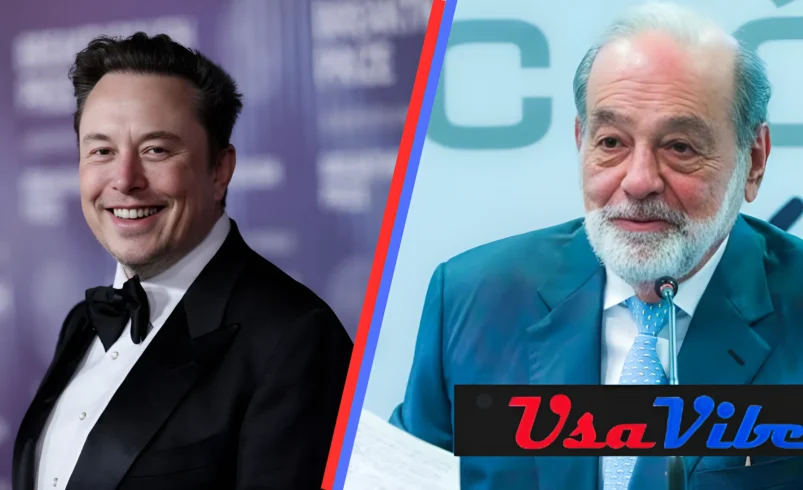
Elon Musk and Carlos Slim: Two Billionaires With Different Business Empires
October 29, 2026
0
Elon Musk and Carlos Slim are two of the world’s best-known business figures, but their careers reveal very different approaches to building wealth, managing companies, and influencing major
Elon Musk and Carlos Slim are two of the world’s best-known business figures, but their careers reveal very different approaches to building wealth, managing companies, and influencing major industries. Musk is associated with electric vehicles, space exploration, artificial intelligence, and social media. Slim built much of his fortune through telecommunications, investments, infrastructure, retail, and other established businesses, particularly in Latin America.
Their names attract interest because both have accumulated substantial wealth and developed business interests that extend beyond a single company. Yet the strategies behind their success are not identical. Musk has become known for pursuing ambitious technological projects and investing heavily in innovation, while Slim’s career illustrates the power of long-term investment, acquisitions, and ownership across multiple business sectors.
For readers searching for Elon Musk and Carlos Slim, an important question is whether the two billionaires have a documented business or personal relationship. Their public profiles establish no obvious basis for treating them as business partners or close associates. Their careers can, however, be compared to understand different approaches to entrepreneurship, investment, competition, and economic influence.
Who Is Elon Musk?
Elon Musk is an entrepreneur and business executive associated with several technology companies operating in transportation, aerospace, artificial intelligence, and digital communication.
Born in South Africa in 1971, Musk moved to North America as a young adult and became involved in technology businesses during the early development of the commercial internet. His early ventures included Zip2, a company providing online business directories and mapping services, and X.com, an online financial services company that later became part of PayPal.
The sale of PayPal helped establish the financial foundation for Musk’s subsequent ventures. He went on to invest in and lead companies pursuing electric vehicles, reusable rockets, satellite internet, and other technologies.
His public profile is closely associated with Tesla and SpaceX. Tesla helped accelerate interest in electric vehicles and battery-powered transportation, while SpaceX has developed reusable launch vehicles and expanded commercial spaceflight capabilities.
Musk’s other business interests have included social media through X, artificial intelligence through xAI, and brain-computer interface research through Neuralink.
These companies operate in different markets, but their development reflects a recurring feature of Musk’s business strategy: investing in technologies that he believes could change established industries.
Tesla and the Electric Vehicle Industry
Tesla became one of the most recognizable names in electric vehicles, helping bring battery-powered cars into the mainstream of consumer discussion.
Its business involves more than manufacturing vehicles. The company also develops battery systems, charging infrastructure, energy storage products, and software features that support its vehicles.
Musk became Tesla’s chief executive in 2008 and played a central role in the company’s public identity and expansion. Tesla’s growth helped change how many consumers and investors viewed electric vehicles, although the company operates in an increasingly competitive market.
Electric vehicle manufacturers face challenges involving production costs, battery supply chains, charging access, consumer demand, and competition from established automakers. Tesla’s position can therefore change as technology improves and other companies expand their offerings.
The company illustrates Musk’s preference for businesses that combine manufacturing with technology development. However, the commercial success of such ventures depends on execution, market conditions, regulatory requirements, and sustained demand.
SpaceX and Commercial Space Exploration
SpaceX represents another major part of Musk’s business portfolio. Founded in 2002, the company develops rockets, spacecraft, and satellite systems.
Its reusable rocket technology has helped change the economics of certain space launches by allowing parts of launch vehicles to be recovered and reused. SpaceX also operates the Starlink satellite internet network, which provides broadband connectivity in numerous markets.
The company competes for commercial, scientific, and government-related launch opportunities. Its activities also contribute to broader developments in satellite communications and human spaceflight.
Space exploration involves considerable technical and financial risk. Launch vehicles must meet demanding safety requirements, while satellite networks require significant investment in equipment, operations, and infrastructure.
SpaceX’s progress illustrates Musk’s focus on ambitious technological projects, but it also demonstrates the importance of engineering expertise, operational discipline, and long-term financing.
Who Is Carlos Slim?
Carlos Slim Helú is a Mexican business magnate and investor whose fortune has been built through telecommunications, financial investments, consumer businesses, infrastructure, and other commercial activities.
Born in Mexico City in 1940, Slim developed an interest in business and investing early in life. He studied civil engineering at the National Autonomous University of Mexico and later built an extensive investment portfolio through acquisitions and ownership stakes in businesses operating across different sectors.
Slim became particularly prominent through his involvement in telecommunications. His business group expanded significantly after the privatization of Mexico’s national telephone company in the early 1990s.
Through companies and holdings associated with Grupo Carso, América Móvil, and other business interests, Slim developed a broad commercial presence in Mexico and across international markets.
Unlike Musk’s public image as a technology-focused entrepreneur, Slim is often associated with patient capital allocation, acquiring established businesses, improving operations, and maintaining long-term ownership.
His approach demonstrates how substantial wealth can be accumulated by investing in companies that provide essential services and by expanding through acquisitions rather than concentrating primarily on creating new technologies.
América Móvil and Telecommunications
América Móvil is one of the most important businesses associated with Slim’s fortune. The telecommunications company operates mobile and fixed-line services in several countries across Latin America and other markets.
Telecommunications businesses depend on extensive infrastructure, including mobile networks, fiber-optic systems, data centers, and customer service operations. They also require substantial ongoing investment to maintain service quality and expand coverage.
Slim’s involvement in the sector reflects the commercial importance of communication networks. Mobile and broadband services have become essential to households, businesses, governments, and digital economies.
Telecommunications companies can benefit from recurring customer revenue, large subscriber bases, and established infrastructure. At the same time, they face challenges involving competition, regulation, technological upgrades, and the cost of expanding networks.
América Móvil’s position in the telecommunications market has made it a significant part of Slim’s business identity.
Grupo Carso and Diversified Investments
Slim’s business interests extend beyond telecommunications through Grupo Carso and related investments.
These interests have included retail, industrial operations, construction, infrastructure, and other businesses. Such diversification provides exposure to different sources of revenue rather than relying entirely on one industry.
A diversified business portfolio can help an investor pursue opportunities across economic cycles. However, it also requires effective oversight because each industry has its own competitive pressures, regulatory environment, and operating requirements.
Slim’s career illustrates the role of acquisitions and long-term ownership in building a business empire. Rather than relying on one product or a single technological breakthrough, his approach has involved identifying businesses with commercial potential and expanding their reach.
His investment history also reflects the importance of local market knowledge, particularly in Mexico and Latin America.
What Connects Elon Musk and Carlos Slim?
The most obvious connection between Elon Musk and Carlos Slim is their status as influential business leaders with interests spanning major industries.
Both have built or controlled substantial commercial enterprises, attracted international attention, and influenced discussions about wealth, competition, and economic development.
However, their principal business activities differ. Musk is closely associated with electric vehicles, aerospace, artificial intelligence, and digital platforms. Slim’s fortune is more closely linked to telecommunications, diversified investments, infrastructure, and established consumer businesses.
The available information does not establish a major direct business partnership between the two that explains why their names might appear together in a search query.
It would therefore be inaccurate to describe them as business partners or claim that they jointly control a major company without specific evidence.
That does not mean the two have never encountered one another. Billionaires and executives can meet at international events, business gatherings, or philanthropic functions. Such a meeting, if documented, would not automatically establish an ongoing professional relationship.
The clearest way to understand their connection is to examine their individual business empires and compare the strategies that shaped their careers.
Elon Musk vs. Carlos Slim: Business Strategies Compared
Although Musk and Slim have both accumulated substantial wealth, their business strategies reflect different priorities.
Elon Musk: Investing in technological transformation
Musk’s companies often target industries where new technology could alter existing business models.
Electric vehicles challenge conventional automotive manufacturing, reusable rockets change launch economics, and satellite internet expands alternative ways to deliver connectivity.
These ventures frequently require substantial upfront investment and years of development. They can offer significant growth opportunities, but they also expose businesses to technical setbacks, financing needs, regulatory challenges, and uncertainty about future demand.
Musk’s strategy is associated with ambitious projects and a willingness to pursue difficult engineering objectives.
Carlos Slim: Acquisitions and long-term investment
Slim’s business career illustrates a different route to expansion. His investment activities have emphasized acquiring established businesses, developing operating capabilities, and maintaining exposure to sectors that serve large populations.
Telecommunications, retail, construction, and infrastructure businesses often depend on large customer bases and extensive physical networks.
These characteristics can create opportunities for long-term growth, although they also involve significant capital requirements and regulatory oversight.
Slim’s approach highlights the importance of valuation, ownership, operating efficiency, and the ability to identify commercial opportunities within established industries.
What the comparison reveals
Neither approach guarantees success. Technology-focused businesses can achieve rapid growth but face substantial uncertainty. Established businesses can generate recurring revenue but may encounter slow growth, competition, or regulatory pressure.
The strategies also are not mutually exclusive. Technology companies make acquisitions and manage long-term investments, while diversified investment groups may invest in innovative technologies.
The comparison is most useful as a way to understand where each billionaire has concentrated his resources and how those choices have influenced the businesses associated with him.
Comparing Their Business Empires
Category
Elon Musk
Carlos Slim
Main business focus
Technology, transportation, aerospace, and digital platforms
Telecommunications, diversified investments, infrastructure, and retail
Best-known companies
Tesla and SpaceX
América Móvil and Grupo Carso
Expansion approach
Product development, technological innovation, and scaling new markets
Acquisitions, long-term ownership, and expansion of established businesses
Major operating markets
Global technology, automotive, aerospace, and digital markets
Mexico, Latin America, and international telecommunications and commercial markets
Investment profile
Concentrated public identity around high-profile technology ventures
Broad exposure to multiple established industries
Common business challenges
Technical risk, competition, financing, and regulation
Market competition, regulation, capital allocation, and operational complexity
This comparison simplifies two complex business portfolios. Both men have interests beyond their best-known companies, and the structure of their holdings can change over time.
Who Is Wealthier: Elon Musk or Carlos Slim?
The answer depends on the date and the methodology used to estimate their wealth.
Billionaire net worth is not the same as cash held in a bank account. Much of a business leader’s wealth may be tied to shares in companies, private investments, and other assets whose values can change substantially.
Musk’s estimated wealth is particularly sensitive to valuations associated with Tesla, SpaceX, and other business interests. Changes in share prices, private-company valuations, ownership stakes, and financial arrangements can affect published estimates.
Slim’s wealth is influenced by the value of his holdings in América Móvil, Grupo Carso, and other investments. Changes in stock markets, currency values, and company performance can also affect his estimated net worth.
Because these factors change over time, a precise comparison should use estimates published for the same date and should identify the methodology behind them.
Without a verified, date-specific comparison, it is better not to assign either billionaire an exact current net worth or declare a definitive ranking.
The broader distinction is that their wealth comes from different types of businesses. Musk is associated heavily with technology-driven enterprises, while Slim’s fortune has historically been connected to telecommunications and a diversified portfolio of commercial holdings.
Their Influence on Technology and Economic Development
Musk and Slim influence different parts of the modern economy through their business activities.
Musk’s companies are involved in technologies that affect transportation, energy storage, satellite connectivity, space launch services, and artificial intelligence. These sectors can influence how people travel, communicate, produce energy, and access digital services.
Slim’s business interests have contributed to the development and expansion of telecommunications networks and other commercial infrastructure, particularly in Mexico and Latin America.
Telecommunications infrastructure supports digital commerce, education, remote communication, business operations, and access to online services. Reliable connectivity can be important to economic participation, although the benefits depend on affordability, competition, and access.
Both business empires also raise questions about the concentration of economic power. Large companies can finance complex projects and expand services, but their market positions can create concerns about competition, pricing, regulation, and the influence of major owners.
These issues cannot be resolved simply by comparing the fortunes of two billionaires. They require attention to individual markets, consumer outcomes, public policy, and the specific conduct of each business.
Philanthropy and Public Influence
Both Musk and Slim have public profiles that extend beyond their commercial activities, although their philanthropic and public-facing work has taken different forms.
Musk has supported various charitable initiatives and has been associated with donations involving technology, education, disaster relief, and other causes. The scale and distribution of his philanthropic activity have attracted public attention, and specific claims about donations should be assessed individually.
Slim has supported education, health, cultural initiatives, and other social programs through foundations and philanthropic organizations associated with his business interests.
His philanthropic work has included initiatives focused on expanding access to educational resources, supporting medical programs, and preserving cultural and historical materials.
Philanthropy by wealthy business leaders can provide resources for research, social services, education, and community projects. It can also raise questions about transparency, accountability, the priorities chosen by private donors, and the relationship between private giving and public responsibility.
The important point is that charitable activity should be evaluated through its documented programs and outcomes rather than through a person’s wealth or public reputation alone.
Leadership Lessons From Elon Musk and Carlos Slim
Their careers provide several useful lessons for readers interested in entrepreneurship, investing, and management.
Understand the industry before investing
Musk’s technology ventures and Slim’s acquisitions illustrate the importance of understanding the markets in which a business operates. Successful decisions require knowledge of customers, competitors, operating costs, and long-term demand.
Choose a strategy that matches the opportunity
A new technology may require substantial research and development, while an established business may offer opportunities for operational improvement or expansion.
Entrepreneurs and investors need to assess whether their strategy matches the risks, resources, and competitive conditions involved.
Treat risk as an ongoing responsibility
Large investments do not eliminate uncertainty. Companies must continually evaluate financial exposure, technological challenges, regulation, and changes in customer behavior.
Think beyond short-term results
Building a business often requires years of investment and sustained execution. Short-term success can be important, but durable performance depends on a business’s ability to adapt and remain competitive.
Recognize the importance of management
An entrepreneur’s vision or an investor’s capital allocation decisions are only part of a company’s performance. Employees, engineering teams, financial professionals, suppliers, and operational leaders also contribute to results.
These lessons do not suggest that one billionaire’s approach should be copied universally. Instead, their careers illustrate different ways of building and managing large enterprises.
Frequently Asked Questions
1. Who is Elon Musk?
Elon Musk is an entrepreneur and business executive associated with Tesla, SpaceX, and other technology companies. His business interests include electric vehicles, aerospace, satellite internet, and artificial intelligence.
2. Who is Carlos Slim?
Carlos Slim Helú is a Mexican investor and business magnate whose fortune has been built through telecommunications, diversified investments, infrastructure, and other commercial businesses.
3. Are Elon Musk and Carlos Slim business partners?
The information reviewed does not establish a major direct business partnership between them. Their businesses are associated with different industries and operating strategies.
4. Why are Elon Musk and Carlos Slim compared?
Both are influential business leaders with substantial fortunes and extensive commercial interests. Comparing them offers an opportunity to examine different approaches to entrepreneurship, investment, and corporate expansion.
5. Who has more money, Elon Musk or Carlos Slim?
Their relative wealth depends on the date and the valuation methodology used. Company shares, private investments, currency movements, and other assets can change their estimated net worth. A reliable comparison should use figures calculated for the same date.
6. What is Elon Musk best known for?
Musk is best known for his leadership roles associated with Tesla and SpaceX, as well as his involvement in other technology ventures.
7. What is Carlos Slim best known for?
Slim is best known for his telecommunications investments, particularly América Móvil, and for his broader business interests through Grupo Carso and related holdings.
8. Do Elon Musk and Carlos Slim have similar investment strategies?
Their approaches differ in emphasis. Musk is strongly associated with developing and scaling technology-focused businesses, while Slim is associated with acquisitions, long-term ownership, and diversified investments. Both approaches involve capital allocation and risk management.
Conclusion
Elon Musk and Carlos Slim represent two different approaches to building business empires. Musk has focused much of his public career on technology-driven ventures in transportation, aerospace, and digital services. Slim has built a diversified commercial portfolio with a strong foundation in telecommunications and established businesses.
Their careers demonstrate that substantial wealth can emerge through different combinations of entrepreneurship, investment, innovation, acquisitions, and long-term ownership.
Although their names may appear together in business discussions, the information reviewed does not establish a significant direct partnership between them. Their value as a comparison lies in the differences between their industries and strategies rather than in an assumed personal or commercial connection.