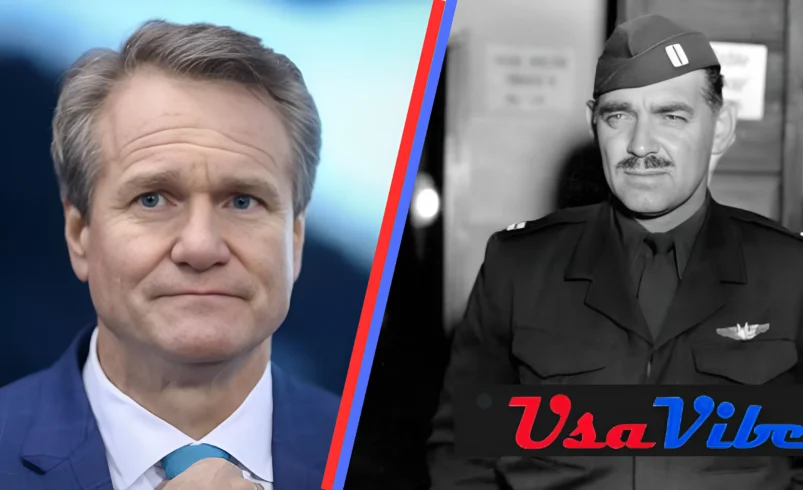
Brian Moynihan and Clark Gable: Two Influential Figures From Banking and Hollywood
November 10, 2026
0
Brian Moynihan and Clark Gable belong to two entirely different chapters of American history. One is recognized for his leadership in modern banking, while the other became one
Brian Moynihan and Clark Gable belong to two entirely different chapters of American history. One is recognized for his leadership in modern banking, while the other became one of the most celebrated actors of Hollywood’s Golden Age. Although their professional lives never followed the same direction, both names carry considerable recognition in their respective fields.
Brian Moynihan built his reputation through corporate leadership, financial strategy, and his long association with Bank of America. Clark Gable, meanwhile, became a defining presence in American cinema through his confident screen persona, memorable performances, and enduring popularity. Their stories offer an interesting look at how influence develops in different industries and how individuals can leave lasting marks on American culture.
For anyone searching for Brian Moynihan and Clark Gable together, it is important to establish one point clearly: there is no widely documented family relationship, business partnership, or personal connection between the two. Their significance comes from their separate achievements, not from a confirmed shared history.
Brian Moynihan: The Executive Behind a Major American Banking Institution
Brian Moynihan was born on October 9, 1959, in Marietta, Ohio. He developed an interest in business and law before building a career that would eventually place him among the most recognizable executives in the American financial sector.
After graduating from Brown University, he earned a law degree from the University of Notre Dame Law School. His legal education provided a foundation for understanding corporate structures, financial regulations, and the responsibilities involved in managing large organizations.
Moynihan initially worked in the legal profession before entering the financial services industry. His career progressed through several leadership positions, including roles connected to FleetBoston Financial and Bank of America. When Bank of America acquired FleetBoston in 2004, Moynihan continued his professional development within the larger organization.
His appointment as chief executive officer of Bank of America in 2010 marked a defining moment in his career. He took leadership during a particularly challenging period for the American banking industry, following the global financial crisis.
Leading Bank of America Through a Changing Financial Landscape
Taking responsibility for a major financial institution after the 2008 financial crisis involved more than maintaining daily operations. Banks were facing increased regulatory scrutiny, changing customer expectations, economic uncertainty, and pressure to strengthen their financial positions.
Under Moynihan’s leadership, Bank of America concentrated on improving its balance sheet, managing expenses, strengthening risk controls, and expanding its digital banking capabilities.
The company also continued investing in technology to make financial services more accessible through mobile banking, online platforms, and automated customer support.
Several areas have defined his leadership approach:
Financial stability: Maintaining a strong capital position and managing financial risks.
Digital transformation: Expanding mobile and online banking services.
Customer relationships: Improving access to banking products for individuals and businesses.
Corporate responsibility: Supporting environmental initiatives and community development.
Long-term strategy: Positioning the institution to operate in an increasingly technology-driven financial industry.
Moynihan’s career is closely associated with the transformation of traditional banking into a more digitally connected service. His influence is not measured through public entertainment or cultural recognition but through decisions affecting customers, employees, investors, and the wider financial system.
Clark Gable: The Hollywood Legend Whose Screen Presence Defined an Era
Clark Gable was born William Clark Gable on February 1, 1901, in Cadiz, Ohio. Long before his name became associated with Hollywood royalty, he experienced a relatively ordinary upbringing in a working-class American family. His early life included several jobs and an eventual interest in theatre that would change the direction of his future.
Gable did not achieve immediate success in the entertainment industry. He spent time developing his acting skills through stage performances before gradually finding opportunities in films. His early Hollywood experiences included smaller roles, but his natural confidence, expressive acting style, and distinctive personality eventually attracted attention.
His career gained momentum after joining Metro-Goldwyn-Mayer (MGM) in the early 1930s. The studio recognized his potential and began placing him in increasingly prominent productions. Gable soon became one of the most recognizable leading men in American cinema.
His screen personality was particularly appealing because he could combine humor, confidence, romance, and a certain rebellious charm. He did not rely entirely on traditional leading-man qualities; his performances often carried an individuality that audiences remembered.
The Film That Earned Clark Gable His Place in Oscar History
One of the defining achievements of Gable’s career came with It Happened One Night (1934), directed by Frank Capra.
In the film, he played Peter Warne, a newspaper reporter who becomes involved with a wealthy young woman played by Claudette Colbert. The combination of comedy, romance, and engaging dialogue made the production a major success.
Gable won the Academy Award for Best Actor for his performance. The film also became the first production to win all five major competitive Academy Awards: Best Picture, Best Director, Best Actor, Best Actress, and Best Adapted Screenplay.
His success continued with other important productions, including:
Mutiny on the Bounty (1935), in which he portrayed Fletcher Christian.
San Francisco (1936), a drama featuring major Hollywood stars.
Test Pilot (1938), showcasing his familiar adventurous screen persona.
Gone with the Wind (1939), in which he played Rhett Butler.
Mogambo (1953), an adventure film featuring Ava Gardner and Grace Kelly.
The Misfits (1961), released after his death.
His performance as Rhett Butler in Gone with the Wind became particularly influential. The character’s complicated personality, sharp dialogue, and relationship with Scarlett O’Hara helped make the film one of the most recognizable productions in cinema history.
Gable received another Academy Award nomination for the role, adding to his earlier recognition for It Happened One Night and Mutiny on the Bounty.
A Hollywood Career That Extended Beyond the Movie Screen
Clark Gable’s life was not limited to film production. During World War II, he served in the United States Army Air Forces after the death of his third wife, actress Carole Lombard, in an airplane crash in 1942.
He participated in aerial missions over Europe and received military recognition for his service. This period represented a significant departure from his established Hollywood career and demonstrated another side of his public life.
After completing his military service, Gable returned to acting. Although the entertainment industry had changed, he continued appearing in major productions and remained a recognizable Hollywood personality.
His final film, The Misfits, featured Marilyn Monroe and Montgomery Clift. Gable completed filming shortly before suffering a fatal heart attack on November 16, 1960. The film was released in 1961.
Even decades after his death, his performances continue to attract audiences interested in classic American cinema.
Brian Moynihan and Clark Gable: Where Their Stories Actually Meet
At first glance, bringing Brian Moynihan and Clark Gable into the same discussion might seem unusual. One represents modern corporate leadership, while the other belongs to an era when Hollywood studios shaped much of popular entertainment.
Their connection is best understood through their respective contributions to American professional and cultural history.
Moynihan’s career reflects the changing nature of financial institutions. Banking has evolved from traditional branch-based services into a technology-driven industry involving digital payments, cybersecurity, international markets, and sophisticated financial products.
Gable’s career reflects a different transformation. He worked during a period when cinema was becoming a central part of American popular culture. His performances helped establish the image of the confident Hollywood leading man, influencing how audiences viewed movie stars for generations.
There are several interesting differences between their professional journeys:
Comparison
Brian Moynihan
Clark Gable
Profession
Banking executive
Film actor
Main industry
Financial services
Entertainment
Era of influence
Modern business
Hollywood Golden Age
Major association
Bank of America
MGM and classic Hollywood
Recognized achievement
Banking leadership
Academy Award-winning performance
Lasting contribution
Financial and corporate leadership
American film history
Their stories demonstrate how individuals can become influential without sharing the same profession, generation, or public platform.
Is Brian Moynihan Related to Clark Gable?
There is no established public evidence of a family relationship between Brian Moynihan and Clark Gable.
Their family backgrounds, professional histories, and personal biographies are separate. Moynihan’s life is documented through his education, legal background, and banking career, while Gable’s biography centers on his childhood in Ohio, acting career, marriages, and military service.
Similarly, there is no widely documented evidence of a business partnership, personal friendship, or professional collaboration between them.
The appearance of both names in the same search query should therefore be treated as a reason to explore their individual biographies rather than an indication of a hidden relationship.
Two Different Legacies That Continue to Attract Attention
The lasting recognition of Brian Moynihan and Clark Gable comes from two very different forms of achievement.
Moynihan’s professional story is connected to leadership, financial responsibility, and the management of a major banking organization. His position has placed him in discussions about the future of financial services, economic conditions, corporate governance, and responsible business practices.
Gable’s reputation has survived through the continued popularity of classic films. His work remains part of discussions about Hollywood history, acting styles, and the development of American cinema.
What makes their comparison worthwhile is the opportunity to see how professional influence changes across generations. In one era, a film performance could establish a cultural icon. In another, decisions made inside a financial institution could influence millions of customers and businesses.
Both careers offer a different perspective on ambition, professional development, and the ways individuals become recognized beyond their immediate working environments.
Frequently Asked Questions
Who is Brian Moynihan?
Brian Moynihan is an American banking executive who serves as chairman and CEO of Bank of America. He has held the CEO position since 2010 and has played a major role in the company’s development.
Who was Clark Gable?
Clark Gable was an American actor known as the King of Hollywood. He became famous for films including Gone with the Wind, It Happened One Night, and Mutiny on the Bounty.
Did Brian Moynihan and Clark Gable ever work together?
There is no publicly documented professional collaboration between the two. Their careers belong to different industries and historical periods.
What was Clark Gable’s most famous movie?
His portrayal of Rhett Butler in Gone with the Wind is widely considered his signature role. However, It Happened One Night was the film that earned him his Academy Award for Best Actor.
What is Brian Moynihan known for besides banking?
Beyond his leadership at Bank of America, Moynihan is associated with economic policy discussions, corporate governance, sustainability initiatives, and higher education leadership. He became Brown University’s 22nd chancellor in 2024.
When did Clark Gable die?
Clark Gable died on November 16, 1960, in Los Angeles, California, following a heart attack. His final film, The Misfits, was released the following year.
Final Thoughts
Brian Moynihan and Clark Gable represent two distinct forms of American influence. Moynihan’s career reflects the responsibilities and challenges of leading a major financial institution, while Gable’s performances helped define an unforgettable period in Hollywood history. Although there is no established personal or professional relationship between them, their individual stories provide an engaging comparison of business leadership and cultural achievement. Their legacies continue to attract attention for different reasons, making both names relevant to readers interested in influential American personalities.