Introduction
Artificial intelligence is becoming an important part of everyday life. From recommendation systems and virtual assistants to medical research and business automation, AI models help people complete tasks more efficiently. However, these systems do not become intelligent simply by collecting large amounts of information. They need accurate, well-organized data to recognize patterns, understand instructions, and produce useful results. This is where data labeling plays an essential role.
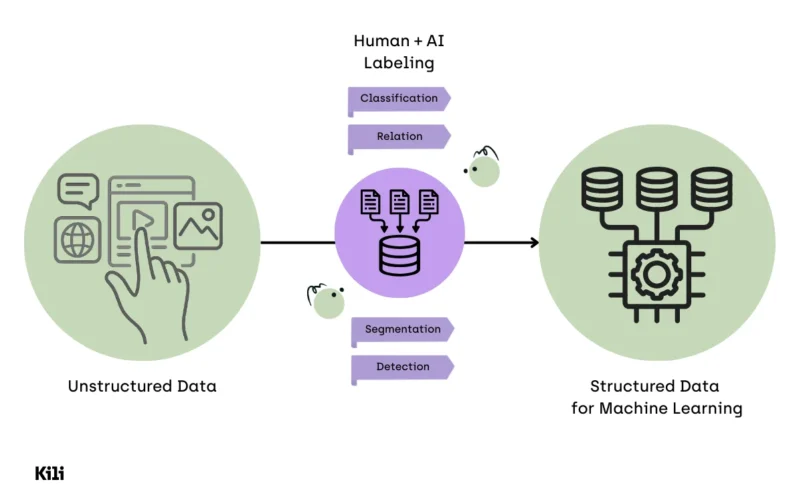
Data labeling is the process of adding meaningful information to raw data so that machine learning models can understand what they are analyzing. For example, an image might be labeled as containing a car, a person, or a building. Similarly, a recorded conversation can be labeled to identify spoken words, while a document can be categorized according to its subject. These labels provide the guidance AI systems need during training.
As AI projects become more advanced, businesses require reliable processes and suitable tools to organize labeling work. Platforms such as labelbox help teams manage data annotation activities, collaborate on projects, and maintain consistency across datasets. Understanding how this process works can help organizations build more dependable AI models and make better use of their data.
What Is Data Labeling?
Data labeling, also known as data annotation, involves identifying and marking information within different types of datasets. The purpose is to make raw information understandable to machine learning algorithms.
Common types of data labeling include:
- Image labeling: Identifying objects, people, or other elements within photographs.
- Text labeling: Categorizing written content, identifying keywords, or recognizing opinions.
- Audio labeling: Transcribing speech and identifying sounds or speakers.
- Video labeling: Marking objects and activities across video frames.
- Data classification: Assigning categories to information according to predefined rules.
The labeling method depends on the AI application. A model designed to recognize objects in photographs needs different annotations from one created to understand customer messages.
Why Data Labeling Matters in AI Development
Machine learning models learn by identifying patterns in training data. However, without clear labels, many supervised learning systems cannot reliably determine what the examples represent.
Imagine developing an AI application that recognizes different types of plants. If the training images are accurately labeled, the model can learn the visual differences between species. If the labels are incorrect or inconsistent, the system may develop misunderstandings and produce unreliable predictions.
Quality labeling supports AI development in several ways:
- Improves learning: Clear annotations help models recognize relevant patterns.
- Supports accuracy: Correct labels reduce confusion during training.
- Encourages consistency: Standardized guidelines help teams annotate information uniformly.
- Saves development time: Organized datasets make it easier to identify and correct problems.
- Strengthens evaluation: Properly labeled examples help developers assess model performance.
How Data Labeling Supports Different AI Applications
Data labeling is useful across many industries because AI systems depend on different types of information.
Healthcare
Healthcare researchers may use labeled medical images to train systems that assist with identifying patterns in scans. Specialists must carefully review annotations to ensure that datasets are appropriate and accurately prepared. AI tools can support professional workflows, but medical decisions should remain under qualified human oversight.
Retail and E-Commerce
Online retailers use AI to recommend products, organize catalogs, and understand customer preferences. Labeled product images and descriptions help systems recognize categories, colors, and other relevant details.
Transportation
Transportation technology uses labeled images and video to help systems identify road signs, vehicles, and surrounding objects. Accurate annotations are particularly important because these applications can involve safety-related decisions.
Customer Service
Businesses can label customer messages according to topics, questions, or sentiment. This helps train systems that organize incoming requests and direct them to appropriate support teams.
The Importance of High-Quality Annotations
Having a large dataset does not automatically produce a successful AI model. The quality of its annotations is equally important. Incorrect labels can introduce confusion, while inconsistent labeling standards may cause a model to learn conflicting patterns.
Organizations can improve annotation quality by following a few practical steps:
- Create clear guidelines: Explain how each data category should be labeled.
- Train annotation teams: Make sure workers understand the project’s requirements.
- Review completed work: Check samples regularly to identify mistakes.
- Resolve disagreements: Establish a process for handling unclear examples.
- Update datasets: Correct outdated or inaccurate annotations when necessary.
Human review remains valuable, even when automated tools assist with the labeling process. People can recognize unusual situations, understand context, and identify mistakes that automated systems might overlook.
Common Challenges in Data Labeling
Although data annotation is essential, managing it can be complicated. Large projects may involve thousands or millions of records, making consistency difficult to maintain.
Some common challenges include:
- Time requirements: Detailed annotation can take considerable effort.
- Subjective decisions: Different annotators may interpret unclear information differently.
- Data complexity: Some images, recordings, and documents require specialist knowledge.
- Privacy concerns: Sensitive information must be handled responsibly.
- Changing requirements: AI projects may need updated categories as their goals develop.
Planning ahead, providing training, and introducing quality checks can help teams address these issues more effectively.
Choosing Suitable Tools for Data Annotation
The right technology can make annotation projects easier to organize. Businesses should consider their dataset size, project requirements, collaboration needs, and available budget before selecting a platform.
Comparing options through a software directory can help decision-makers explore different solutions and understand the features available. They should also consider ease of use, security measures, integration options, and the ability to manage different data formats.
Rather than selecting a tool based only on popularity, organizations should evaluate whether it supports their actual workflow. A small project may need basic annotation features, while a large AI development team may require advanced collaboration and review capabilities.
Conclusion
Data labeling provides the foundation that helps AI models learn from information and recognize meaningful patterns. Accurate annotations improve consistency, support reliable predictions, and strengthen model evaluation. By combining clear guidelines, human oversight, and suitable tools, organizations can develop more effective AI systems and prepare their datasets for future innovation.