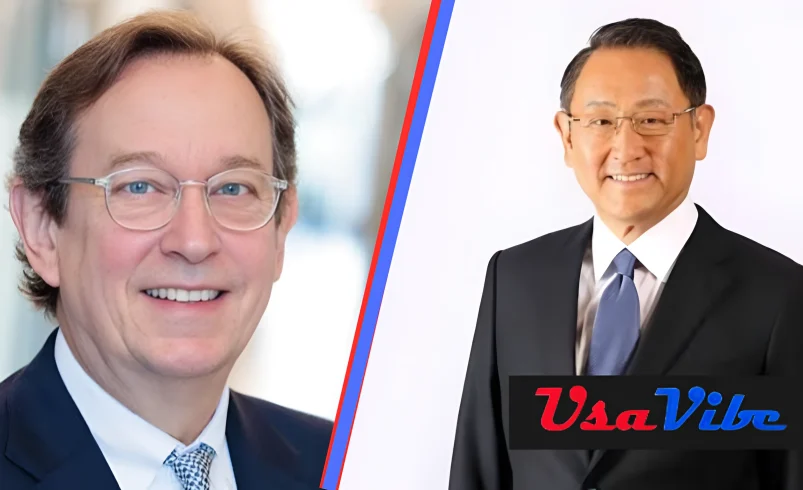
Richard Peery and Akio Toyoda are two names that come from very different corners of the business world. Peery became closely associated with the growth of Silicon Valley commercial real estate, while Toyoda spent decades building his career within Toyota Motor Corporation, eventually becoming chairman of the company’s board.
At first glance, there appears to be little reason for their names to appear together. One built a major real estate career in California, while the other became one of the most recognizable executives in the international automotive industry.
There is also an important clarification to make at the beginning. There is no well-documented public evidence that Richard Peery and Akio Toyoda are business partners, relatives, or participants in a major joint venture. Their stories are separate. What makes the pairing interesting is the contrast between their careers, industries, and approaches to long-term business building.
Peery’s story is tied to land, property development and the rise of Silicon Valley. Toyoda’s story is tied to manufacturing, automobiles, corporate leadership and motorsport. Looking at both provides a useful picture of how very different business environments can produce very different kinds of leadership.
Who Is Richard Peery?
Richard Peery is an American real estate developer and investor whose career became closely connected with the transformation of Silicon Valley.
His name is particularly associated with Peery-Arrillaga, the commercial real estate partnership he built with John Arrillaga. Stanford’s account of Arrillaga’s career explains that the two men began buying fruit orchards around Stanford University during the early development of what would eventually become Silicon Valley. They transformed agricultural land into office parks as technology companies began expanding throughout the region.
This was a long-term bet on the future of the region.
Before Silicon Valley became synonymous with technology companies, venture capital and global software businesses, much of the Santa Clara Valley had a very different character. Peery and Arrillaga recognized that growing businesses would require physical space, and they developed commercial properties to meet that demand.
Their company eventually became one of Silicon Valley’s major commercial real estate developers.
Richard Peery and John Arrillaga
John Arrillaga was the most important business partner in Peery’s career.
The two worked together for decades, acquiring land and developing office properties throughout Silicon Valley. Stanford describes their partnership as beginning when they purchased fruit orchards and converted them into office parks as the technology industry expanded.
Forbes similarly identifies Arrillaga as Peery’s longtime business partner and reports that the pair began acquiring farmland in the 1960s before turning it into commercial office properties. Forbes also reports that the partners sold many of their buildings for approximately $1.1 billion in 2006.
That partnership is central to understanding Peery’s career.
Rather than building his reputation through a public technology company, Peery accumulated influence through property. His business model depended on understanding location, development, tenants and the long-term economic direction of Silicon Valley.
The result was a substantial commercial real estate portfolio connected to some of the world’s most important technology companies.
How Peery Became Part of Silicon Valley’s Growth
Peery’s career developed at an unusually important moment for Northern California.
The technology industry was expanding rapidly, and companies needed offices, research facilities and other commercial infrastructure.
Peery and Arrillaga were positioned to provide that physical infrastructure.
Stanford’s historical account notes that their company eventually leased office space to companies including Intel, Apple, Facebook and Google.
This illustrates an important distinction between Peery and many of the technology billionaires associated with Silicon Valley.
He did not primarily build software or hardware.
Instead, his business benefited from the physical expansion of the companies that were transforming the region.
The office buildings became part of the infrastructure supporting the technology economy.
Richard Peery’s Early Business Background
Peery’s professional path began before his partnership with Arrillaga became famous.
Forbes reports that he gained early experience by managing his father’s property portfolio. The same profile notes that Peery attended Brigham Young University and later left Stanford’s MBA program.
That early exposure to property management gave him a practical foundation for the career that followed.
Real estate can be a particularly long-term business. A property purchased at one stage of a region’s development may become dramatically more valuable decades later if the surrounding economy changes.
Peery’s career became an example of that principle.
His success was closely tied to anticipating how the land around Stanford and throughout Silicon Valley would evolve.
Richard Peery’s Wealth
Richard Peery has become a billionaire through real estate.
Forbes currently estimates his real-time net worth at approximately $3.5 billion, with the figure dated September 10, 2026. Forbes identifies real estate as his source of wealth and describes him as a self-made businessman.
Net worth figures for wealthy private individuals can change over time because asset values, ownership structures and other financial factors change.
For that reason, a current estimate should not be treated as a fixed amount.
What is more important to Peery’s biography is the source of that wealth. His fortune is strongly associated with commercial real estate and the long-term development of Silicon Valley.
Richard Peery and Philanthropy
Peery’s public profile also extends beyond real estate.
The Peery Foundation is associated with the Peery family and supports nonprofit organizations in areas including education and social development.
His philanthropic activities reflect a pattern also seen among other major Silicon Valley-era business figures: building a commercial fortune and later directing resources toward educational and community causes.
However, his primary historical identity remains connected to commercial property development.
That is what distinguishes his career from Akio Toyoda’s.
Who Is Akio Toyoda?
Akio Toyoda is a Japanese business executive and a member of the family that founded Toyota.
Born on May 3, 1956, Toyoda studied law at Keio University before earning an MBA from Babson College in the United States. He joined Toyota Motor Corporation in 1984.
His career inside Toyota covered many different areas of the automotive business.
Toyota’s official biography records responsibilities involving production, marketing, product development, purchasing, quality, sales and international operations. He also served as an executive vice president and board member at New United Motor Manufacturing, Inc., Toyota’s joint venture with General Motors in California.
This broad operational experience became an important part of his eventual leadership of Toyota.
Unlike Peery, who built his career as a real estate entrepreneur, Toyoda developed his career largely inside an established global corporation.
Akio Toyoda’s Rise Through Toyota
Toyoda joined Toyota in 1984 and gradually moved through increasingly senior positions.
He joined the company’s board in 2000 and later became an executive vice president. In June 2009, he became president of Toyota Motor Corporation.
His rise was not simply a matter of family heritage.
Toyota’s official biography records responsibilities across numerous areas of the company, including operations in Asia, China, the Americas, product management, quality, purchasing and overseas sales.
Those assignments gave him experience across different parts of the organization before he eventually reached the company’s top leadership position.
His presidency began during a difficult period for the global automotive industry, making his tenure particularly consequential for Toyota.
Akio Toyoda Is Now Toyota’s Chairman
One important detail for anyone researching Akio Toyoda today is his current position.
Older articles often describe Toyoda as Toyota’s president or CEO, but those titles are no longer current.
Toyota’s official executive information lists Akio Toyoda as Chairman of the Board of Directors and Kenta Kon as President. The change took effect in June 2026 following Toyota’s annual shareholders’ meeting.
Toyota’s official June 17, 2026 announcement specifically identifies Toyoda as chairman and Kon as president and member of the board.
This distinction matters because outdated descriptions of Toyoda’s role remain widely available online.
As of 2026, he is chairman rather than Toyota’s current president and CEO.
Akio Toyoda and Motorsports
One of the most distinctive aspects of Toyoda’s career is his personal involvement in motorsports.
He has competed under the name Morizo, developing a public identity that connects his corporate role with his interest in driving and racing.
Toyota’s motorsport materials identify Toyoda as chairman of Toyota Gazoo Racing World Rally Team and note his racing background, including his participation in the Nürburgring 24 Hours.
This interest is more than a personal hobby within the story of Toyoda’s career.
Motorsports became connected to Toyota’s broader approach to developing vehicles and testing engineering ideas under demanding conditions.
For Toyoda, driving provided a direct connection to the products that Toyota builds.
That makes his leadership profile different from a corporate executive whose experience exists almost entirely within offices and boardrooms.
The Morizo Identity
The name Morizo became closely associated with Toyoda’s motorsport activities.
Under this identity, he participated in races and developed a reputation as an executive who genuinely enjoyed driving.
Toyota’s racing materials continue to identify him as Morizo in the context of motorsport.
The connection between Toyoda and racing also reflects his broader interest in what Toyota calls making “ever-better cars.”
Rather than viewing automobiles solely as products to manufacture and sell, his public career has frequently emphasized driving experience, engineering and competition.
That philosophy has become closely associated with Toyota Gazoo Racing.
Richard Peery and Akio Toyoda: Is There a Direct Connection?
The available evidence does not establish a meaningful direct relationship between Richard Peery and Akio Toyoda.
Peery’s major documented business relationship was with John Arrillaga and centered on Silicon Valley commercial real estate. Stanford and Forbes both identify Arrillaga as Peery’s longtime partner.
Toyoda’s professional history is centered on Toyota Motor Corporation.
Toyota’s official records trace his career through the company’s operations, board and executive leadership.
There is no established public record showing Peery and Toyoda as business partners, relatives or co-founders of a shared enterprise.
That means the two names should not be presented as if they belong to the same business story.
Why Are Their Names Appearing Together?
Search behavior can sometimes create pairings that do not reflect a direct relationship.
When two successful people from different industries become the subject of comparison articles, their names can begin appearing together across websites. Readers then naturally assume there must be a hidden connection.
In this case, the documented information points in a different direction.
Peery represents Silicon Valley commercial real estate.
Toyoda represents global automotive leadership.
The comparison itself can be interesting without requiring a personal connection.
Two Different Business Models
Peery and Toyoda built their careers through fundamentally different business models.
Peery worked with land and commercial property.
The value of his investments depended heavily on location, economic development, tenants and long-term demand.
Toyoda worked inside a global manufacturing organization.
His responsibilities involved products, factories, international operations, marketing, technology, quality and corporate strategy.
A commercial real estate developer and an automotive chairman face very different challenges.
Peery needed to understand where businesses would want to operate.
Toyoda needed to understand how a multinational automaker should develop products and compete in an industry undergoing technological change.
Their careers therefore provide two distinct examples of long-term business leadership.
The Importance of Timing in Peery’s Career
Timing played an important role in Peery’s real estate career.
Buying farmland before the area became one of the world’s most valuable technology regions required a long-term view of economic development.
Stanford’s account of the Peery-Arrillaga partnership makes this transformation particularly clear. The men acquired agricultural land at a time when Silicon Valley had not yet become the technology center recognized today. They then developed office space as technology companies expanded.
The value of their properties increased alongside the region.
This demonstrates an important feature of real estate entrepreneurship: the business can depend as much on anticipating future demand as on managing existing assets.
The Importance of Industry Experience for Toyoda
Toyoda’s career illustrates a different kind of long-term development.
Before becoming Toyota’s president, he accumulated experience across numerous areas of the company.
Toyota’s official biography records his involvement in production, marketing, product development, quality, purchasing, sales and international operations.
That range of experience gave him exposure to many sides of the automotive business.
His career therefore developed through organizational depth rather than property accumulation.
The two paths were very different, but both involved learning how complex systems operate over long periods.
Peery’s Relationship With Silicon Valley
Peery’s story cannot really be separated from Silicon Valley.
His partnership with Arrillaga developed alongside the growth of the technology sector.
The office properties they built were used by companies that became central to the region’s transformation.
Stanford notes that tenants included Intel, Apple, Facebook and Google.
This means Peery’s influence was not necessarily visible to consumers in the way a technology founder’s influence might be.
Most people may never have known his name.
Yet the physical environments created by his company formed part of the infrastructure supporting Silicon Valley’s technology economy.
Toyoda’s Relationship With the Automotive Industry
Toyoda’s influence is more visible because Toyota produces products used around the world.
During his career, he became associated with major questions facing the automotive industry, including manufacturing, vehicle development, technology and mobility.
His involvement with motorsports added another dimension to that public identity.
Toyota’s current corporate structure keeps him in the chairman role, while Kenta Kon leads the company as president.
This arrangement means Toyoda remains closely connected to Toyota while no longer holding the company’s top executive position.
Their Different Approaches to Legacy
Richard Peery’s legacy is strongly associated with physical development.
His name appears in the history of Silicon Valley commercial real estate and in the Peery-Arrillaga partnership.
Akio Toyoda’s legacy is connected to an established global company and its transition through changing automotive technologies.
Peery’s work helped provide places where companies could operate.
Toyoda’s work involved leading a company that designs, manufactures and sells vehicles.
Those are different forms of influence.
Neither story requires the two men to have personally worked together.
Wealth and Public Profile
There is also a major difference in how their wealth and public profiles are documented.
Forbes currently estimates Peery’s net worth at about $3.5 billion.
Toyoda’s financial position is harder to reduce to a comparable personal net-worth figure because his public identity is primarily that of a corporate executive and major shareholder within the Toyota family and corporate structure.
Corporate compensation, share ownership and personal wealth are not interchangeable measures.
A company’s enormous valuation does not mean its chairman personally owns the company.
That distinction is particularly important when comparing wealthy entrepreneurs with executives at public corporations.
A Comparison Without a Shared Business
The most useful way to understand Richard Peery and Akio Toyoda is therefore not to search for a hidden partnership.
It is to look at two separate career stories.
Peery saw the future value of Silicon Valley property and developed commercial space alongside John Arrillaga.
Toyoda built decades of experience inside Toyota before becoming president and later chairman.
Peery’s career was entrepreneurial and property-centered.
Toyoda’s was corporate and automotive-centered.
One operated through buildings and land.
The other operated through vehicles, manufacturing and global corporate organization.
What the Two Careers Have in Common
Despite those differences, there are a few broad similarities.
Both careers were built over decades rather than through a single short-term success.
Both required understanding industries that were changing around them.
And both became associated with organizations that had a significant effect on their surrounding economies.
For Peery, the connection was Silicon Valley’s commercial development.
For Toyoda, it was Toyota’s role in global automobile manufacturing.
These similarities provide enough substance for comparison without claiming that the two men personally share a business relationship.
Frequently Asked Questions
Who is Richard Peery?
Richard Peery is an American real estate developer and investor best known for his long partnership with John Arrillaga and the development of commercial property in Silicon Valley.
Who is Akio Toyoda?
Akio Toyoda is a Japanese business executive who joined Toyota Motor Corporation in 1984 and eventually became its president and chairman. Toyota currently lists him as Chairman of the Board of Directors.
Are Richard Peery and Akio Toyoda related?
There is no reliable public evidence establishing a family relationship between Richard Peery and Akio Toyoda. Their documented family and professional backgrounds are separate.
Did Richard Peery work for Toyota?
There is no reliable public record identifying Richard Peery as a Toyota executive or employee. His established career is in commercial real estate, particularly through his partnership with John Arrillaga.
Who was Richard Peery’s business partner?
John Arrillaga was Richard Peery’s longtime business partner. Their Peery-Arrillaga partnership became a major commercial real estate operation in Silicon Valley.
Is Akio Toyoda still the CEO of Toyota?
No. As of 2026, Akio Toyoda is Chairman of Toyota Motor Corporation’s Board of Directors. Kenta Kon is Toyota’s president and CEO.
When did Akio Toyoda join Toyota?
Akio Toyoda joined Toyota Motor Corporation in April 1984. He later joined the company’s board in 2000 and became president in 2009.
What is Richard Peery’s net worth?
Forbes currently estimates Richard Peery’s real-time net worth at approximately $3.5 billion as of September 10, 2026. Because wealth estimates change with asset values, this should be treated as a current estimate rather than a fixed figure.
What is Akio Toyoda known for besides Toyota leadership?
Toyoda is also known for his involvement in motorsports. He has competed under the name Morizo and remains associated with Toyota Gazoo Racing activities.
Why are Richard Peery and Akio Toyoda discussed together?
Their names appear together primarily as a comparison between two prominent business careers. Peery is associated with Silicon Valley commercial real estate, while Toyoda is associated with Toyota and the global automotive industry. There is no established evidence that they have a direct business partnership.
Final Thoughts
Richard Peery and Akio Toyoda represent two very different versions of long-term business leadership.
Peery built his career around commercial real estate, working with John Arrillaga to develop office properties as Silicon Valley transformed into a global technology center.
Toyoda built his career within Toyota, gaining experience across multiple areas of the automotive business before becoming president and later chairman. Toyota’s current records identify him as chairman, with Kenta Kon serving as president and CEO.
Their names do not need a secret partnership to make an interesting story.
The more useful comparison is what their careers reveal about two completely different industries. Peery’s world revolved around land, development and the physical infrastructure of Silicon Valley. Toyoda’s world has revolved around automobiles, manufacturing, technology, global markets and motorsports.
One helped build the places where technology companies worked.
The other spent decades helping lead one of the world’s largest automobile manufacturers.
The available evidence supports that comparison, while not supporting claims that Richard Peery and Akio Toyoda are relatives, business partners or direct collaborators.
Read More: Usa Vibe