

Peter Lynch and Safra Catz: What Really Connects Them?
- September 17, 2026
- 0
When two major names from the world of finance appear together in a search, it is easy to assume there must be a direct story connecting them. Perhaps



9621 Agnes Crossing, Lake Suzanneview, New Mexico Island 84604-9295.
When two major names from the world of finance appear together in a search, it is easy to assume there must be a direct story connecting them. Perhaps
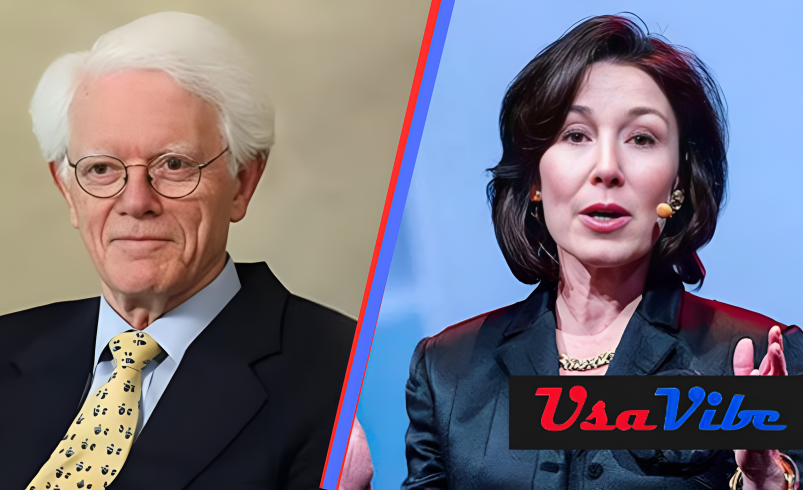
When two major names from the world of finance appear together in a search, it is easy to assume there must be a direct story connecting them.
Perhaps they worked at the same company. Perhaps they attended the same university. Perhaps one influenced the other. Or perhaps there is a family connection that is not immediately obvious.
The search for Peter Lynch and Safra Catz is interesting because there is a genuine connection—but it is narrower than some online pages might suggest.
Both are associated with the University of Pennsylvania’s Wharton School. Lynch earned his graduate business degree there in 1968, while Catz later attended Wharton as an undergraduate and subsequently earned a law degree from Penn. Their paths, however, belong to different generations.
Their professional careers also developed in very different directions.
Lynch became one of America’s best-known investment managers through Fidelity Investments and his long tenure running the Magellan Fund. Catz built her reputation through investment banking and corporate management before becoming one of the most influential executives at Oracle.
There is no reliable public evidence establishing that they are related, married, former colleagues, or business partners.
What they do share is a connection to one of America’s most prominent business schools—and an unusually strong place in the history of modern finance.
Peter S. Lynch is an American investor, author and philanthropist best known for managing Fidelity’s Magellan Fund.
He joined Fidelity in 1969 after completing his education, eventually becoming the fund’s manager in 1977.
Lynch remained in charge of Magellan until 1990, when he retired from day-to-day fund management at the age of 46. The American Academy of Arts and Sciences records his tenure as lasting from 1977 through 1990 and notes that the fund averaged a 29.2% annual return during those years.
His influence extended well beyond the performance of one mutual fund.
Lynch became known for explaining investing in language ordinary people could understand. His books, including One Up on Wall Street, Beating the Street and Learn to Earn, helped turn him into a household name among individual investors.
His basic philosophy was often associated with the idea of investing in businesses that investors understand from everyday experience.
That approach helped distinguish him from the image of Wall Street as a world accessible only to professional analysts.
The Magellan Fund became the defining chapter of Lynch’s career.
When Lynch took over in May 1977, the fund was relatively small. In a PBS interview, Lynch recalled that it had roughly $20 million in assets when he became its portfolio manager.
Over the following 13 years, Magellan grew dramatically.
The American Academy of Arts and Sciences records an average annual return of 29.2% during Lynch’s management.
Wharton Magazine similarly describes Lynch’s 1977–1990 tenure as a period in which Magellan averaged approximately 29.2% annually and became one of the most prominent mutual funds in the United States.
The growth was not simply the result of holding a handful of famous technology companies.
Lynch became known for researching companies across numerous industries, including retailers, restaurants, consumer businesses and industrial companies.
He was interested in finding businesses whose growth prospects were not yet fully reflected in their market prices.
That philosophy became one of the reasons individual investors continued studying his methods long after his retirement.
One of the phrases most associated with Lynch is the idea of investing in what you know.
The principle is often misunderstood.
It did not mean that someone should automatically buy shares in every company whose products they liked.
Instead, Lynch emphasized that everyday experiences could help investors notice potentially interesting companies before Wall Street analysts fully recognized their growth.
A consumer might notice that a particular restaurant was suddenly crowded.
A shopper might notice that a retailer was opening stores everywhere.
A parent might notice that a particular product was becoming popular among children.
Those observations could become the starting point for research.
Lynch’s wife, Carolyn, also played a role in some of the household observations that influenced his thinking. In his PBS interview, Lynch discussed how her shopping experiences could help identify consumer trends.
But observation was only the beginning.
Lynch’s investment philosophy still required studying a company’s finances, growth prospects, valuation and competitive position.
That distinction remains important because “buy what you know” was never simply an argument for buying familiar brands without research.
Lynch’s decision to leave Magellan in 1990 surprised many investors.
He was only 46.
At the time, Magellan had become one of the most successful mutual funds in the country, and Lynch was at the height of his reputation.
Contemporary reporting from the Los Angeles Times said Lynch had spent about 21 years at Fidelity and wanted to devote more time to family and community activities.
His retirement did not mean he disappeared from the investment world.
He remained involved with Fidelity in advisory and leadership capacities and devoted substantial energy to philanthropy.
The Museum of American Finance describes Lynch as continuing to serve as an advisory board member for Fidelity funds and as vice chairman of Fidelity Management & Research, while also working with his family’s foundation.
His post-Magellan career therefore became less about running a massive portfolio and more about philanthropy, education and mentoring.
Lynch’s influence also survived through his books.
One Up on Wall Street became particularly influential because it presented investing concepts in a conversational style rather than treating the stock market as an exclusive professional discipline.
He followed it with Beating the Street and Learn to Earn.
The books helped establish another part of his legacy: financial education.
Rather than simply presenting himself as someone who had successfully picked stocks, Lynch attempted to explain how investors could think about companies.
That educational dimension is one reason his name continues to appear in discussions about individual investing decades after he stopped managing Magellan.
Safra A. Catz is an American business executive whose career has been closely associated with Oracle.
Unlike Lynch, who became famous primarily for selecting and managing investments, Catz built her reputation through corporate finance, investment banking, acquisitions and technology leadership.
Oracle’s executive biography identifies her as the executive vice chair of the company’s board. It also records her previous positions at Oracle, including president, chief financial officer, executive vice president and senior vice president.
Before joining Oracle, Catz worked at Donaldson, Lufkin & Jenrette, where she held positions in investment banking and eventually became a managing director.
That background became important to her later work at Oracle.
Corporate acquisitions require more than financial analysis. They can involve negotiations, valuation, integration, strategy and decisions about how a transaction fits into a company’s long-term direction.
Catz became closely associated with that side of corporate leadership.
This is where the Peter Lynch connection becomes genuine.
Wharton identifies Lynch as a graduate of its business school, class of 1968. His Wharton designation is WG’68.
Catz attended the same broader institution more than a decade later.
She earned her undergraduate degree from Wharton in 1983 and later graduated from the University of Pennsylvania Law School in 1986.
That means the two share an important academic connection.
But they were not classmates.
Lynch’s Wharton education preceded Catz’s undergraduate studies by approximately 15 years.
Therefore, saying that they both attended Wharton is accurate.
Saying they studied together would be unsupported.
That distinction is particularly important because several online pages now focus specifically on the phrase “Peter Lynch and Safra Catz.”
No.
They both attended Wharton, but in different periods.
Peter Lynch completed his Wharton MBA in 1968.
Safra Catz later attended Wharton and graduated in 1983 before earning her law degree from the University of Pennsylvania in 1986.
The difference in timing matters.
A shared university does not automatically mean that two people knew each other personally.
It is entirely possible for generations of alumni to share an institution without ever meeting.
In this case, there is no reliable evidence showing that Lynch and Catz were classmates, professors and students, mentors and protégés, or members of the same campus organization.
The verified connection is simply that both are part of the Wharton alumni community.
There is no credible public evidence establishing a family relationship between Peter Lynch and Safra Catz.
Their biographies describe separate family histories and separate professional trajectories.
Lynch’s public identity centers on Fidelity, Magellan, investing, writing and philanthropy.
Catz’s professional history centers on investment banking and Oracle.
Neither Oracle’s official biography of Catz nor established biographies of Lynch identify a familial relationship between them.
That makes it inappropriate to describe them as relatives based simply on their shared prominence in finance.
It is also worth remembering that the absence of a documented relationship is not the same thing as proving that two people have never crossed paths privately.
What can be said confidently is that no significant family relationship is established in the reliable public record.
There is no established record showing that Lynch and Catz worked together.
Lynch’s most important professional association was Fidelity Investments.
His defining position was manager of the Magellan Fund from 1977 to 1990.
Catz’s professional history developed through Donaldson, Lufkin & Jenrette and Oracle.
Oracle’s official biography lists her various senior positions at the company and her earlier investment-banking career.
Their professional paths therefore crossed the financial world without crossing at the same major employer.
This is an important distinction.
Two people can operate within the same broad industry and still have no direct working relationship.
No.
Lynch’s professional biography is primarily associated with Fidelity Investments and the Magellan Fund.
His post-Fidelity activities have included philanthropy, writing, board and advisory work, and involvement with Fidelity-related activities, but there is no reliable record establishing him as an Oracle executive or employee.
His investment philosophy sometimes involved analyzing technology and other major companies, but that is different from working for one of those companies.
An investor can own, analyze or discuss a company’s stock without being part of its management.
There is likewise no authoritative record showing that Catz worked for Fidelity.
Her career before Oracle included investment banking at Donaldson, Lufkin & Jenrette.
Oracle’s biography identifies that earlier career and then traces her rise through Oracle’s executive ranks.
This is another place where the two biographies can easily be confused because both involve finance.
Lynch approached businesses primarily from the perspective of an investor.
Catz spent much of her career making decisions from inside a large corporation.
Those are fundamentally different roles.
The most useful way to understand Lynch and Catz together may be to look at the different sides of business they represent.
Lynch’s job was essentially to ask:
Which companies are worth investing in?
Catz’s executive career required her to deal with questions such as:
How should a major technology company allocate capital, pursue acquisitions, manage operations and execute its long-term strategy?
The difference is subtle but important.
An investor evaluates companies from outside.
A corporate executive helps determine what happens inside one.
Lynch’s success came from identifying businesses with attractive characteristics and managing a portfolio.
Catz’s success came from helping lead a massive technology company through major periods of change.
Both require financial knowledge.
But they use that knowledge differently.
Catz’s role at Oracle has changed in recent years.
Oracle announced in September 2025 that Catz would move from the CEO role to become executive vice chair of Oracle’s board, while Clay Magouyrk and Mike Sicilia became CEOs. Oracle’s current executive biography identifies Catz as executive vice chair of the board.
That means articles describing her simply as Oracle’s current CEO can now be outdated.
Her transition also illustrates how corporate leadership can evolve without ending an executive’s influence.
Moving from CEO to executive vice chair allows an experienced leader to remain involved at the board level while new executives take responsibility for day-to-day management.
For Catz, the change came after years of senior leadership at Oracle.
Catz’s influence at Oracle developed over many years.
She joined the company in 1999 and became a central figure in its financial and acquisition strategy.
Her background in investment banking was particularly relevant as Oracle expanded through acquisitions.
Oracle’s official biography notes her previous positions as president, CFO, executive vice president and senior vice president.
She was also part of Oracle’s top leadership during a period when enterprise software was undergoing major changes.
The industry moved increasingly toward cloud computing, subscription models and large-scale infrastructure.
Oracle’s transformation during that period required substantial capital decisions and long-term strategic planning.
Catz’s financial background made her particularly visible in those discussions.
Wharton is therefore the most meaningful factual bridge between the two names.
The school has a long history of producing prominent leaders in finance, business, government and technology.
Peter Lynch belongs to the generation of alumni associated with traditional investment management and the growth of mutual funds.
Safra Catz belongs to a later generation associated with investment banking, technology companies and global corporate management.
Their shared institution therefore offers a useful way of comparing how business careers can develop across different generations.
But it should not be inflated into a personal relationship.
They were not classmates.
There is no established evidence that Lynch mentored Catz.
There is no authoritative record showing that they jointly worked on an investment.
And there is no evidence that Lynch played a formal role in Catz’s Oracle career.
The Wharton link is real.
The supposed direct relationship is not established.
The phrase “Peter Lynch and Safra Catz” has increasingly appeared on websites specifically discussing whether the two are connected.
Several recent pages make essentially the same distinction: there is no documented family or professional partnership, while both have a Wharton connection.
That pattern is useful to understand.
When a pair of prominent names begins attracting search interest, websites may publish explanatory articles around the exact phrase.
As more pages use the same wording, the phrase can become more visible.
Readers then encounter multiple pages discussing the same two people and may reasonably assume that an important historical event connects them.
But repetition is not proof.
The most reliable approach is to return to the original institutional records.
Wharton establishes Lynch’s alumni connection.
Oracle establishes Catz’s career.
Fidelity and independent institutional biographies establish Lynch’s professional history.
Together, those records show a shared academic institution but separate careers.
Although Lynch retired from active management in 1990, he did not leave public life.
His focus shifted toward philanthropy, education and family.
The Museum of American Finance notes his continuing involvement with Fidelity-related advisory work and his role with the Lynch Foundation. It also highlights his long-running support for scholarships for students attending Boston’s Catholic schools.
His charitable work became an important part of his later public identity.
This is significant because Lynch’s name is often associated almost exclusively with stock picking.
In reality, his post-Magellan career has included a substantial philanthropic dimension.
His investment reputation remained powerful, but his activities were no longer centered on managing a huge mutual-fund portfolio.
Catz’s career has also extended beyond one corporate position.
Oracle’s biography notes her involvement with the Oracle Education Foundation and her service on other boards, including previous service with HSBC Holdings and The Walt Disney Company.
Her board and academic activities reflect the broader responsibilities that often come with senior corporate leadership.
Catz has also been involved in education.
Oracle identifies her as a lecturer at Stanford Graduate School of Business and notes her involvement with the Oracle Education Foundation.
That makes her public profile broader than the title of Oracle CEO alone.
Putting Lynch and Catz side by side reveals an interesting contrast.
Lynch became famous for making investment decisions based on detailed research into companies.
Catz became famous for making corporate decisions inside one of the world’s largest technology companies.
Lynch asked where capital should be invested.
Catz helped determine how a corporation should deploy capital.
Lynch’s public legacy is strongly tied to books and investment education.
Catz’s is tied more closely to corporate strategy, finance, acquisitions and executive leadership.
Both careers demonstrate how financial expertise can be applied in very different settings.
The generational difference is significant.
Lynch’s greatest period at Magellan ran from 1977 to 1990.
That was an era when mutual funds were becoming increasingly important to American households, but the technology industry looked very different from the global cloud-computing economy of today.
Catz’s most prominent executive years came during the transformation of enterprise software and the technology industry.
Oracle expanded its role in databases, enterprise applications and cloud infrastructure while technology companies increasingly became central to the global economy.
So although both figures are associated with finance, their careers reflect different economic environments.
Lynch became a symbol of the professional mutual-fund manager.
Catz became a symbol of the modern technology-company executive.
There is no reliable public evidence establishing a family relationship between Peter Lynch and Safra Catz.
Yes. Both have a connection to the University of Pennsylvania’s Wharton School, but they attended in different periods. Lynch earned his Wharton MBA in 1968, while Catz graduated from Wharton in 1983.
No. Their Wharton years were separated by approximately 15 years.
There is no established professional record showing that they worked together at Fidelity, Oracle or another major organization.
No. Lynch’s defining career was at Fidelity Investments, where he managed the Magellan Fund from 1977 to 1990.
There is no authoritative record indicating that Catz worked for Fidelity. Her pre-Oracle career was in investment banking at Donaldson, Lufkin & Jenrette.
He is best known for managing Fidelity’s Magellan Fund from 1977 to 1990 and for writing influential books about investing.
Catz is best known for her long executive career at Oracle, including serving as president, CFO and CEO before becoming executive vice chair of the company’s board.
No. Oracle announced in September 2025 that Catz would become executive vice chair while Clay Magouyrk and Mike Sicilia became CEOs. Oracle currently identifies her as executive vice chair of its board.
The clearest documented connection is their shared affiliation with Wharton. Lynch earned his MBA there in 1968, while Catz attended Wharton later and graduated in 1983. There is no established evidence of a direct family or professional relationship.
The phrase “Peter Lynch and Safra Catz” initially sounds as though it should lead to a hidden business story.
The documented record points to something more straightforward—and arguably more interesting.
Peter Lynch and Safra Catz both became major figures in the world of finance and business, but they approached that world from very different directions.
Lynch became famous through investment management. His 13 years running Fidelity’s Magellan Fund transformed him into one of the best-known money managers of his generation, while his books brought investment concepts to millions of individual readers.
Catz built her career through investment banking and corporate leadership. At Oracle, she held senior positions including CFO, president and CEO before transitioning to executive vice chair of the company’s board in 2025.
The two do share something substantial: Wharton.
But the timing matters.
Lynch graduated in 1968.
Catz graduated in 1983.
They therefore belong to different generations of Wharton alumni rather than being classmates.
There is also no reliable public evidence establishing that they are relatives, spouses, business partners or former colleagues.
The most accurate way to understand the pair is therefore not as two people with a secret shared history, but as two influential figures whose careers represent different approaches to finance.
One became famous for deciding which companies investors should own.
The other became famous for helping lead one of the world’s largest technology companies.
Their names may now appear together in online searches, but the strongest documented connection remains the one that can actually be verified: both are part of the Wharton story, even though their careers unfolded decades apart and in very different directions.
Read More: Usa Vibe